Episode Transcript
[00:00:02] Speaker A: Welcome to series five of the Life of Letters, a podcast exploring the art history and future of calligraphy, handwriting and all things letter related.
I'm your host, Laura Edrilyn, a London based calligrapher with a curious mind. Continuing this journey to connect with artists, historians, experts and letter lovers all around the world.
As the podcast grows, I'm so grateful that this season is once again kindly supported by Speedball art, champions of craftsmanship and creativity, helping keep the life of letters thriving across generations.
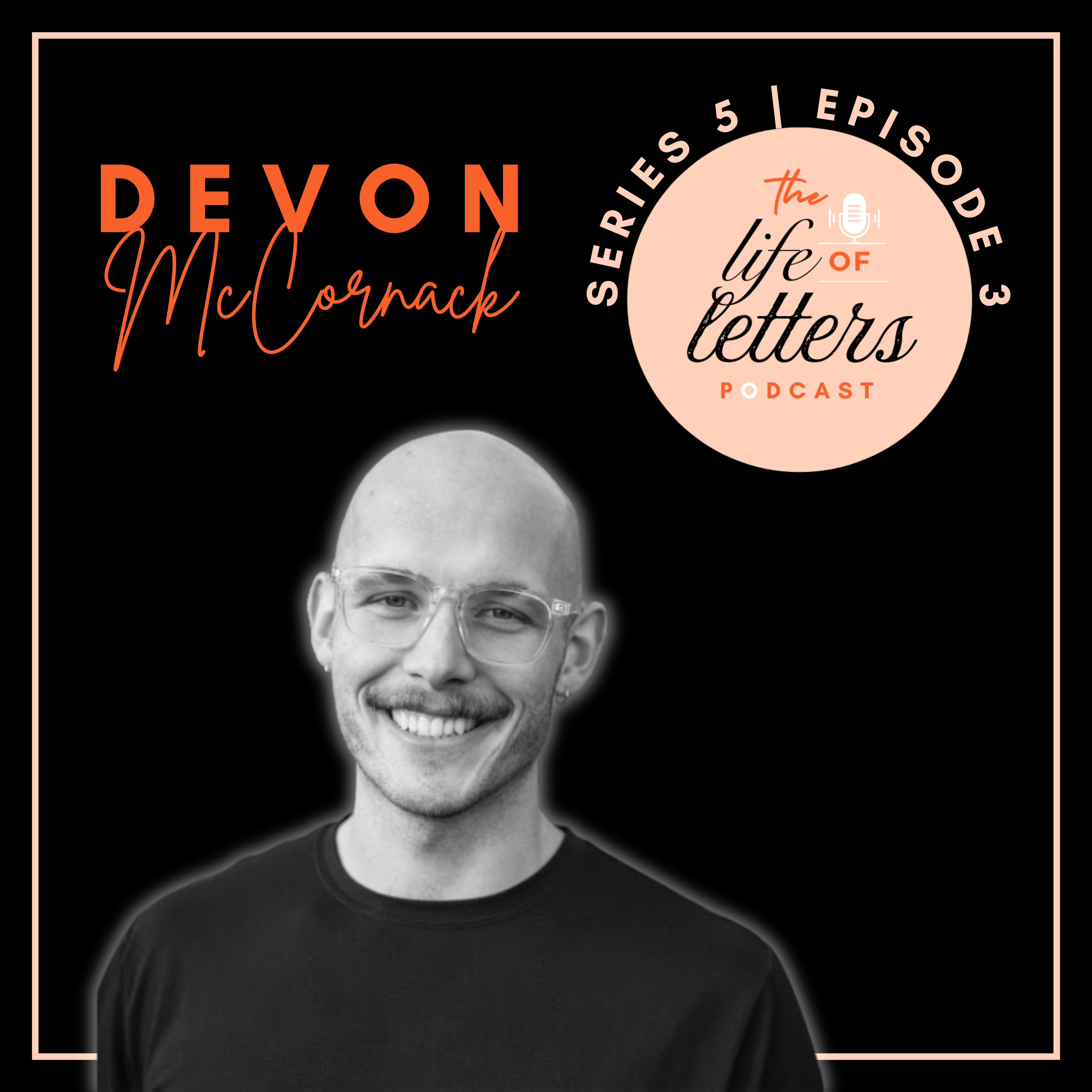
In today's episode, I'll be speaking with Devon, the creator of Learn Greg Shorthand Project. The mission of Learn Greg Shorthand is to revive the art of stenography by making modern tools for better learning.
Nice and short and sweet. Welcome to the Life of Letters, Devon.
[00:00:57] Speaker B: Yeah, I'm happy to be here.
I like what you guys are working on and I love preserving the art of pen on paper just in general, so.
[00:01:07] Speaker A: Perfect. Well, we're, we're connecting in all the right places because today as well is National Handwriting Day. And although we're not quite talking about handwriting here, this is a sort of slight. I don't know, would you. I'll ask the question in a minute, but because this is quite an exciting topic. So a lot of us may have heard of shorthand, but could you just give us a little history and brief explanation of what shorthand or stenography is?
[00:01:38] Speaker B: Yeah, sure.
Well, if you've never heard of shorthand in the context of an actual writing system, you're not alone. I didn't know anything about it until about two years ago.
Shorthand is a form of writing pen on paper.
It's like inside a larger category of stenography, which could also include mechanical stenography, which some people, you know, still do today.
But the pen on paper version that you might have read about in old books, or maybe your grandma, like studied it or wrote it back in the day, that's kind of a. A more dying art form. And so I guess shorthand as a. In contrast to longhand. So longhand is what we're all pretty much taught growing up. It's that writing system we're all familiar with.
The difference being longhand kind of encodes spelling, whereas shorthand encodes speech. So the words themselves are actually written phonetically and as a way to kind of like unlock the spelling speed of writing. It enables people to dictate basically at the speed of speech, so verbatim, because it allows you to write kind of more efficiently. So as I mentioned, it's been around a long Time. I think the first form of shorthand, I teach Greg, but the first form was called Pitman shorthand. It was invented by this guy named Isaac Pittman, and it was the first, like, fully phonetic system that was introduced. I think it was the 1830s and the big leap there was where they took strokes outside of traditional letters and the strokes themselves represented sound. So again, increasing the efficiency of, you know, you don't have to make tiny little lines to write an A.
It just happens to be a single fluid stroke.
So, yeah, I mean, and then later on, Greg, shorthand kind of came about. It was invented by a guy named John Gregg and kind of improved on other versions of shorthand in the sense that it mimicked kind of the more flowy cursive language. And it didn't rely on things like, like Pitman relies on different line weights and position from the writing.
But shorthand could be written with any pen, could be written on any kind of paper. You didn't need any reference lines or anything like that. So in my opinion, my biased opinion, it was a big upgrade from the language. So, yeah, that's a general, brief kind of overview.
[00:04:25] Speaker A: It's fascinating. And I guess from my own understanding, like I've heard, I used to work with a team of people who would do sort of marketing and maybe interview. And for them to go in capture an interview, it would be really helpful, whether it's on the phone or in person, I guess somebody is almost dictating their answer. And for you to be like, oh, just hang on a minute, I've just got to spell that and write. This is really, it's. It's not time efficient. Right. I mean, I know you've got all sorts of electronic digital ways now that we can capture this, but with shorthand, you're still getting that lovely pen to paper. But I wanted to ask you what. How did you become interested in shorthand? And why are you exploring this mission to revive it?
[00:05:17] Speaker B: Yeah, so the way I came about to shorthand was a bit convoluted. I was actually in grad school. I was working on my PhD at the time, and I was in this kind of doom, burnout cycle.
But one of the things we had to do, obviously, was keep a good lab notebook and we had to do surprising amount of writing by hand.
I'm also an avid journaler. I love just, like, the tactileness of pen on paper.
And so, yeah, I kind of like started exploring ways, like I was in classes and trying to like. Like you mentioned, just trying to like, Scribble notes down. And obviously we all know the advantage of like writing things down as opposed to typing them as then even opposed to record.
So there's a bit of a cognitive advantage as well. But obviously. And like you mentioned, it's like really hard to capture everything. And so I remember, just like you talked about, I remember hearing about journalists or court reporters and I just started asking like, how did they, you know, how could they take dictations verbatim with a pen and paper?
And that led me down the whole rabbit trail of like discovering shorthand, discovering the tools for learning shorthand, which there are, you know, spoiler alert. There aren't a lot.
I shouldn't say that there's a lot of resources online, but there's not a lot of resources to kind of like condense and give you this specific information you need. And so, yeah, I just started learning it. Just kind of a self study program practice, started piecing together the, you know, the different parts and had a lot of failed starts. Then I would kind of come back to the language. But yeah, I mean, I became interested in it because it, I feel like made me a better student. Came to find out, like, I mean, obviously some of your audience will know this in a lab notebook. It has to be readable to other people. So I couldn't actually use it in my lab notebook, but the skill still stuck and I still use it to like jot quick notes or to journal. And yeah, yeah, it's just, it's immensely practical, I will say.
[00:07:30] Speaker A: What were you, what were you studying?
[00:07:33] Speaker B: So my PhD is in bioengineering.
[00:07:36] Speaker A: Okay, you said lab. And I was like, this is sounding.
[00:07:38] Speaker B: Yeah, yeah.
[00:07:39] Speaker A: Scientific.
[00:07:40] Speaker B: Yeah, no, it's completely unrelated to this endeavor in a lot of ways, but, but yeah, just wide ranging interests, I guess.
[00:07:50] Speaker A: Yeah. And then what was the turning point to sort of think, okay, I've learned this, other people maybe need to learn this, or obviously if there isn't that space for people to kind of learn or be guided in learning how to do it, where did you then suddenly go? Yeah, I think I should start sharing what I'm doing here.
[00:08:16] Speaker B: Yeah, it was a bit of a process, to be frank. I kind of had in mind that I could, you know, be a useful resource out there to other people from the get go. But it wasn't until I started actually just posting online, there wasn't a lot of people posting about shorthand. And so like, if, if you scroll back through some of my socials, like the, the, the early videos were just atrocious like, one of the things about shorthand is it's really precise with proportions and the different size and some positional stuff. But, yeah, I just started posting even before I was good at it and before, you know, I had much ambitions surrounding it and was just kind of surprised at, like, all the other people that either were interested or had learned it or were currently learning it, and then kind of, like, very quickly started to hear and understand, like, some of the problems that other people have when they're learning, which there are many, many friction points to learning. And so. So, yeah, it was. It was just kind of, like, a little encouragement along the way to, like, keep posting. And then, like, people would ask specific questions, and then I would, you know, post a video to answer those. And so now I'm, like, kind of trying to compile a comprehensive resource that can help guide people along the process and make it so that they don't have to repeat some of the same mistakes that, you know, I've. You know, I had to. It's trying to build the tools that I wish I had when I first was starting.
[00:09:56] Speaker A: So, yeah. Yeah, that makes sense. And. And I guess so. What I've seen online is that you do these videos on Instagram, but you also have substack where you can kind of click on little lessons. And obviously, it's difficult getting across what shorthand looks like in an audible podcast. We'll have to make sure we get this onto YouTube as well somehow and bring in some visuals. But can you explain a little bit about what.
How the system works? You mentioned that it sort of phonetically captures the sounds to.
Is there a way of describing what you do or how you do it verbally?
[00:10:44] Speaker B: Yeah, yeah, no, totally. I mean, I'll do my best. You're right. It is helpful to have, like, a visual reference. But.
So, for instance, if you think about the letter M, the letter M has a lot of curves in it, a lot of changes of direction for the sound. And the letter M itself represents the. The M sound where you're kind of pressing your lips together and, you know, humming, essentially. I'm not a, you know, phonetics expert, but that's my basic understanding of that. So if you visualize the letter M with all those loops and changes of direction, the shorthand counterpart is just actually a. Just straight line directly across the page. So horizontally, you can picture it as an underscore.
So because M and N phonetically are very similar, they are grouped into what's called A forward consonants. So M and N actually look Visually the same. They sound visually the same, but on shorthand they also look the same. But because N is a shorter sound than M, the N is actually half the length of, of the forward M, if that makes sense. And so there's further examples like the K and the G, they're both made in the same part of the mouth, like K and G.
But the G or the gay sound, the. That hard G is longer. And so that stroke is actually, I have it on my shirt here, but it's represented, represented by a forward curve where the K sound is just half the length of that G curve. So there's. So each of those sounds in the language is like mapped to a stroke. And then to put the strokes together or put the sounds together and the words together, you just connect all those curves and then that's basically how it works.
[00:12:38] Speaker A: Okay. I thought that was going to be a real curveball question that you'd struggle with, but there is a way to explain it. Oh, my goodness. Wow.
[00:12:46] Speaker B: Hopefully. Hopefully that that made sense.
[00:12:48] Speaker A: It really does. Yeah, it really does. And, and I guess so. I've seen little bits of it and I keep going, oh, no, my brain can't work this out. But what you're, what it sounds like. Once you've gotten used to the fact that you're looking at sounds rather than trying to visualize letters in any of it, you've then got this sort of pattern of reference where you can kind of see what the word says through just different symbols almost. So it's like a different language.
[00:13:23] Speaker B: Yeah, no, absolutely. There's, there's some of the same learning curves with learning a new language, but once you've familiarized yourself.
Actually, that's one of the key insights that I've learned in teaching. It is actually to like forestall your attempt at writing it for as long as possible until it's become ingrained. Because, yeah, the visual patterns, you know, they start to repeat themselves and then you become familiar.
So. And it also is built a lot around context of the sentence itself because, because it's phonetic, there are different words that can look like different, you know, other similar sounding words, but you understand the word in context. So it's kind of like your brain kind of auto completes the word for you once you become familiar. But if you jump straight ahead to trying to like, you know, familiarize yourself from the get go, it can kind of get jumbled.
[00:14:24] Speaker A: Got you. Got you.
[00:14:25] Speaker B: So, so, yeah, I mean, but that's in essence how it works.
[00:14:29] Speaker A: Oh my gosh, that's fascinating. So in terms of sort of who would have used shorthand method, you mentioned journalists, obviously students, if they happen to know it. But is it still in use today? Like, can you give us an idea about how mainstream it was or has it always been this kind of quiet discipline that some people can do and others just don't?
[00:14:57] Speaker B: Sure, yeah.
As far as, like, popularity today, at least in the States, it doesn't seem like it's super popular. Like, it seems to have died off with the last generation.
Like, it was popular enough that they used to teach it in school, like high school. Like, instead of cursive, like, apparently, like my grandma, she learned shorthand and there was still like a professional avenue for secretaries or business people or again, journalists who kind of knew it back in the day. Apparently it was like, ubiquitous. It was a very, you know, common career path. And I think there are certain countries, like Latin American countries that still use. It's called tacky, graphic or like there's some, you know, like the Philippines, they. Or in India, they use shorthand quite a bit. I have quite a few, like, conversations and followers from those countries who are like, actively in a class or trying to learn it right now. But as far as, like that, you know, the Western world, it's, it's pretty much fallen out of style with the, you know, advent of new recording technologies and stuff like that. So. But obviously I think it's a, it's a super beneficial and useful skill.
I wouldn't be doing it, so.
[00:16:15] Speaker A: Yeah, for sure. You've just made me want to ask another question. In terms of different languages, are there different. I mean, I know we've got the Greg and Pitman actual kind of formats. Yeah, systems. Systems, yeah, of shorthand.
But do you then have languages that have their own systems of shorthand or can any language use the same system?
[00:16:46] Speaker B: Yeah, I think it, it depends. Again, I'm not an expert, but I know, for example, like takigraphia or the Spanish version or at least I assume I can follow because they use a lot of the same phonetic sounds.
They, they do follow Greg kind of nomenclature. Although, like Spanish in particular is, Is I imagine, very challenging because of the, the rate of like sounds per word is extremely. A lot higher than English. And so they, they have a lot more brief forms or like abbreviations or just like denser, you know, outlines, because.
And that's what they're. The words in shorthand are called outlines. It's not related to the thickness of the line themselves, which may be different from your discipline of like, maybe Calligraphy. But yeah, it's a good question. And it depends again, if they follow Greg, then they, it will be the same. So kind of like a universal IPA language if you can, if you're familiar with the sounds, you could, you know, probably puzzle out how to say Spanish words phonetically. But, but it kind of depends. I mean Greg is super versatile. Like there's, there's Greg versions for other languages, there's a mirrored version of Greg for like left handed people to allow them to like take advantage of that arcing, you know, nature of the language. And so it's, I think it's probably why it's one of the most persistent versions of shorthand. And personally I think one of the best and most beautiful is in part because of how adaptable it is. So.
[00:18:35] Speaker A: Yeah. Oh, that's lovely. That's really nice. And actually a big part of what I teach with calligraphy is the idea that it's, it's actually not handwriting. It's such a kind of crafted art form. And so the similarities between shorthand therefore are this idea that you're, you're not seeing letters, you're, you're seeing sounds and creating the strokes to match those.
And with calligraphy you're creating strokes, individual strokes so they sit completely apart from each other. But when you put them next to each other, you've then got this system of strokes that form the letter forms that then we know. So it's, it's, there is the, there's a, there's little, you know, moments where there's crossovers here with all these lovely writing styles and systems and.
Yeah, scripts as well. I love the one on your T shirt. What does it say?
[00:19:33] Speaker B: This is a kind of a inside joke within the, the community. Like one of the first things people associate when they see my videos or something is they assume it's like the doctor's language. Because the joke is that like doctors are, you know, write really quickly, they don't have time to write prescription. And so one of the most commented things on my videos is paracetamol.
And so we, we like made a, we made some like shirts with paracetamol, 500 milligrams written out in shorthand.
And that's kind of been the, the calling, organizational, you know, factor. But, but yeah, no, I mean, you touched upon it. I was, I was thinking, you know, when I was thinking about doing this conversation in, in some ways like shorthand and calligraphy are like polar opposites, but they're, but they're really like not, I Mean, they're just different tools, different.
Different skills for different tools. Like, shorthand is very utilitarian.
And, you know, it's, it's meant for fast writing where, you know, it seems like the art form of calligraphy is, you know, specifically slowing down and you knowing the beauty in the forms. I don't know much about it, but I can, I can see the appeal. And I know there's definitely like an overlap in our audiences of people into writing. So.
[00:20:56] Speaker A: Yeah, and I think that's quite cool because there is this sort of linear visual thing I can start to see where you've got something that's close to pronunciation and kind of verbalizing, but on paper, which is the shorthand. And then you've got the handwriting, which is fast, but you're basing it on a particular, I'd say script. But really it's whatever you've learned. And then most people find their own signature, handwriting style. Right.
[00:21:30] Speaker B: Yeah.
[00:21:31] Speaker A: And then you've got calligraphy, which is very much. There's formulas to it, there's, you know, guidelines and heights and all sorts of things. And you can get really mathematical and scientific about it with, with your style. So there's. Yeah, there's this kind of.
I was gonna say timeline, but that's not the right word.
[00:21:50] Speaker B: Yeah, no, it's. It's almost like a spectrum of.
[00:21:53] Speaker A: Thank you.
[00:21:54] Speaker B: Yeah.
[00:21:55] Speaker A: I'm glad you're here.
[00:21:56] Speaker B: Yeah.
No, I mean, you're. You're absolutely right. I think, I mean, again, different tools for, for different outcomes. But like, especially, I mean, and this is, you know, this is kind of my philosophies behind it. Like, especially with the advent of new technologies and increasing like, digitalization of our world and stuff. I think, like, with any sort of new jump in technologies like that, there seems to be like this pendulum swing of people that kind of go back to the old, the old ways, you know, like purposefully unplugging or, you know, putting the pen back to the paper, so to speak. And yeah, I think it's just like what you imagine have captured and then what it seems like with some of my audience is just like tools to help people, you know, restore their, you know, chronic onlineness. You know, it's kind of hard to get around in this day and age. But yeah, just all that stuff seems to just be, you know, really good for us as humans.
And. Yeah, so. And you mentioned, like, the personalization short, Greg, in particular. Like, it's, it's really just meant for you. So a lot of times people will submit to me, like, letters that their, you know, grandma had written to their significant other or recipes. And, And a lot of times we can kind of puzzle out and we can translate for them. And there's been some sweet moments, but for the most part, your shorthand, like, will reflect you. And so, like, the way you write your GS, for instance, or your, you know, other strokes or whatever. And so a lot of times it's actually hard to translate someone else's shorthand because they have all these ticks and all these other stuff that make it as unique, kind of like, I guess, traditional long handwriting.
So, yeah, it does kind of become coded.
But my recommendation to people is always like, learn the fundamentals, learn the basics first, copy the forms as best you can, and then once you have comprehension, you can. Can adapt your own version later.
[00:24:01] Speaker A: Yeah, add your. Add your flourishes if you need to. Yeah, yeah. Oh, that's so lovely. And what a lovely thing to mention, because I think, yeah, when you're learning these sorts of new writing systems, you do kind of. You're. You're learning the foundations and you're copying and recreating and copying, and this is sort of part of that practice and that journey that you go on, but actually having your own stamp and being, you know, and working out what you want to do it for. You know, are you writing?
Are you journaling?
Are you capturing conversations as you're out and about? You know, what a lovely thing to be able to do, to kind of, oh, I just overheard someone saying something lovely to a friend and. But I couldn't quite remember what they said. You know, being able to have this, this tool at your fingertips, I think is great.
Yeah.
So my next question is around. Obviously, you've got a lot of followers on Instagram who have just gravitated towards this, this sort of secret space. I mean, it's not that secret because loads of people found you, but it's. It's a kind of corner of the Internet that so many people are becoming interested in through you. But what do you think it is?
And you've touched on this for the kind of digital side and people wanting to come back to pen and paper. But is there a sort of mystery, intrigue about it? Have you found that lots of your students are there to pick up this new skill, or is it the secret codeness of it?
[00:25:36] Speaker B: Yeah, I mean, it's hard to suss out some of their specific motivations sometimes. But, yeah, I think a lot of people just think it looks cool and are. Are interested and you know, I, I imagine they're, if, if they're anything like me, they, they do want to kind of reduce their tech dependence and, you know, kind of learn, learn a skill. I mean, it's, it's also kind of like pretty practical, like if you're, if you're writing a lot, like, for me, I'm not like the fastest.
Like some people can get up to 220 words per minute when they're writing. For me, I'm just like, you know, I, I like to write and so it just, it's a much more ergonomic way of writing. So I write for longer and, and so there's again, some practicalities and utility to it. But yeah, a lot of people like the coded aspect of it. They like to think that no one can read their writing.
Yeah. But I mean, as to, as to their intentions and stuff. So, I mean, some are really wholesome and sweet. Like, some people really want to translate their, like old letters or stuff like that. So yeah, it seems like there's a whole range of people that come to the page.
[00:26:54] Speaker A: Yeah. And talking about the page.
So can you just give us a little bit of insight? So if there was somebody who was listening and thought, oh, I'd like to find out a little bit more about what shorthand is and potentially learn it, what would you suggest they do?
[00:27:08] Speaker B: So just follow, follow us on socials, probably just to, you know, increase your exposure to, to the language itself. I think that's kind of key. But yeah, we've, I've been working kind of in the background on creating a more comprehensive version of this teaching form that will allow people to go from zero or little to experience, you know, experience to, you know, semi fluency in shorthand or at least enough where they can, you know, continue their practice kind of on their own and adapt it to their needs. And so been putting a lot of time and effort into that in the background. It's not quite ready to launch yet, but if people are interested, they can always, you know, reach out on Instagram or, or YouTube or TikTok or whatever, whatever channels.
And I also wanted to shout out like some of the other resources that are online, like, other than me, because they're, they're definitely out there and I benefited from them. And a lot of these, you know, resources are available for free. So there's like, it's a great little community. There's people like Andrew Owen who, who has a website where he's basically published the manual online. So people can kind of go and like, they don't have to use us, but they can. They can learn shorthand themselves.
Carlos Rodriguez has, like, a great little corner of the Internet where they have a community of shorthand writers. And then websites like Stenopile.com they have not just Greg, but like all the other shorthand versions and stuff that people can use to kind of learn. But yeah, I mean, if people are interested in starting, I would just, you know, just pick one of those routes and just get after it.
[00:28:59] Speaker A: Yeah. And I guess when you've got a community, I mean, that is where we bridge this gap between being part of history and being taught in person to people who would take it on as a career choice or a skill for their career. And then now where there is this choice to go and learn these things for whatever you might find, benefit from them. But you can do that with people all around the world being able to connect with people who are just genuinely interested in the same thing as you and maybe even get a bit of the sort of accountability side as well, if you know that other people are doing it, trying to get through some lessons and things.
[00:29:44] Speaker B: Yeah, for sure. Community is like, I mean, not just in shorthand. In all areas of life is. Is a massive tailwind to getting things done. So I'm, you know, again, the theme of, like, kind of getting offline and stuff, like, yeah, just get plugged in somewhere, just be interested in things and. And surround yourself by other people who are interested.
[00:30:08] Speaker A: So, yeah, find that thing. And shorthand might just do that.
You say stenography as well. So is it just. Is it. Does it mean the same thing? Is stenography like the universal umbrella term?
[00:30:24] Speaker B: Yeah, yeah, exactly. They're kind of synonymous, I think, at this point. Like, there's stenotype, which is directly related to, like, mechanical stenography, but it all falls under the umbrella of stenography. So.
[00:30:38] Speaker A: Okay, so there's even more things to go down a rabbit hole with there.
[00:30:43] Speaker B: Yeah.
[00:30:45] Speaker A: We asked our guests last season a slightly challenging question, which may be even more challenging.
I wanted to find out what your favorite letter of the Alphabet was and why. But maybe I don't know if you want to choose more than one or even give us a kind of variation that is adapted to a Greg shorthand symbol.
[00:31:09] Speaker B: Hmm. Yeah.
Yeah. Because there's, again, it's not. There's not really letters. More. More sounds in shorthand. I can tell you the ones that are the most fun to write are this concept called blends.
And so sometimes similar, like with words, there are strokes which can Kind of blend together. And so instead of. We talked about earlier how the M stroke is a straight line, you know, and then you have another stroke like a D, which is a straight line, but upward. And so if you pair that with like another letter when, or sound, when you're writing really quickly, sometimes they can get blended together.
And so, yeah, it's like, so it almost takes on a new form that you see it and you recognize it with a sound. Like you don't have to, you know, go through the process of puzzling it out individually. But I just really love writing those blends. So, yeah, it's, it's not a specific letter, but when they connect kind of together, that's always, that's always fun to me.
[00:32:21] Speaker A: When you're, when you're creating writing shorthand, are you.
I mean, it can't be a slow process because it's really fast. But do you find yourself having to really think about it or are you just so fluent in it now?
[00:32:36] Speaker B: Well, me personally, like, I definitely still have to, you know, occasionally, especially if I find myself stopping practicing because I'm working on other things. But when you, yeah, when you really get into it, it's a very physical activity. Like, it kind of just like the way you speak. Like, you don't really think about the, like putting your teeth, you know, your tongue to your teeth to make the sound you just kind of just pours out of you and similar, like with shorthand, like, eventually it becomes so ingrained that it's kind of just like an extension of, you know, what, what you're, you're thinking. And so it just like, again, just decreases that time from thought to record, I guess, or recorded speech. And so that's when you've really achieved fluency, is when you don't have to think about things. And in fact, like, one of the most challenging exercises in Greg is to, to like, listen to something and then, you know, beyond your speed of comfort.
So say you're, you're working on 100 words per minute or something like that is to take a transcript at 100 words per minute and just really push your. Push yourself beyond what you think you can. And it's amazing. Like, you're. Once you've familiarized yourself with the forms, like how your brain just kind of switches off and you start going through the process of making the sound. So it's really quite a challenging but very rewarding practice. I'll say.
[00:34:07] Speaker A: That's a video you need to do. You need to do, like, I don't know, Song lyrics or something that you can kind of write alongside it. I want to see that flow state coming through, but it also genuinely makes me want to learn it. I feel like for some reason my brain would struggle with it, but. But I've started journaling in the morning and in the evening, and it's a lot of writing.
It's a lot of writing, but just as you were.
The thought process of. And it's a lovely thing, like, obviously doing the long hand. You're capturing your thoughts and you're putting it down on paper. But there is a point where you're sort of slightly. Well, if your brain is as busy as mine is, you're kind of trying to catch up. Well, I hold that thought while I finish this thought. And then you're.
So I guess shorthand would slightly remove that. Still keeping that fluid kind of way of thinking, train of thought process.
You'll be. You'll be ahead of yourself. You'll be like, I've written it.
Finished the thought yet? I've written it down.
[00:35:13] Speaker B: Yeah. Yeah. No, it's a great skill for brain dumping or just like, you know, trying to get things down.
Obviously, there's. There's always going to be a place for slowing down and. And having that in your practice. I know exactly what you mean. I have that. That same issue too. And sometimes, like, the thought runs away from you before you can actually capture it.
[00:35:34] Speaker A: Yeah. Oh, gosh, it's. It's absolutely fascinating. And I feel like there's so much more to say around this subject. So there's. Obviously, you're working behind the scenes on this guide book that will hopefully come to fruition, and we can share it with people as and when or add it to the show notes as and when.
[00:35:53] Speaker B: It's not a big secret or anything. I'm just. I'm really having a hard time putting out something that is imperfect. And so part of me talking about it is just, you know, lighting the fire under me to get it out there. And maybe people would, you know, still find value from an imperfect edition. But, yeah, I'm working on a full course, an online course that has the visual elements and specific practice, and a lot of it is adapted from the resources that are already out there. So, for instance, like on substack, I've been translating and digitizing the Functional Method, which is an old manual that allows for a lot of extra reading practice. And so the emphasis is on reading comprehension.
But I hope to create something that has both reading and writing that allows people to kind of like get started in as quick a time as possible. So.
So yeah, I'm looking forward to sharing that. Need to get it out the door. I just also worked on this massive project where I translated and digitized like by hand drawing on a computer, on my mouse, like each of the 5,000 most commonly used words in the English language so that we could, you know, provide that as a resource to people who want to build tools around, you know, creating, learning or even digitizing. But, but who knows? I don't know. It. It's. At the moment, it's kind of a. One of the advantages is this kind of like anti AI. Like AI has no idea what to do with shorthand at the moment. But yeah, yeah. So excited about those things kind of coming down.
[00:37:34] Speaker A: That's fascinating. And yes, get it out there. We're all sat here waiting to learn now. Now we're talking about it. I'm definitely in there. I want, yeah, I want the visual learning platform, all the things. Because being led to my left to my own devices, I think I may not get all the way through the learning.
[00:37:55] Speaker B: Yeah. Oh, totally. Well, I mean you have the stamina and to learn, you know, calligraphy, so.
[00:38:00] Speaker A: That's true.
[00:38:01] Speaker B: You could get there.
[00:38:01] Speaker A: That's what I needed to hear. Thank you for the vote of confidence.
[00:38:05] Speaker B: You can get there. Anyone. Like this is the thing. Anyone can do what I did and learn it on their own. There are a lot of people who are doing and have done that. I just hope to like help make it easier. You know, if I can save you a year or two, then fantastic.
[00:38:19] Speaker A: That's great. Oh, that's so exciting to have these things coming out and really add to the kind of revival of it.
Are you working in bioengineering at the same time as this?
[00:38:32] Speaker B: Yeah, I'm trying to. I started a company spinning out of my, my research from my PhD program and so like a common theme of my life is I, I'm, I consider myself to be a little bit entrepreneurial and so this is a side project that's, you know, kind of taking on a business aspect.
I have a tendency to ruin some of my hobbies by trying to make them businesses, but, but yeah, I know my, my day job is I'm a founder in the, the biotech space. So.
[00:39:03] Speaker A: Wow. Oh my gosh. So many hats. Quite different.
A lot going on for you. Thank God you've got shorthand to scribble notes down and make sense of the world around you.
[00:39:15] Speaker B: Yeah, I think it's healthy to have orthogonal or non related projects or hobbies to kind of keep you separated sometimes.
[00:39:25] Speaker A: But yeah, yeah. And keep that variety coming through. Well, if people want a bit of variety and they haven't yet learned Greg shorthand and then they can find out much more on the website. Learn Greg Shorthand. So Greg is G R E, double
[00:39:42] Speaker B: G. Yeah, two GS.
[00:39:44] Speaker A: Two GS. That's a quicker way. This is what I mean. You know, verbal shorthand is probably a thing at some point.
[00:39:50] Speaker B: Yeah.
[00:39:52] Speaker A: Learn GregShorthand.com on substack as well, which is Learn Greg Shorthand and also on socials as learn.org shorthand. So we will put all the, all the links in the show notes. But you're on Instagram, YouTube, TikTok, anywhere else.
[00:40:11] Speaker B: No, I think that's, that's it for the moment. That keeps me busy.
[00:40:15] Speaker A: That's enough for now. Yeah, yeah, sure.
But thank you so much, Devon. Thank you for joining me today and being a great part of the life of letters.
[00:40:24] Speaker B: Yeah, of course. Thanks for what you do. Really appreciate the. The chance to yap about it.
[00:40:29] Speaker A: So that's great. Thank you.
Thanks for listening. Series 5 is made possible by my wonderful producer, Heidi Cullip and the support of Speedball Art, whose commitment to high quality tools and creative tradition continues to serve, partner and deliver to artists all over the world.
If you enjoyed the episode, don't forget to subscribe and leave comment, a review or share it with a fellow letter lover. And until next time, keep listening, keep creating and keep celebrating the life of letters.