[00:00:02] Speaker A: Welcome to series five of the Life of Letters, a podcast exploring the art history and future of calligraphy, handwriting and all things letter related.
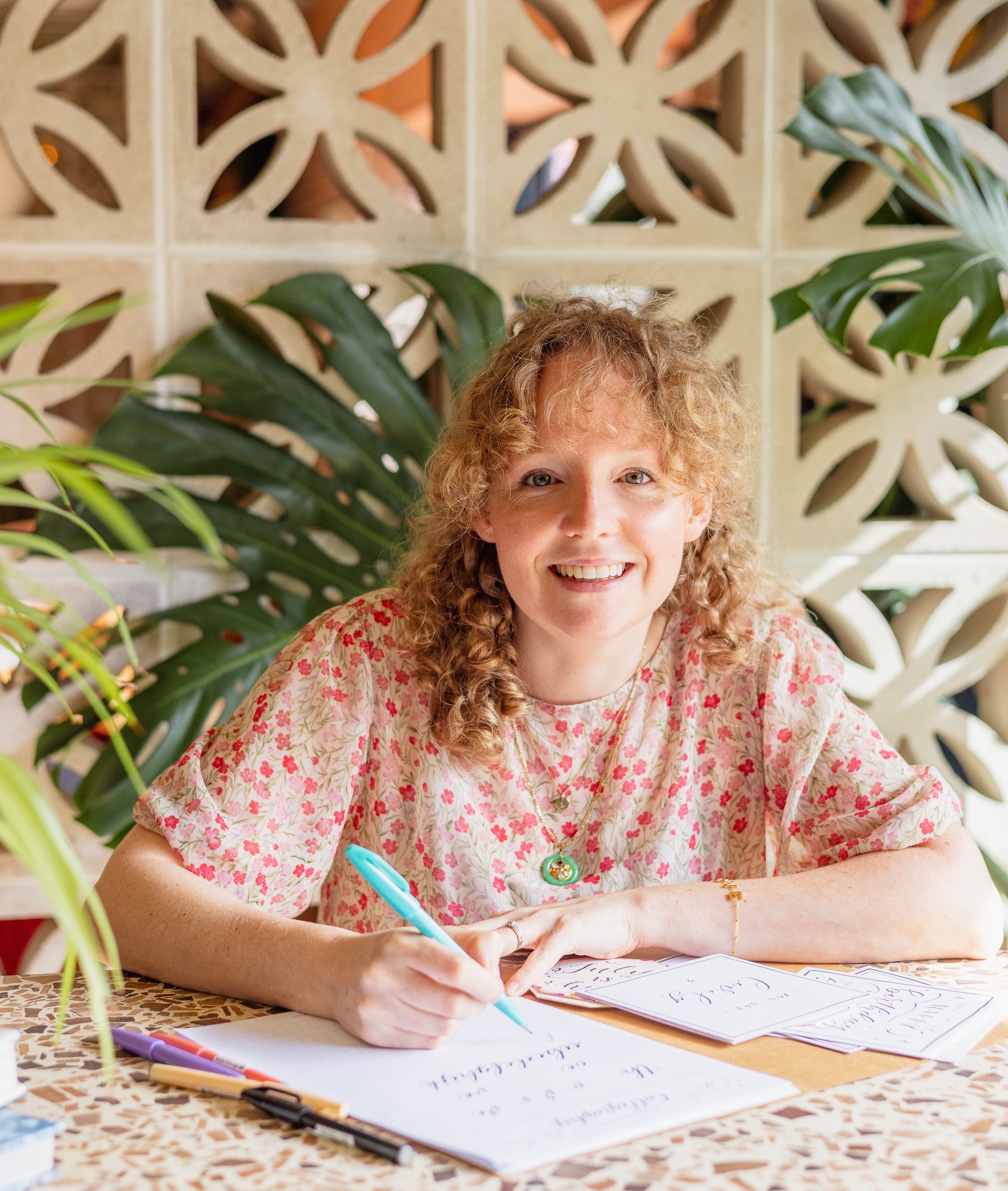
I'm your host, Laura Edrilyn, a London based calligrapher with a curious mind. Continuing this journey to connect with artists, historians, experts and letter lovers all around the world.
As the podcast grows. I'm so grateful that this season is once again kindly supported by speedball art and champions of craftsmanship and creativity, helping keep the Life of Letters thriving across generations.
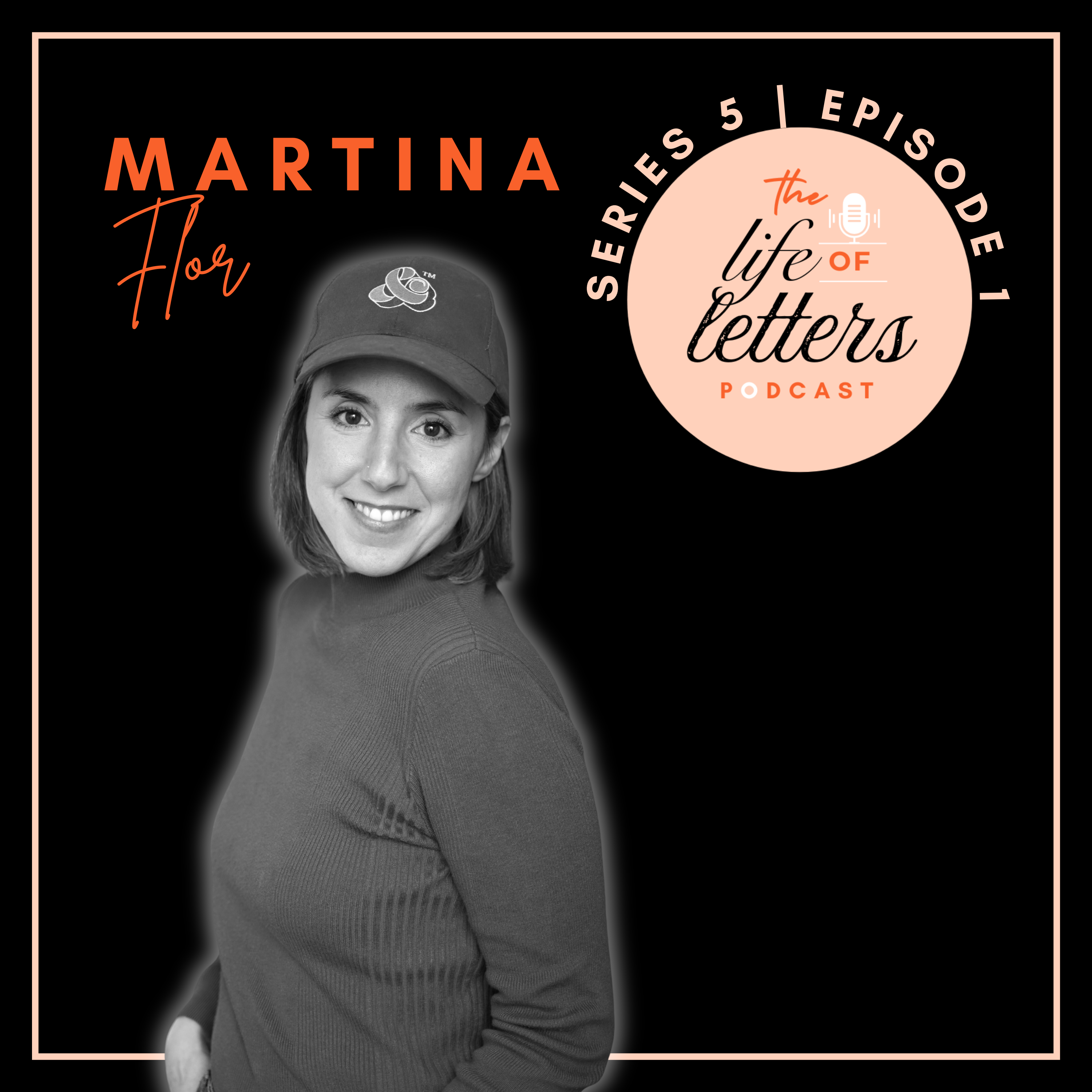
Today I'm speaking with Martina Flor, an award winning lettering designer, author and educator. She's worked with several high profile clients, been on stage at dozens of Design conferences including TEDx and built the business of her dreams doing what she loves. And since 2010, she's been helping designers and artists master the craft of hand lettering and turn their skills into a thriving freelance business too.
Welcome to the Life of Letters, Martina.
[00:01:06] Speaker B: Thank you so much, Laura. I'm excited to be chatting with you today.
[00:01:09] Speaker A: It's great to have you on and obviously I've just introduced you as someone who helps artists and designers and help them build that career. But I kind of wanted to start with your journey into becoming a hand lettering artist. So could you tell us a little bit about that, that journey into lettering and what that big leap looked like for you?
[00:01:29] Speaker B: So it started with me as a graphic designer. So I started as a generalist graphic designer and I was doing all kinds of things.
I had a full time job as a designer and I was a little bit, I had fallen a little bit out of love with graphic design and I felt like my work was not personal, it wasn't very expressive. So all of the dreams that I had when I initially signed up for art school of becoming, you know, a creative that is expressing her voice and leaving her mark, they were a little bit blurry at the time. And I remember that I used to have this day job as a graphic designer and I will come back home and I was preparing a cup of coffee and I would sit down to draw and I would draw letter forms. I would draw anything basically.
And I remember thinking, what if I could do this every day instead of just two hours every night, what if I could do this as a job?
And that question pushed me to find the answer and I doubled down in my education. At that time I was living in South America, I was born in Argentina and I decided to to invest all of my savings to go to the Netherlands to pursue a course in type design, which was the closest thing I could find to Lettering design, which at that time wasn't even called lettering, Imagine. So it was like, okay, this is something with letters. Perhaps this is the thing that I, you know, that I, I could pursue or I could learn more about.
And that decision changed my life.
I didn't only move continents because I went to the Netherlands from South America, but also in that experience, I discovered the perfect overlap between two things that I loved. So design and drawing. I always say that lettering as the craft of drawing letter forms is the. The perfect combination or the perfect marriage between design systems because you are not just drawing anything. You're drawing within the constraints of the Alphabet. So you're drawing things that need to be read.
And at the same time, you have this opportunity to bring your voice on that drawing, on that letter form so you can tell a story that. The story you want to tell or the story that you need to tell for a client if you're working commercially.
And I just fell in love with that overlap between those two things.
And I thought, like, well, this is it. This is what I want to pursue. And I had no idea how to do it.
I knew very few people who actually were doing this for a living. And I remember as I was studying type design at that time, I had, you know, I experienced this moment where you see someone and you think, like, I want to be like that person. I want to do whatever they are doing. And we had a workshop with Ken Barber, which is also a lettering artist from the US And I remember that we had that workshop and he showed his work and I thought, like, oh, I want to do what he's doing. Like, I want to do that. And for me, that was really important to have some sort of a role model, someone, like, to see someone doing that and to think, okay, okay, that's. That's what I'm going to pursue. And by, you know, I always say that by wanting to. To become Ken Barber, or while I was. I tried to become.
Become Ken Barber, I. I became myself as, you know, as Martina Flora. I discovered my style. I discover, you know, the way I could do. I could make a living with lettering design. So it all started with that question, how can I turn this thing that I love into, you know, every day, this hobby of mine, this thing that I do on the side, how can I turn that into something that I do every day and that people also pay me for it? And it took me to, yeah, crazy places. It took me to Berlin, you know, as the last stop where I decided to, you know, after that, those studies, I Decided to go to Berlin and start my studio in lettering design.
And, yeah, I've been living here for 15 years now. I have not only a studio, but also a family, all Germans and me.
[00:06:13] Speaker A: Amazing, amazing.
You're sharing your journey in a way that, you know, is now inspiring others, which is lovely, this sort of full circle thing, because obviously you were learning from somebody else. You're now in the position to teach others and you're not just doing that through kind of courses and things, but you also offer a huge amount of free resources for people to access as well on your website from videos and PDFs and master classes and.
And you send out regular lettering tips and all sorts of things. I mean, it's like a wealth of knowledge that people can just tap into.
And part of your skill set and the knowledge that you share on Instagram is the sort of DNA of letters, which I found really fascinating. This idea that there's adjustments that you should be looking out for.
I mean, whether you're a lettering designer or not. I think it's quite interesting because you go through a series of looking at signs that are already existing in our environments, in our streets, in our cities, and just give us an idea about, actually there's a reason why this doesn't quite work or it doesn't quite look right. And I found that, yeah, fascinating when sort of exploring the world of letters that actually we don't always have to just take them as they are. There's something that we can explore here and I wondered if you could share a little bit about these kind of optical.
I don't know if they're optical illusions, but they're sort of optical issues. Right. And if there's any way of explaining a couple of examples of those, I know we're on a, an audible platform and we can definitely share some visuals around this as well.
[00:07:54] Speaker B: Yeah. So what I do, what you're describing right now is essentially what I do on, on my Instagram account, also on my YouTube, which is, you know, I like opening people's eyes to the typography and the stories that they have around. And I always say that, and I do that by showing small examples that you can find on the street that you can find on a book cover. And I just analyze them and hopefully that will open people's eyes to small details or why letterforms are built the way they are.
And, and I always say that we know more about letter forms that we think we do because we are surrounded by letterforms. Everybody, you know, if I tell you, Laura, you are an expert in this. But if I tell anybody, anybody who is not working with letterforms every day, I tell them, draw me an end. They would know how to draw an end. And they will know how to draw an end in, in a few, several shapes.
So that means that we, you know, we work with letters all the time on our, on the texts or the SMS that we send, on our phone, on the emails that we write on, you know, the products that we buy. Everything is full of letterforms.
And what I love to do with, with the content that I share is to open. Open people's eye to eyes to the details, the things that make a letter forms a letter form be, or be constructed the way they are.
So some of the, some of the things that I share have to do with, you know, becoming very, or, yeah, getting really nerdy around, you know, what makes, what are the optical illusions around letterforms. So if we think of the Alphabet as the system that lettering designers work with, essentially you can, you can divide the Alphabet into three groups of simple shapes. There's the group of the rectangular letterforms, which is, you know, the H or the E or the L. You can recognize them because they're all using straight shapes.
There's also the group of the rounded letterforms, and this one is easy because it's like do or the C or the Q, and these are only rounded shapes.
And there's the group of the triangular letterforms, which is the A and the V and the W and all of those letters that only have diagonals.
And by understanding these groups, you can then combine DNA from one group with the other and build new letters. So if you have an age, and I want your listeners to imagine an H, any H, if you have an H, and next to it you have a. No, and I tell you A, now draw a D. You would take a straight shape from the H, right? You can take some DNA, some information from that age and combine it with the information that the O is giving you. Right? There's A. So you can build at the.
With a part of the H and a part of the O, and this is how you build new letters. And this is how letterforms share their DNA.
So if I tell you, okay, imagine an H, keep the H, and now think of an A next to it, and I tell you to build a K, then you have all the information you need in those two letters to build a cane, right?
So this is what's fascinating about letterforms and the world of letterforms. That is it's a system. There's a logic to it. And once you understand it, a world of possibilities opens up in front of you. Like, you walk down the streets and you start seeing all these details and you start understanding why the things look the way they look. And then you can get more nuance. So, for instance, in order to make a rectangular or, sorry, a circle look the same height and the same size than a rectangle, you have to make it a little bit bigger. So optically it will look the same, but it will be always a little bit bigger. So if you take that which happens in geometry, and you take it to letterforms, then your O should always be a little bit bigger than your H. Right.
And I'm thinking in uppercase letters, right? In like the capital A in the capital O.
So you can really get really nuanced and you can get into the details. But what I love is to show, first, open people's eye to the system, because there's a system behind letterforms and then you can put all your expression and your voice onto it. Right. So lettering designers and lettering artists, they bring their own voice, they bring their own nuance into how the shape of an N looks or how a word looks.
[00:13:05] Speaker A: I love it. It's amazing. I love that there is this structure behind it and there's a, there's a real kind of foundation to learn first, where, you know, you've got, there are rules, and once you've got those rules, you can then start to sort of play within them. Right.
And I guess that's the exciting kind of creative side as well.
[00:13:28] Speaker B: Yeah, And I think that's, that's what I love about it. Like, I always say that, you know, creativity thrives in constraints. If you don't have, if you don't have limitations, anything is possible. But if you have certain limitations. So if you have, for instance, a client assignment and they come to you and they tell you you can only use these colors and we can only use this ink. In your case, Laura, we can only use this ink or we can only use this format, then, then you have certain constraints and, you know, you start having ideas within those constraints. Whereas if someone comes, I, I, I, I say that, you know, for me, the, the, the worst briefing is the briefing where they ask you to, to do whatever you want. Because it's like, it could be anything. It could be, you know, like, I don't know in which direction to go. But if you have constraints, if you have limitations, this is where you start having ideas and it's. Is this what I think lettering Provides to many creatives, it creates this, this, this briefing, these constraints where, where your creativity, you know, starts to play. Right.
So, yeah, that's, that's what I love about it, actually, that there's constraints. You cannot just draw anything. You have to draw something and it has to be legible. You can, you should be able to read it. Otherwise it's something else. Is art or is street.
Street art or graffiti.
But if you, if you're doing lettering, it should, it should be readable.
[00:15:00] Speaker A: Yes, and I love that. And actually, while you were talking, I was thinking about how the brief can sort of help the creative mind find meaning within whatever they're going to create. Right. So if, if there's a style of writing, obviously, if it's like a really great, I don't know, like a toy or something that's got a lot of play to it, you're prob. Probably not going to want something super serious and super mundane. In terms of the script, you might want to show the playfulness through the script that you're writing or through the letters that you're forming. And so I guess that takes me on to sort of. When it comes to developing your own style of letters, where do you think people should start? Maybe they've got an idea in their mind of a word or something that they want to create. Where would you suggest they start?
[00:15:54] Speaker B: So first, I would go a step back in terms of saying that through the shape of letter forms, and that's really the core of the craft of lettering, is that through the shape of letterforms, you can tell stories, you can send a message. So by drawing the shapes in a certain way, more soft, more angular. You can also tell a story in terms of whether whether you want to come closer to the reader or whether you want to keep some distance to the reader, or whether what. What you want the reader to feel by reading your words. Right. And, and a good example of these are logotypes. You know, when, when you look at a logotype, which oftentimes are done with lettering or by lettering designers, you know, you can, you can tell something about the brand by looking at the logo type. You can tell whether that's a bank, whether that's, you know, that's a very serious institution, or whether that, that is a more friendly brand, right. That works with people or have a community, just because, just by looking at the shape of the letter. So the shape of letter forms, they, you know, they influence the way we feel, the way we act, the choices we make.
And, and this is, this is really, this is really part of the expertise of lettering designers to understand what are the stories that they are triggering in people's minds. We all have stories in our minds. You know, we, since children, we have been collecting cues from our surroundings. We know what makes us feel, you know, cozy. We know what makes us feel like, okay, there's danger there. We know we have these stories in our mind. And lettering designers, they, they play with those stories, they use those stories and they know what are the triggers that they need to pull to, to, to trigger those feelings in the reader right?
Now of course, that there is another element to lettering design. So there's this expertise that we as lettering designers have of triggering those, those stories. But then there's there is a, a level of self expression, right? So I always say that, you know, as a lettering designer, you, you can play within two areas. The area of design where you're applying your expertise to a certain project. So the logotype design, you know, telling a certain story or awaken certain stories in, in the reader's mind. Or you can be, you can be assigned to work as a, as an artist, right? So they will hire you to bring your own, your own style, your own voice onto a project.
So for instance, an editor will come to you and will say like, hey, we would like you to design this cover for this book. And we love this style that you created that we have seen on your website.
And they will hire you to do your thing, you know, your own style.
And in terms of developing that style, I like to think of, I like to think as, you know, as a style, as something that is visible as a thread through your work, but not necessarily because you're sticking to, in a specific shape or in a specific style, but because there's cues, there's things that make that artwork feel, feel like yours, right? So perhaps it's your, your choice of color schemes or perhaps it's a certain softness that all of your letters have, or perhaps it's the way you create compositions, right? But it's not necessarily because you have stick to a certain style and the only thing you do is that, right? So I want to listeners that are thinking right now, how can I develop my own style? I think a good way of discovering your own style is to try out very different things to try out, you know, when it comes to lettering, to try out, to draw letter forms, serif letter forms, the ones with the feet or sans serif letterforms or script letter forms, the ones that are connected and try out different, different shapes and see what are the cues, what are the patterns that you find throughout all these different pieces? Is there any specific way you use decorative elements? Is there any specific composition that you tend to use more? Is there in a specific rhythm to your letters? And this is where you start to see, okay, this is, you know, this is where I start to see my style.
But it's, it's a lot about trying out different things and seeing where you find the patterns, where you can connect the dots.
[00:21:04] Speaker A: I love that. Yes, yes. And finding, I like that thread where once you can see, obviously you need to build up enough of a practice for you to find the data to go, right, this is the bit that I keep doing, or this is the rhythm that I have with my letters. I think that's a lovely way to kind of explore your own style.
I wanted to ask you as well, you've worked on lots of projects over the years, if you can pick one.
I know that's a torturous question to ask, but what's been your favorite project to work on?
[00:21:41] Speaker B: So I will choose a project that we recently did for Adobe.
So I speak about we because I work with the team. I'm not the only one working in the company.
And of course I'm normally the visible face, but I like to, to mention that there's other designers and other creatives working with me.
So we, we created a, an artwork for their new Creative Council.
The Creative Council of Adobe was actually announced yesterday and the Creative Council is a group of creatives from different parts of the industry that are coming together to discuss the future of the industry with all the changes concerning AI, the new technologies, and how that's going to play a role into the development of the industry.
We know that many creatives are, you know, right now concerned about how this is going to affect their work, and they are taking the lead in starting the conversation and having these discussions.
And we were invited to create the, the artwork for that group. So this was a print that was sent to each member.
And what I love about that project is that they. Normally when I'm assigned with the project, they will provide a certain text that I have to illustrate. Right. So if it's a book cover, if it's a logotype, I would know what, what is the word that I have to work with or the, the set of words. But in this case, they didn't have a word. They just had this idea. They wanted to give a print as a gift to all of the members of this council.
And they came to me and they said, well, this is the idea of the council and come up with the word and come up then with the artwork.
This is the first time that I had to go through that process of sitting down with the client, listening to what they are creating. And then from those keywords that I extracted from that conversation, I came up with a word which was later Illustrator. The word is Future Maker.
So it's. It's an entire word. It's a very long word, which is very tricky, actually. I should have chosen. I should. I was the one coming up with the word. I should have chosen a shorter word.
So I made my life harder by choosing that word. But I thought it was such a good word.
Future maker. And it's all one word. And we had to design that artwork, we had to produce it, we had to frame it, we had to ship it to the members of the council.
So it's the first time I do a project that it goes from, you know, selecting the word and going all the way to delivering the artwork to their doorstep. So it's been. It's been a journey and super interesting as a. As a process. Yeah.
[00:24:42] Speaker A: Wow. Ken, is there. Are we allowed to see that image yet? Is it kind of public?
The Future Maker?
[00:24:50] Speaker B: I believe it is.
[00:24:52] Speaker A: So we can link to it in the show notes or somewhere so people can have a look at the final piece.
[00:24:57] Speaker B: Yes. We're going to also post a reel about it, about the process of creating that artwork in my Instagram feed in the next couple of days. So you will see there for sure.
[00:25:08] Speaker A: Amazing. Amazing. I think anything that shows a process is just fascinating, isn't it? It's lovely to see. I mean, it's lovely to see the final piece, but the work that goes behind it can often be underestimated. And as you say, there's. There's more people behind it sometimes than. Than just the face. So, yeah, it's, It's. It's lovely to know that you're. You're. You've got wing people with you who are helping you create all these wonderful things.
[00:25:33] Speaker B: That's amazing. I always speak about the process. We follow a process inside the studio to create our work.
A very intentional set of steps that we use every time. So we start with thumbnail sketches just to test some ideas. Then we create a bigger draft which we send to the client, then the client gives us feedback, then we move on to doing the digital drawing, which, if you look at our portfolio, we. We basically create digital work because we love, like, precision that, that we get with, with digital tools and and then we have a new round of, of feedback, and then we deliver the final. And. And this is the process we follow every time. And this is the one also that we share with our students, our members.
And, and what is interesting is that throughout the years, so in the beginning it was just me doing all of the steps. And throughout the years, I, because I am working with a team, we have identify, okay, what are the steps in which, you know, I, I have an involvement. What are the steps where I can step back and leave others do their part.
Because I think for many creatives that are listening right now and artists that listen to your podcast, they are thinking, like, how could someone do your work or your creative work? This is the hardest part to delegate for most creatives.
And it's been a journey of discovering what are the parts that could be delegated and still have the signature that I once created or the signature that has to do with my work, with my authorship.
[00:27:23] Speaker A: Yeah, yeah, yeah. That's amazing.
Whilst you were talking as well there, I was like, oh, I wonder if there's a project that you would love to do that you haven't yet. Is there something that you have always wanted to do that's a bit of a dream for you that would be a great project to work on.
[00:27:41] Speaker B: Well, now I'm really, I'm really excited about what we are building in the company, in our community.
You know, in the very beginning of my career, it was a lot about, you know, working with that client, doing that artwork for Adidas, for Nike, and suddenly all those things happen to me, and I think now it has a lot more to do with giving back to the community.
So what you said before, what I was mentioning in the beginning of, you know, having that role model in the beginning for me was really important in terms of showing me the North Star so that I could pursue that, so that I could believe that I could do it, and then I did it.
So I love to be that for others right now and I love to enable that for others, and I love to share what I have Learned throughout these 15 years of building my own career as a lettering designer so that I can pave the work the way for others. And, and we do that through our membership, which is, you know, this, this project that I'm, I'm still building.
When you asked me what are, what is the thing that you're looking forward to work in is this, is this membership that we started two or three years ago, it's called Begun Present, and, and we help designers and illustrators and creatives, build their portfolio, learn the craft, become experts.
And we continue working on this and this is like a long term project.
It's still a baby for us.
So that's the thing that I'm looking forward to work on and to continue working on.
[00:29:41] Speaker A: Amazing. Big ampersand.
[00:29:43] Speaker B: Big ampersand. It's called.
[00:29:44] Speaker A: Yes, amazing. Is there an ampersand day? I feel like you posted about ampersand day.
[00:29:49] Speaker B: Oh, yeah, there's an ampersand day. It's coming up in March, so there's an ampersand day. And, and we, you know, we have. The ampersand is part of our branding now. And it all started because we, we drew an ampersand when we moved to the studio where I'm from, where I'm recording this podcast. We drew a huge ampersand on the wall.
We did this mural.
And with the time, the ampersand has become like a sign of this community that we are building. As perhaps your listeners don't know that the ampersand, this sign that I have on my cap and also here on this pin, for those that are watching, this is the video.
I have a pin that has an ampersand.
This is a special character in the Alphabet which is the combination of two characters is E and T and it comes from the Latin language. So it means and. Right. So it's like a conjunction between two people or two words or two subjects. So for us, it's a good representation of, you know, this new, new chapter for us where we bring community together, where it's us and the community or a member and another member. Yeah.
[00:31:11] Speaker A: Ye. Yeah. Oh, I love it. I love it. Anything that carries that, that sort of sense of meaning and the fact that you'd already got it on your wall, it was like you'd manifested it.
[00:31:21] Speaker B: Right?
[00:31:21] Speaker A: It was like right there in front of you.
[00:31:24] Speaker B: Totally. I. Actually, you're right. I, I never thought about it this way, but I totally manifested that because it was in 2019 that we drew that ampersand and in 2020 we already worked, started to work on this project. So. Yeah, amazing.
[00:31:42] Speaker A: And, and that's, that's something that people could get involved in now if they looked it up or is it not quite ready to launch yet?
[00:31:49] Speaker B: Yeah, our, our membership is been running for three years now. We have 150 members that are part of the membership. And our membership is built behind our signature program, which is the lettering seminar. Our program is an eight week program to learn the art and craft of lettering, is a professional program and after they finish this, this intensive training, we invite them into the community, into Big Ampersand, to, to continue their journey. Because we understand and you know this, Laura, and those that are listening also know that whatever skill you have learned, whatever craft you have become expert at, is not a sprint. This is more of a marathon. It's something that you develop throughout the years, you figure out things throughout the years, you build your portfolio throughout the years. And, and we want to be that companion for our members. So they start with us with the lettering seminar, which is, by the way, launching soon. It's opening in April 2026 for those listening in the first months of the year. And then we invite them into the Big Ampersand community. And this is where, you know, where we have seen designers specialize and launch their careers as lettering designers. We have seen, I have seen illustrators come into the membership and then build their freelance businesses with us.
It's quite incredible to witness that growth.
[00:33:20] Speaker A: Yeah, I think that's lovely. There's the professional aspect of it, of course, but I feel like the, maybe not bonus, but the sort of dual benefit is that sense of community. Once you've learned something and you're going off to explore it or pursue it as a job, often when it's an art based vocation or something that you want to continue with, it can be lonely. It can be you sat in your house, in a studio, wherever it is, until you're at a point perhaps where you join a team or maybe you do go straight into sort of joining an agency or something. But for a lot of people it is, it can be quite a solo, quite a sort of individual working day. So having that community and having that support is just an extra benefit. Right.
And really sings true for the Ampersand logo again.
[00:34:16] Speaker B: Yeah, yeah. And Laura, you know this and there's a reason also why you are creating this podcast, because those that are listening, which are also working perhaps solo at home, they are feeling less solo because they are listening to your podcast and they have this sense of, you know, I'm spending this time with someone and this is so important.
I think it wasn't something conscious for me in the beginning of my career or although when I look back being immersed in a community that I was doing the thing that I wanted to do, that I was, you know, making a living out of drawing letter forms was a game changer for me. It was instrumental for me to make a living and to build a business around this skill set. So community is really important, is what keeps you motivated it's what keeps you going.
And I always say that even you have to build your team. Even if you are working alone at home as a freelancer, you have to build your team, your team of people who support you, who shares, you know, who celebrates your wins.
And in my case, I build my team and they work with me. But if you are working solo, you can also build your team by connecting with other people who are, you know, doing the same thing on the same journey behind the same goals and pursues.
But you need to build your team. There's a phrase that says no solo act is in fact solo. It's because you always need, you know, to have other people helping you in some way or another.
[00:35:55] Speaker A: I love that. And what a way to sort of nearly wrap things up. I have one final question for you, and that is that this series, similar to last series, we're asking guests, this may be challenging question, but can you tell us what your favorite letter of the Alphabet is and why?
[00:36:15] Speaker B: My favorite, I have this one and it's because I've drawn it many times.
My favorite letter is M.
So first because it's part of my name, Martina, but also because I think it's such a.
Such. There's so many shapes to an M. If you think of a script, M. Laura, you know, in your calligraphy, you know that you can, you can write an M in several different ways. You can make it a bit more angular, right, with the, the two mountains, let's say you can also do it with the, with the.
A bit more rounded or curved, with the three curves, right? And, and I love it. Also in the Latin Alphabet, for instance, in, in a more necessary flutter form, for instance, that you can, you have the diagonal, you have a straight shape. So you have this variety of angles in one letter form. So this is, this is, I would say, I feel, is the, the letterform that I, I've drawn the most, but also that I feel allows for the more variety. And I love it.
[00:37:30] Speaker A: I love that. I love that. I love asking this question. It just, it. I always think that people are going to really struggle with it, but they know everybody knows they've all got a favorite letter or maybe a couple. But yeah, for the most part, it's, it's so lovely hearing the reasons why as well. And I think you're right. There's, there's, there's lots that you can do with the letter M. There's lots of opportunity. And when you're playing with the DNA with letters as well, like, you know that you can take that in all sorts of different directions. So that's.
Yeah, that. That makes complete sense. Oh, thank you so much. Oh, it's just been lovely talking to you. But if people want to find out more about you, they can Visit
[email protected] or they can connect with you on Instagram Artinaflore.
Is there anywhere else?
[00:38:16] Speaker B: We also have a YouTube martinaflooracademy school and we also have our lettering seminar coming up, which is theletteringseminar.com you can check it out. If you're interested in learning and becoming an expert in lettering, design and learning all about the craft and the business, then we are waiting for you with open arms.
[00:38:41] Speaker A: Yes, yes. Be part of this. Yes, absolutely. We're going to put lots of links and details into the show notes, but just a very big thank you, Martina. Thank you so much for joining me today and being a part of the life of letters as well.
[00:38:56] Speaker B: Thank you, Laura, and thank you for allowing me to come into the life of your listeners.
You know, this conversation is the companion of many of creatives and illustrators and designers that are working solo at home. And, you know, I think today we made them feel less solo.
[00:39:15] Speaker A: So, yes, we're with you. We're with you.
[00:39:18] Speaker B: We are with you. Yeah.
[00:39:20] Speaker A: Thanks, Martina.
[00:39:22] Speaker B: Thank you, Laura.
[00:39:26] Speaker A: Thanks for listening. Series 5 is made possible by my wonderful producer, Heidi Cullett, and the support of Speedball Art, whose commitment to high quality tools and creative tradition continues to serve, partner and deliver to artists all over the world.
If you enjoyed the episode, don't forget to subscribe and leave a review or share it with a fellow letter lover. And until next time, keep listening, keep creating and keep celebrating the life of letters.