Episode Transcript
[00:00:01] Speaker A: Welcome to series four of the Life of Letters, a podcast exploring the art history and future of calligraphy, handwriting and all things letter related.
I'm your host, Laura Edrilyn, a London based calligrapher with a curious mind on a journey to connect with artists, historians, experts and letter lovers around the world. This season is once again kindly supported by Speedball Art, who continue to help celebrate the tools and traditions that keep the written word alive.
Don't forget, if you want to find out more about the guest, the podcast or me, check out the show notes.
Let's dive into the episode.
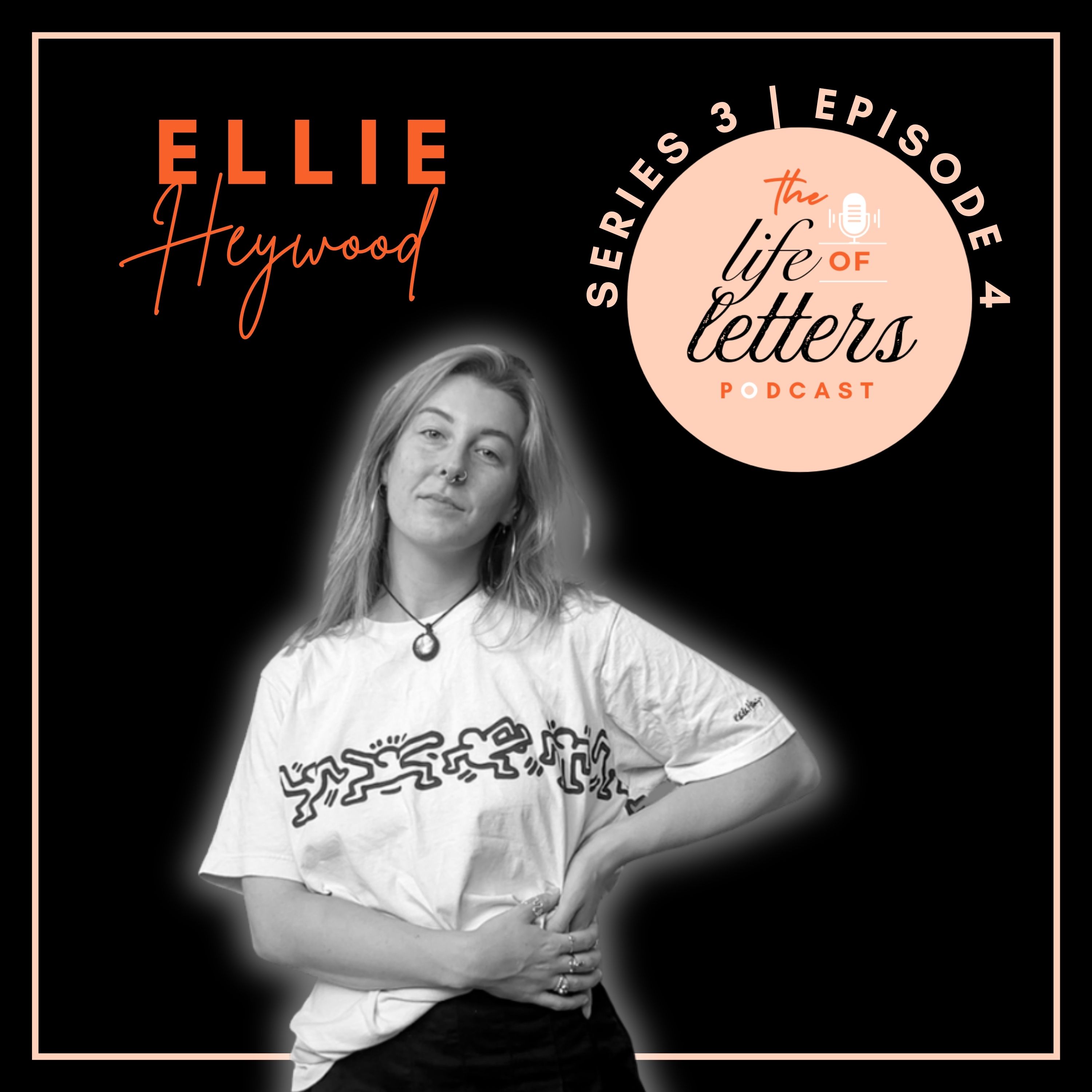
[00:00:39] Speaker B: In today's episode, I'm delighted to be speaking with Ellie Hayward. Ellie is a calligrapher, lettering artist and sign writer based in the uk. Her freelance calligraphy practice under the name Eletta began in 2015 after finding joy hand drawing letters.
With over 10 years in the business, she has worked with clients all over the world on hand painted signs, murals and logo types. Her lettering and calligraphy skills have touched on abstract calligraphy. I'm always going to get stuck on that word abstract calligraphiti. Got it. And now primarily centre around black letter scripts. She teaches calligraphy both in person and online via her downloadable worksheets. Ellie, firstly, a huge welcome to the Life of Letters podcast. I'm so happy to be talking to you today.
[00:01:27] Speaker C: Oh, thanks so much for having me. Happy to talk to you as well.
[00:01:31] Speaker B: So I wanted to kick things off with kind of getting into where your love of letters kind of came from. You obviously cover quite a few different areas of lettering, calligraphy, signs, writing, murals.
How did you get into all of these art forms? What was the spark for you?
[00:01:53] Speaker C: I don't know. They all kind of came both at the same time and, and kind of led on to each other. So I did graphic design at uni and in the first term, this is like almost 10 years ago now.
In the first term we had a teacher called Fred and he taught us all about the anatomy of type and, and we were taking typefaces and drawing them by hand and I thought, oh, this is amazing, this is great. This course is perfect for me.
And I really got into playing with the forms, changing them. So you take like the letter A of a typeface such as Helvetica and he would, one of the exercises was he would try and make us thin down the strokes so it would be a completely different form. And essentially this is how typographers would make a light version of a typeface and a bold version is, you know, you either fatten up the strokes or you thin them down and you get a completely different looking letterform.
So yeah, I really found this exciting and I was drawing.
So previously I'd come from like a fine art background. I'd always drawn and painted and this was bringing me back to that.
I wanted to do a course that was, it would kind of set me up to solve problems and earn money in the future.
So that's why I chose graphic design. But I think I always craved that hand drawn element.
So yeah, doing this in the first term just brought me so much joy. And interestingly, that's kind of where I kind of took off from at university. Like the rest of the course wasn't really what I was interested in as much as the hand drawn element of typography and letterforms, which is crazy really because, you know, we did stuff like coding and various other screen based activities and tasks throughout the three years. And this is what I enjoyed the most, which was the first term, which I think is crazy.
But yeah, so from there I kind of got into, I got into hand lettering and I, you know, the Internet was, it was pre, it was when Instagram was just starting out really.
I think Instagram came about in 2011 and this was maybe 2013, 14 and people were sharing their artwork, people were sharing their doodles.
It was very, very.
What's the word?
Raw, I guess. And it wasn't curated as much as it is now.
And people were just showing their experiments, they were showing process sketches, they were showing various different things. Just a little snippet from their day and their work and what they were doing. And it was really exciting because I found this community of people on Instagram that were doing hand lettering and, and then I saw people doing calligraphy.
Gemma O', Brien, somebody, she's Mrs. Eaves on Instagram. She's somebody who, whose work I saw when I was at university. And I thought, wow, this person's drawing letters, they're doing them at a big scale, including illustration and things like that. And I thought it was so inspiring along with many other people on, on Instagram. And you know, I think I started my Instagram account in 2015 and that kind of just blew up from there. And I found this whole world of lettering, calligraphy, signwriting, and you think, oh, wow, that's cool, I'm going to try that. And it was very, very playful, very organic and it was a really nice way to discover all these different ways of drawing, painting and writing letter forms that I didn't previously know about.
And around this Time as well. I also that the film, the sign painters film came out and I thought, oh, I'm interested in that. I'll buy the film. I think I actually bought it on itunes or something when that was a thing.
And that film really inspired me as it did many others in the, in the sign painting community and like helped with the revival of that craft.
Um, so, yeah, like back in, back in the mid-2010s, I was touching on a lot of different types of hand drawn letters and what started with hand lettering.
And I really love doing this where, you know, you'd, you'd sketch something out and then you'd retrace it and retrace it to refine it. And a lot of my like first jobs throughout uni came this way. People would want a logotype or they'd want something for maybe merch for T shirts. And I would do hand lettering. I'd draw a piece out, I'd re sketch it and trace over it and, and refine it to, to get the logo. And then somewhere along the line my interest changed and I was more interested in calligraphy.
Similarly, sign painting, I touched on that a little bit, did a few, a few jobs and never really got into it as thoroughly as I have done now. But calligraphy really sparked something in me at that time where I think it was the, the ease and, and efficiency of it in that you just, you write the, let the words and it's done. You don't have to retrace, redraw. And yeah, there's something beautiful and raw about that that I really enjoyed. And, and yeah, I think that's what inspired me and sparked that joy that I've carried for so many years now.
It's crazy. I remember thinking at the time, you know, I'd have many different interests in different types of things, but nothing really stuck. And I remember thinking like three years into doing calligraphy. Wow. I've been doing this a long time. I've not got bored yet.
It was a strange feeling and I'm glad that I still feel that joy because yeah, it's, it's so nice when you find something that you're really passionate about and that you enjoy doing so much.
[00:08:13] Speaker B: Yeah, totally, totally. That's so relatable as well. I think for a lot of people it's that jumping from something new, something interesting, something you want to have a go at. Especially when you're creative. There's so many options out there to do things with your hands and create and make. And when you discover that Thing that actually, this is the one that I keep wanting to come back to, and it keeps making me want to practice it, do it.
I think that's a. That's a. A moment for sure, but it's. Sometimes you don't realize it until, like, you say, like, several years later. You're like, oh, hang on.
It's this. This is the thing. But, you know, a huge variety of styles.
And I'm particularly keen to ask you about the group of calligraphy scripts that come under black letters, which seems to be something that you do more of these days.
Do you know much about the kind of history of these styles? What can you tell us about them? And how did you sort of fall in love with them?
[00:09:18] Speaker C: Yeah, I absolutely love blackletter.
It's definitely like, similarly how I was saying that calligraphy is something that's stuck throughout, you know, for close to 10 years now. And I've really not fell bored of it at all. I think blackletter specifically, I feel that way about.
I just think it's so beautiful and there's so many variations of it, and you can. You can mould and change it so much. Like the. The scripts that I do aren't necessarily traditional black letter scripts. I think there's. They're definitely derived from that. But I think the beauty of calligraphy is that you can adapt and change and mold it to your personality and.
And just try things out and experiment. I think that's one of the greatest joys of it, is that, you know, like I was saying about the. When we were drawing letters in that first term of university, you can stretch or shrink or widen the black letter. I mean, this goes for all calligraphy, really. But you can. I find such joy with blackletter because it's so regimented. It's black, white, black, white, black, white. It's very uniform, it's very balanced. And I think there's something so beautiful about that.
It's quite geometric. And I think that's what got me into it to begin with.
So one of the first scripts that I started learning calligraphy with, you know, I got one of those basic. A beginner's guide, too. And I think I got like a couple of nibs, a pot of ink, and it came as a set, and I think maybe someone gave it to me, maybe my dad gave it to me, and he had it from. From another time or something, and. And I think they came with a little booklet, and foundational calligraphy was the. The script that they were teaching you, and it was Just a very basic starter script and it was really nice to learn. I think it comes on the back of, like, you know, you buy a calligraphy pen, it sometimes comes with that included as like, a little Alphabet on the back of it.
And once I'd done that, you know, and I was researching stuff on the Internet and finding out about all these different types of scripts and different calligraphers that were doing them, you know, I found Gothic calligraphy, a myriad of versions of it, and, yeah, blackletter, really.
I don't know, it struck a chord. And, yeah, similarly to that first term in university, I was stretching things, I was shrinking things and seeing other people do the same. And I thought, wow, there's so much scope to this.
Yeah, I really, really enjoyed it. Anyway, to get back to the question, the history of it is, I feel like it kind of gained prevalence in the 12th century.
So there was a script that was wildly used called, I think, Carolingian. That script was kind of dying out a little bit, and people wanted to write quicker, essentially. And, like, I think Gothic calligraphy and black letter was a way of doing that, because it basically is just loads of vertical strokes. And it was really quick for the scribes to get a lot of text down. They were using one pen and they were just maintaining the same angle, bringing the strokes down and then using no curves. It was just straight strokes.
So I think this was more of a texture style. So there's like four main categories of black letter. One's textura, you've got rotunda, which is a more rounded one, batad or bastarda, and fracture.
And they're the kind of four main categories. There are other variations. They're a bit more scripty or, you know, you can have Gothicized italic, but, yeah, textura or textura quadrata is. I think that was the first kind of variation of textura that was.
There was definitely black letter that had evolved from these earlier scripts. But, yeah, from like the 11th to the 14th century, really, there was a lot of. A lot of black letter use. And, yeah, scripts being kind of created mostly. I do think it was to speed up the writing of books, really. And I think, personally, I think it's a really easy script for beginners to learn. For the same reason almost is that it's basically just loads of vertical strokes.
And I think when you're trying to gain control of the pen and control of your hand and arm and shoulder when you're writing, just pull in a single stroke is such a good exercise to measure consistency and Improve your consistency.
And I probably started out with it because I thought it was easy.
And I know that's a little bit of a cop out, but I probably thought, oh, I'm getting good at this quick, therefore I want to do more of it.
And yeah, I think that's probably why I became so attached to it.
And I also just think it's really beautiful.
[00:14:34] Speaker B: Yeah, yeah, I love that. And so tool wise, are you, I presume with these you're using a broad edge pen and inks, but I've also seen you use brushes. Do you use brushes for black letters or is it just more kind of larger scale signs and things and murals?
[00:14:57] Speaker C: Yeah, good point.
Yeah. So it's a broad edge pen for the calligraphy, a metal nib usually. Because you can get a lot more control with the nib.
I'd say like it's flexible somewhat, but not as much as a brush.
So you can really kind of steady yourself against the paper when you're using a metal nib.
And especially for smaller sizes. Definitely a metal nib. Like it's quite tricky to write with a brush at smaller sizes. But yeah, I do enjoy using artists flat brushes as well.
So for calligraphy I usually with a brush I would use a bit of ink with water and it's just a short artist flat brush, which is different to the signwriting brushes that I use when I do sign painting.
So sign writing brushes have quite long hairs, so they can hold a lot of paint and you can pull a stroke for longer when you're writing letters or painting a sign.
But the artist flat brushes I use for calligraphy have much shorter hairs and they're much thicker. Usually you can still get quite thin ones. I've got one here. Not that people listening can see this, but it's quite thin to the point. So the ink of the water kind of holds it, holds it together and it comes to a really fine sharp point at the end.
And this broad edge brush is perfect for creating marks that are way more varied and manipulated than you can get with using the same technique with a pen. So this might be quite convoluted to try and explain, but using a brush and twisting it and using different amounts of pressure, you can achieve a much bigger variation of thick to thin strokes within one pull, if that makes sense. So yep, yep, it while when I. You can do this and manipulate the pen as well and the nib by twisting it.
But the brush lends itself to much gentler movements where you can use the pressure that you put on the Page with. And it flexes the brush hairs. And then this is where I really enjoy using texture in my work, because you can splay the edges of the brush and it'll create gaps where the ink isn't on in the letter.
So, you know, different amounts of pressure. And I think this works much better when you have. The brush is a bit drier.
So maybe just using ink with no water, or like after you've been writing for a little while and the ink and water dries up a little bit, you can get these beautiful marks where you put different amounts of pressure on the brush. You pull it and twist it, and it leaves these gaps where the brush hairs aren't anymore. Because the way that the ink falls and the hairs play out, it means that, yeah, you get this negative space where there's no ink. And I think because you see the movement that your hand is made, that your arm has made with the brush, there's something so beautiful about that that you don't get with a metal nib necessarily.
And I think that's, yeah, a really nice tool that I've been experimenting with a lot, really, over the last few years, especially as I've been like, manipulating the pen by twisting it a lot to get thick and thin strokes within the letters.
It's kind of taking that to the next level by using the brush and you get with that the texture that comes with the brush marks, which is so beautiful.
[00:18:53] Speaker A: If you're enjoying this episode and fancy supporting the podcast, you can literally buy us a coffee. Head to the link in the show notes. It's a lovely way to help keep the life of letters going.
[00:19:03] Speaker B: Thank you.
[00:19:04] Speaker A: Now, let's get back to the episode.
[00:19:08] Speaker B: Ah, I love it. And I love the way you've explained it because it does make perfect sense, even though we can't see it literally in front of us.
It also makes me want to go and have a go. It kind of leads me straight on to the next question, which is you mentioned there is, you know, black letters is a great place to. To start for beginners, but within the styles that you teach, how would you suggest people begin learning? I know you've got some amazing downloads.
[00:19:34] Speaker C: Would you.
[00:19:36] Speaker B: Would you suggest people begin with the nib or a brush or where. Where would you be? Get pencil? I don't know.
[00:19:46] Speaker C: Yes, yes, pencil.
Honestly, I, I wouldn't go for the brush first just because, I mean, obviously everybody's different. You might find the brush really easy, but I think the brush is way harder to control, especially with black letter.
Unless you're working at a really large scale.
Yeah. Like I say, I've done some classes and workshops where people way prefer a brush than a pen. They just. The pen doesn't. Something doesn't click with them, whereas it does with a brush.
But if I. If you want to start learning calligraphy, I would definitely say get a pilot parallel pen. Not sponsored, but they're honestly amazing for beginners and.
And professionals. I do believe that they're really innovative design in that it's basically a cartridge pen. It's a. It's a fountain pen, but it's got a broad edge tip and they come in a variety of sizes. And I'd start with the biggest size, which is 6 millimeters. And because you don't have to keep thinking about topping up the ink and your ink flow, and that's like a whole other part of calligraphy. You can concentrate on the letterforms and concentrate on the practice. And I think that's invaluable, really.
And it literally is just practice. It's just pulling those vertical strokes and trying to maintain consistency.
I definitely. Yeah, definitely. For the nib first, rather than a brush.
[00:21:12] Speaker B: That's brilliant. And I think knowing the tool is always going to be a really handy place to start because once you've got that and having a go at the letter forms and practicing, I presume you would always encourage people to start with some drills. But you tell me, where would you take people on a sort of beginner's version of black letters?
[00:21:34] Speaker C: Yeah, you're totally right. Definitely. Drills, I think.
Oh, you mentioned pencil in the last bit. I think that's also a really good tool to use. So there's this trick that you can tape two pencils together and it creates two points, which acts like a broad edge and you can see the skeleton of the letter. If you. If you write with this tool, all I would say is maintain the same angle, which is 45 degrees, and start practicing with these, either a broad edge pen or this, two pencils, and just start pulling strokes. Honestly, the first thing is getting used to that, getting used to the broad edge because it's completely different to a normal pen. If you've never done calligray before in your life, it's a completely different way of making marks. You don't necessarily push as much as you pull. I feel like with black letter, with texture especially, it's always pulled down or across.
You rarely kind of push the strokes up. It's always pull. And I think the same goes for sign writing, to be honest. Mostly yeah. So definitely drills. Definitely.
Any broad edge tool is a good place to start. Honestly, I think it's just getting going is the first thing. You don't need the most expensive equipment. You can even look at an example or a template and use one pencil and just draw the strokes in a single line just so you know where they go, which order they go in, and just kind of cement in that knowledge in your.
In your memory.
Like, I don't look at examples to know where the strokes go because the alphabets are in my head. They're already there.
And part of it's muscle memory, and part of it's just knowing what should go where.
And that's all just because I've looked at them so much in the past that it's ingrained in my head.
[00:23:41] Speaker B: That's so helpful. This is a total side comment, but there's something really beautiful happening where Ellie's sitting. There are. There's some lines coming through her shutters and the light shining on her. And it's creating like this calligraphy guideline, which looks.
It's so timely as you're talking about the broad edge pen and there's these, like, thicker lines coming down.
It's just geeking out about shadows, but I thought I'd mention that.
Right, back on track. What's been your favorite project to work on? So obviously you do these really large murals. You do signs, but then you do the smaller kind of calligraphy. Do you have you got a project that kind of sticks out in your mind.
[00:24:29] Speaker C: It's interesting. Like the one project that. That comes to mind that I absolutely love doing and I. I still love it years later. I think I did this in 2021 is the big mural I did saying make and believe for a company called Lord Whitney up in Leeds.
So it was a mural that's on the side of their building for the creative studios. So the studio is called Scott Hall Mills, and it houses a range of creatives and leads doing stuff like photography, weaving, graphic design, painting, and Lord Whitney do a lot of set design.
They're like a. They have the top floor in this building. And so, yeah, they commissioned this and it took me.
I used brushes and the wall was old brick, so it was super, super textured. Not very smooth to paint on. But yeah, I think it took me like just over a week to do bit by bit. And it was one of my favorite projects.
The sun was shining throughout the time, which obviously helped a lot.
And yeah, looking back, it just. I feel like it's. I really achieved Something like I'm really happy that I did something at a large scale and I think it's always something that I wanted to do. Like I'd done a few big murals with my, my then collective Goat Collective, which me and a few friends set up at uni and we'd done some collaborative murals but this is the kind of first one that was typography based. It was letter based. I was super happy I got to paint big letters. So yeah, yeah, I'm really proud of that one.
[00:26:08] Speaker A: Yeah.
[00:26:08] Speaker B: What a, what a different experience working on something so, so large but also quite challenging when the, the surface is just unlike anything else. Right. What would you love to do that you haven't yet?
[00:26:24] Speaker C: Paint Black Letter everywhere?
Yeah, I'd really love to see more like Black Letter out in the world.
I know I've done like a, a fair bit of kind of self initiated projects and also some kind of commissioned art projects where like I painted a chair as part of a collaboration with a furniture company in Leeds and I've painted a pair of Converse in collaboration with hip store, also a Leeds. And I think painting this was when I was doing my abstract calligraphy.
The kind of deconstructing black letter forms into abstract shapes and patterns and, and I really, really enjoyed that part of what I was working on at the time.
And I really wanted to just put it everywhere. I wanted it to be on everything that I saw. Furniture, clothes.
Yeah, anything that I could like I made cushions and, and I've made scarves and, and yeah, it, I really just, I, I love the aesthetic of it so much. I think it would be nice to have it elsewhere. Like I'd love to do, I'd love to do more murals that, that celebrate black letter in some form or hand painted fascias and shop fronts. Like there's so many different styles. It's so versatile. It can be super friendly or it can be super harsh. It can be really metal and gothic and, or it can be, it can be really warm and inviting depending on how you construct it. And yeah, I just think it's really beautiful and it should be everywhere. So yeah, more projects with, with Black Letter in. I think.
[00:28:08] Speaker B: I love that, I love that. I love the way you talk about it as well because yeah, I think people have preconceived ideas about how, what a black letter might look like and what, what that says, which kind of goes back to I guess your kind of graphic design mind and you know, what message are you trying to get? And I guess you have to think about this when you're creating murals and signage, and I love that you. It is so versatile that you could have that really kind of gothic, traditional, historical side of it coming through, or you can use something that's softer and gentler and inviting. I think those are great kind of opposites that you can draw on from one group of styles, which you can create by hand and I can. That's the beauty of calligraphy, I guess, in all. In all ways.
[00:29:08] Speaker C: Yeah, absolutely. It gives it so much character. Like, each. Each calligrapher has a specific. I mean, it's their. Is there in hand. It's so unique that even if they're doing the same script, it's going to look different. And, yeah, there's something really beautiful about that. And, yeah, I think it's got so much scope for what it could become and.
Yeah. What it can be used for. I think it would be great to see it out in the world more.
[00:29:33] Speaker A: Yeah.
[00:29:34] Speaker B: Yes. I think you need to make this happen.
Lead the charge, Ellie. We'll all follow.
So this series, we're asking guests the challenging question. What is your favorite letter of the Alphabet and why?
[00:29:51] Speaker C: This is easy. This is not a challenge.
Great.
[00:29:57] Speaker B: You're the first.
[00:29:58] Speaker C: Really?
I mean, don't get me wrong, there's, like, a few favorites, but my ultimate favorite is the lowercase g.
Specifically lowercase. Because that double story, there's so much versatility to it. You can. You can really make it anything you want. Like.
Yeah. It's so beautiful. I feel the same way about it as I do with black letter.
[00:30:24] Speaker A: It's just.
[00:30:26] Speaker C: It warms my heart.
Yeah. I actually started a page years ago.
What did I call it? Links and loop tails on Instagram is pretty defunct now. Like, I used to basically share other people's lowercase GS that they'd created inspired by the 36 days of type. You know, Nina and Raf. I used to basically, yeah. Just repost other people's artwork to celebrate the lowercase g. And it was just the page about that letter and the variety of styles and.
And compositions that people come up with and design. The lowercase GRS is incredible. I think it's.
Yeah, it's. It's crazy. It can be super sexy or it can be super harsh and. And, like, angry. It can. There's so much character to that form.
Yeah. I think it's beautiful.
[00:31:25] Speaker B: I love that.
Oh, my gosh. That's great. You've even celebrated it with a page. Maybe that's our next step, to invite people to create.
I mean, that is niche at his best. It's. Yeah, I love that. Building a community around a single letter.
Oh, Ellie, it's been so lovely talking to you today and thank you so much for all the advice and tips. It's basically me just asking how on earth I get started with Black Letter. But hopefully it's been a really, really useful conversation for other people as well. But if they want to find out more about obviously working with you or, or connecting with you, you have a website called Eletta Art. So E L E T T R dot art. Or you're on Instagram at E L E T T R as well. But as always, we will put the links in today's show notes.
But just a huge thank you from me, really.
[00:32:26] Speaker C: It's been really nice. Thank you for having me on. It's been great.
Yeah, I really appreciate you asking me. So, yeah, it's been a lovely conversation.
[00:32:33] Speaker B: Thanks, Ellie.
[00:32:35] Speaker C: Thanks. Bye.
[00:32:38] Speaker A: Thanks so much for listening. This series would not be possible without my producer, Heidi Cullip, and kindly supported by Speedball Art, champions of creativity, connection and craftsmanship. If you've enjoyed the episode, don't forget to subscribe, leave a review or share it with a fellow letter lover. Until next time, keep listening, keep creating and keep celebrating the life of letters.