Episode Transcript
[00:00:01] Speaker A: Welcome to series four of the Life of Letters, a podcast exploring the art history and future of calligraphy, handwriting and all things letter related.
I'm your host, Laura Edrilyn, a London based calligrapher with a curious mind on a journey to connect with artists, historians, experts and letter lovers around the world. This season is once again kindly supported by Speedball Art, who continue to help celebrate the tools and traditions that keep the written word alive.
Don't forget, if you want to find out more about the guest, the podcast or me, check out the show notes.
Let's dive into the episode.
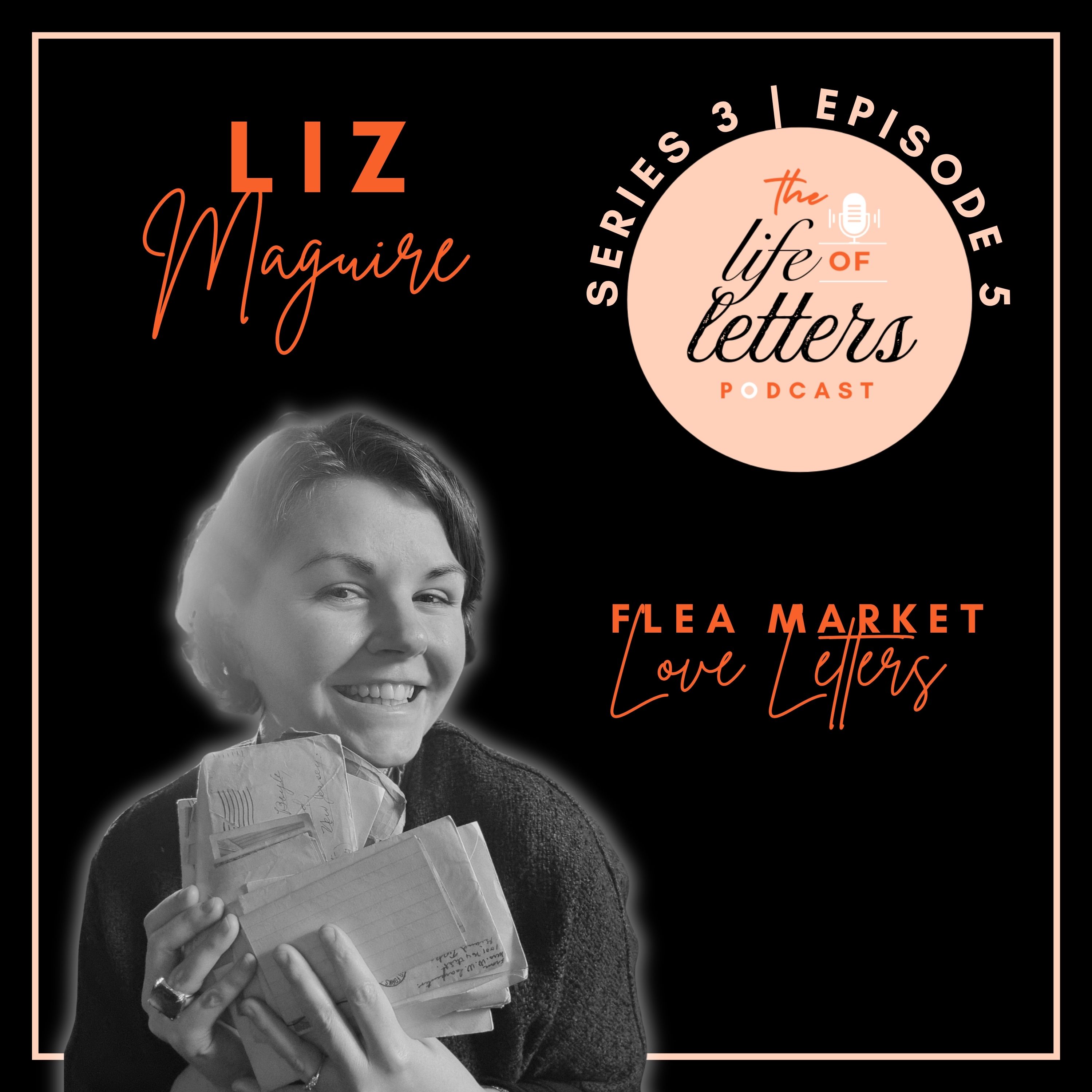
[00:00:39] Speaker B: In today's episode, I'm delighted to be Speaking with Liz McGuire, creator and curator of the digital Love Letter archive flea market. Love Letters. Since 2017, Liz has been sharing her growing archive of thousands of real handwritten letters. A passionate advocate for the preservation of personal, personal correspondence, Liz has dedicated nearly a decade to celebrating the history and future of the handwritten letter.
[00:01:05] Speaker A: Wow.
[00:01:05] Speaker B: You are so aligned, so in tune with what we're doing here. So, Liz, firstly, a huge welcome to the Life of Letters podcast. I'm so excited to be talking to you today.
[00:01:15] Speaker C: Lara, thank you so much for having me. I'm delighted to be here. I think if you put into the universe a podcast that's perfect for me, it would be Life Letter. So happy to be here for sure.
[00:01:25] Speaker B: We've made it, We've found each other, which is lovely. Right. This is what it's all about. Connecting across lands and wherever people are around the world doing their lovely things with letters.
I am fascinated by what you do, partly because it's such a special kind of underrated world. I think for a lot of people who do love this sort of thing, but and don't necessarily know where to even start or look for things.
Can you tell us a little bit more about how your wonderful archive started?
[00:02:02] Speaker C: Sure. So, thank you. First off, you can call me anytime you like to tell me such lovely things.
I know we had to schedule this call, but please feel free.
Yeah, my hotline is always open.
No, it's wonderful to hear from people who connect with the project. Project. So the project started in 2017.
We have over 3,000 letters in the archive and all of those that have been transcribed and shared to the website. About 300, 350 last count. I transcribe myself.
So I find the letters from flea markets, photograph them, store them, and then transcribe to share on the website. So I've been doing that since 2017.
[00:02:41] Speaker B: Wow.
What made you start it?
[00:02:46] Speaker C: So I always loved reading I was a big reader. Am a big reader. And when I was in. I think I did the math ages ago. So it was like 2009 or 2010.
I went to a flea market with my mom. She gave me $20 to leave her alone because she's a jewelry collector. So she went off to do jewelry. I spent the $20 on absolute tat in the first, like, five minutes I was there.
And then I found a shoebox full of.
It was literally a shoebox full of yellowed paper that said letters $5 on Sharpie on the outside of the box. So I went up to my mom and I said, please, please, please, can I have more money? And she was like, okay, show me what you want. I showed her and she. She saw it as a great summer project for me, which it was, bought me the box of letters. They were from 1926. They were the Raymond and Marie letters. They aren't up on the website at the moment, but I do have them with me. They were the first collection that I ever was gifted by my mom. She got them for me and it really kicked off the love of what I do.
[00:03:49] Speaker B: Love that. I love that there's stories and energy and.
And all sorts of lovely things, right? Romance, humor, all sorts of emotions that must come out when you find these letters, in your opinion, sort of. What about handwritten letters make them so special?
[00:04:12] Speaker C: So we all just went through. I don't know if you're familiar with it, but we all just went through this, like, global pandemic thing. Oh, yeah, it was a really small blip, tiny thing. It was just a little thing. But in the process of that, a lot of people felt, and I myself felt it where it was sort of like every day was exactly the same.
But the difficult piece of that was that you didn't know when that was going to change, right? So you didn't know when you were finally going to be able to kind of get out of the routine that you had set.
So at that time, a lot of people found Flea Market, my project, because I think people throughout history are always looking for something that tells them the end of the story.
So in looking at the flea market archive, you can see letters that have a start, a middle and an end, right? So we get. We get the letters when they are.
They might be 30 letters, they might be 50 letters. But I don't. I'm not a genealogist. I don't have the skills for that, nor the. Nor the research capabilities. I've worked with them for the. For the Archive in the past. I'm hugely impressed by them, but I don't put the story outside of the context of the letters. So what I'm saying here is that a lot of people were looking for, how does this end? In the last, you know, during the last five. In that five years kind of window, they were sort of saying, you know, this is all well and good, but what. What ends with this story? And so they turned to things that had predictable endings. So they knew that World War II, they knew the big days, they knew all the sort of battles and things and what it would fall into. They knew when the Great Depression happens. So, you know, when you're reading a letter before and when you're reading a letter after.
So a lot of people gravitate towards the stories, but they gravitate as well to the fact that the people in the letters are living, quote, unquote, unprecedented times in their own way. Because you're seeing a letter that's written a year before the Great Depression, and then you're reading that same person, if you're lucky, you're reading that person two, three years after that time, where these historical things are happening and they're historical in their time, but they're also just there every day.
So it was a. It. The project definitely took a shift away from the kind of the romance of, you know, the forgotten love letter in the back of the closet drawer and that sort of stuff. And it became much more, I think, for me and for readers about the stories and being able to sort of map a story from then on to.
[00:06:42] Speaker B: Now, so there's a real sense of historical kind of context. And when these are being written and you can connect to, I was going to say characters, but they're not, are they? These are people who have written them and lived and breathed on the paper and held a pen in their hand. And there's something quite sort of visceral, you can feel it, I'm sure, with the letters. And then. So when they go up on the website, are people kind of waiting for the next letter or how do you do it? In what sort of format does this work for people coming across the archive?
[00:07:19] Speaker C: So originally, the archive started as a Tumblr blog and an Instagram page that was back in 2017.
And I have a. I have a background in marketing that I've since gotten the degree and work in now, in the eight years or so that I've been doing the project, seven or eight years.
So it started as an Instagram page where I posted envelopes Because I thought that's all that people cared about. And for about four years, I had something like 28 followers, and four of them were my mom's friends. So, like, it was really just me obsessing about mail and regularly transcribing these letters that no one was reading, reading, but I was doing it. Then during COVID I was given the opportunity to be on a podcast called what Should I Read Next?
Which was a really big opportunity for the project.
And in a day, you know, the account grew and grew and grew overnight because it had a big readership. So that was when people really started identifying and you said characters. That was when people really started identifying with the stories of the letters. And so in its heyday, I would say kind of during that stage when everybody was home and everybody was on their phones all the time, that was very much the case where, like, I would put up a letter every day and people would read them, and there was interaction. Now in my business life, I see social media is declining in a way. Use of it is declining in a way. And so I'm encouraging people more to subscribe to the newsletter. I send it once a month, and that kind of has a digest of letter news. This podcast will be there.
It has kind of, you know, little tidbits and stories from around the place, but it also has letter updates from the archive itself. So it's all about evolution and adapting to how to tell the stories. But there definitely was a time where people were kind of waiting to read them, and now so much. I don't know if they are reading them piecemeal or maybe they're reading collections at a time. But I do know that I can definitely plot what it was like and where it is now.
[00:09:24] Speaker A: I love it.
[00:09:25] Speaker B: I love it. What an amazing resource for people. What a way to preserve some incredible moments in time. They're like little time capsules, right? It makes me think about the people who wrote them, who may never know that you've done this lovely thing to kind of treasure their words and their. Their journey and their story.
But I wanted to know, are there any sort of special letters that you can tell us about? Any special stories that kind of really stand out to you?
[00:09:57] Speaker C: So, yeah, there are definitely a few. So I'll. I'll say that this year was the year that we. I featured kind of the oldest letter. I think I should have done my research, but I think it's 1858. It's pre 1860s.
Now I'll be wrong on my own. On my own archive but it's pre 1900s.
And the reason that that is a significant letter is because I have this sound. I have several of them. I have. I have letters from the 1840s, but they are literally like legal tracks, because let's think about the 1840s. There wasn't incredible rates of literacy there. People were farmers, they were. You know, the Industrial Revolution was happening. Wherever that falls in history. People were working to live. They weren't necessarily, you know, sitting down to put all their thoughts on paper. So a lot of the older letters that I have are very transactional.
So it's very like, this is the number of cows I want to sell for this many pennies, that sort of thing. And this letter that I found earlier this year, which would have been earlier in 2025, is just a very unassuming letter. It's a brother to a sister, I believe, kind of from the context. Again, I don't have much more than kind of what's on the. What you can infer. Brother to a sister, basically, talking about life on the farm, you know, wishing that the sister and the family could come visit. And there's a particularly poignant part in the middle where they talk about just how they hadn't. The writer hadn't sent letters for a while because he'd been very ill, and he was pretty sure he was going to die, and he hadn't died, and, you know, just kind of dropped that into the middle of it. So it's a. It's a very. Like you mentioned there, a time capsule is sort of a captured story.
And there's another letter I have, which I love, which is from November 11, 1915.
I can remember that because it's my birthday, not 1915. I'm not that.
[00:11:55] Speaker B: Wow, you look great.
[00:11:57] Speaker C: I know I'm Benjamin Button, but November 11, 1915, and it's a guy writing to his sweetheart about how he's living in a boarding house. And in the boarding house, obviously, it's run by a husband and wife through the context of the letter. And the wife had misplaced a handbag behind a couch cushion, and she had accused everyone of stealing the handbag. And then it had been found. But to spare the wife's embarrassment, they, like, put it in the hallway. So someone would trip over it and be like, where did this come from? It wasn't stolen at all. And so the. The letter is. He's basically like, I asked them where they found it, and they were like, what are you talking about? It was never lost. So it was just funny.
110 years ago. But it was this guy and he's like, my landlord said that, you know, one of the tenants stole the purse. It was really. She forgot where she put it. And then they tried to like trick us into thinking like, it was never lost.
[00:12:55] Speaker B: We've got them. They'll never guess. Yeah.
[00:13:00] Speaker C: So it's just like those are, you know, 110, 150-year-old stories.
[00:13:07] Speaker B: I just, it's, it's amazing. And what's nice about it is that they're everyday kind of conversations. And I guess the landscape of writing letters, as you say, has probably changed quite a bit, which I guess you can see through the archive and.
[00:13:23] Speaker A: Yeah.
[00:13:23] Speaker B: From that kind of trade based kind of communication, like, let's just get this done. This is all kind of transactional to, oh, I could actually tell you where I went today and what's happening in my life. And you might want to know that because otherwise you won't know that unless we see each other, which may not be possible if you're living, working, moving around in all sorts of places. So there must be something very special throughout the kind of years of writing letters where that evolution of letter writing has changed. Can you see that through the archive?
[00:14:04] Speaker C: I think you would be surprised how modern a lot of the antique letters feel.
Again, this goes to the point of sort of we're always looking for a story to map our story onto common themes come up. Love, stress around jobs, illness, you know, accommodation, marriage, partnerships, self confidence issues. All of these things come up in a letter from 1912. Like they come up in an Instagram post from this afternoon, if you're, you know, honest on Instagram. So it's, it's very much a case of. And I don't know how Randy, I can get here, but it's very much the case of like, your generation sometimes thinks that you're the first generation to, you know, hook up. You think you're the first one, like, oh my God. But you really have to think about the fact that like you exist because your parents and your grandparents and everyone. Yeah, yeah, everyone. It was happening, it's been happening. I hate to break it to you, you didn't invent being in the backseat of a car.
[00:15:12] Speaker B: It's not the first time, it's not.
[00:15:14] Speaker C: New, it's not new. And that's what a lot of these letters are, which is like the 1920s, particularly with such a progressive era for, in some context for women and for gender politics and for sexual politics and all this sort of stuff like These are letters that are over a hundred years old.
You get a lot of references. There have been several references to pregnancy scares. There have been several references to sort of, you know, particularly in the military letters, to allusions, to intimacies, sort of on and off the page. Like, these are. These are not letters which were ever meant to be read by anybody but the person, person who's receiving them.
So we. I want to bring this back to the idea that they're real people. So because they're real people, I ask the people who read them understand and respect that, because it's not. I grew up loving the Notebook. It's one of my favorite movies. Like, these are not Noah and Ali. These are not characters that you can just make a decision of, oh, she should have gone with James Marston's character over Ryan Gosin's character. Like, these are real people.
And there have been instances where relatives have found the project, which I'm aware is always going to be a possibility.
So as long as the project itself. I don't make any money off of flea market love letters. Any money that comes in through the Write More Letters fundraiser gets donated to a charity called Hope for the Warriors.
I fund everything personally from the website to sort of the Man Hour to either buying the collections or being gifted the collections. Like, I don't make any money off of this.
I don't want to make any money off of it. And in that principle, I just ask that people understand. This is a social history record.
It's available for anyone to see. But it is real people and real stories.
[00:16:54] Speaker B: Yeah, yeah. Really important, actually, because you are reading something, as you say, that wasn't ever meant to be read and you know, these are personal letters and I guess some will be filled with quite tragic, quite sad, quite shocking things and I guess there's some things which will be easier reads that maybe not so much happens. I've read some of my old letters and they're incredibly dull and boring.
But yeah, it's kind of just thinking about how people consume letters, how people read them and you know, when they would have been written, where they would have been written.
I guess it's quite a nice idea to just explore, obviously the wider picture, the social history, but also that the lives of each person.
[00:17:47] Speaker A: Fancy joining me for a calligraphy workshop?
[00:17:49] Speaker B: Or course, soon.
[00:17:50] Speaker A: Whether you're a total beginner or want a mindful creative boost, I'd love to see you there. Check out what's coming up via the link in the show notes. Now let's get Back to the episode.
[00:18:02] Speaker B: In terms of the kind of future of the archive, is there anything that you would want to do with it? Any sort of big dreams, big hopes, more letters, more anything?
[00:18:15] Speaker C: So I have played around with writing a book.
I've played around with what that would look like again.
It's so strange, right? So they're not my words.
So because they're not my words, I have to find a way to present them with my words. So it's a. It's an unusual challenge. Like, it's. It's as all writing is, you come to it with kind of being like, you know, what do. What do I want to communicate with this? And I suppose I tread the line where it needs to be done respectfully. But I also need to make sure that I'm including ones which are quote, unquote, sensational ones, which are interesting.
And I've had quite a bit of conversation around this with. With people close to me and that have involved the archive. It's sort of. There are some series that people read and they're sort of like, oh, you should definitely, like, you know, like, write about this one and include this and talk about this. And that might be one that I didn't really connect with when I was transcribing. Like, there. There are instances I said that I used to say this in interviews all the time, and then I kind of stopped saying it. But I'm getting older, so I'm fine saying it. I hear the voices. So I hear the voices of the people in my head.
And so there are some times where I'm writing, like typing or transcribing a letter, where I just sort of.
It's not that I feel I become the person, but I hear the person's voice in my head. And there have been instances in over 300 letters where we just wouldn't be friends, we just wouldn't get along.
We're not.
[00:19:50] Speaker B: We're not. Yeah, we're not meant to meet.
[00:19:52] Speaker C: Yeah, yeah. There's just times where I'm like, you know, what if we met in real life? I probably. I'd probably, you know, I'd finish my drink really quick and go back up to the bar. Like, that would be kind of how this would end.
[00:20:03] Speaker B: But.
[00:20:03] Speaker C: And then there are other instances where, you know, I would love to go back in time, Midnight in Paris style, and hang out with some of these, particularly, let's call. Call Spade a Spade. Particularly the women. The women I would love to go back with. And several of them, not all of them, several of them and go back and hang out with them and just be fascinated by them in, in person as well. So yes, I'd love to write a book for the project, but there is kind of. That's a long story ironically.
But yeah, I take every day as it comes.
[00:20:35] Speaker B: Love that, love that. And so the letters that come to you or that you collect, are they from all over the world? Like do you end up with letters that have, I mean, I don't know whether you transcribe from different languages or is that an area that hasn't quite been tapped into? Are they all very location based?
[00:20:57] Speaker C: Yes. So it's kind of, it's a yes and a no. So a majority of the letters are North American, if not 80% to 90% are North American.
The Brits and the Irish like to burn their secret letters.
So there are significantly, I mean, I live in Ireland. A lot of people always say when I do Irish press and stuff, they're always like, we'd love you to talk about Irish letters. And I'm like, I have some postcards.
[00:21:27] Speaker B: Yeah.
[00:21:28] Speaker C: Like, I'm way more likely to get Johnny from New Jersey talking about his sweetheart during World War II than I am the equivalent here. So like, I would love to say that I've got some letters.
I go every year to a trip with my pen pal friends and one of the years we were in Berlin and they stayed on after me and they went to a flea market and they sent me some letters in German that they bought at the flea market for me. So like, I have instances where letters are international, but the majority would be North American.
[00:22:00] Speaker B: And is, is your hope that you would keep getting letters sent to you or are you vetting them and, or just, you know, how does that system work?
[00:22:12] Speaker C: So I don't invite donated letters.
I, the letters that I have that I say are gifted to me are gifted by friends and family.
It's sort of like, you know the old joke about when you were a little girl and you said you liked owls and then every year after that your auntie bought you something with owls on it.
Like that's, that's me in envelopes. And like, thankfully I still really like envelopes, but it's that sort of where I am with that. I have once or twice accepted a collection of donated letters. There was one person who got in touch the beginning of this year that they were aware of a collection of letters which had been used for an art installation which was going to be scrapped after the installation ended.
And they, they didn't Want the letters. But they felt that this was this collection of letters anyway, that got sent to me that ended up taking, like, six months. It was two different parcels. It was a very patient woman in the UK trying to get them to be. But. So it's. It's very rare that I will accept, because people do want to do that. People do want to say, you know, I'm cleaning out my great aunt's house and I have her letters. Do you want them? And I don't take personal letters because personal letters are just that. They are personal.
So in the context of the archive, everything that I acquire is third party in best instances.
So there isn't that. That emotional layer to it.
[00:23:42] Speaker B: Yeah. They've been kind of put into the market, as it were. So it's. Yeah, yeah. It's been released from the family or the attic or.
[00:23:51] Speaker C: You have to remember, like, this is the thing about what I do and it's not the thing people sometimes want to hear. When you go to a flea market or an antique store and you're going through, like, a box of old Polaroids or like the black and white pictures and you're, like, going through and you're like, oh, I love her clothes and I love, like, this family. Like, not all of the people in those pictures were nice or good.
So there's a reason why things go, as you said, go out to be sold or go into circulation. And yes, there's the romantic idea that, you know, this box of letters, during a move, got misplaced and it's going to be found in a thrift shop and then it's going to be returned to the family and they're going to love this because, you know, they didn't know all these details before. That's the ideal. And then there's the other world where you are the sole executor of an estate and you walk into an office that's full of paper and you just shut down and you throw everything out. That's very realistic. There's also the world where you are trying to get your family to take that stuff and they don't want that.
What do you do about that? There's the world where the person was difficult in. In life and so what do you do with their things that, like, it's. It's very easy to be romantic and think these are wonderful things that are out into the world, but you do have to also kind of be aware that it's not all love stories that are out there.
[00:25:22] Speaker B: Yeah, yeah. Gosh, it's so True. And actually I think it is a massively challenging thing to do, to let go of something.
I mean, you know, from our own, my own experience, it's kind of going through. We've got old photos of family. I don't know, we're still kind of working out what that name was scrubbed out on the back of the picture or whatever it is. And. Oh, old letters, which, you know, sometimes you don't even know if you should be reading them or shouldn't be reading them or should you be keeping them.
But also you don't want to just throw them out. There's something so special about them that you sort of. They're almost, you know, a photograph captures a visual representation. The handwritten letter is this beautiful word based kind of image of who that person is. But I, yeah, I think it is a really challenging decision to make. I mean, there's maybe there's things that families and people can do with their letters and there's something.
[00:26:25] Speaker C: There are, there are postal museums that I'm aware of that get inquiries daily about collections of letters.
[00:26:33] Speaker B: Wow.
[00:26:33] Speaker C: And they don't have the capacity to take them.
[00:26:37] Speaker B: Yeah, there's so many.
[00:26:39] Speaker C: We have to look at this as not necessarily a scarcity problem. Like when I see a collection of letters at a flea market and it's $150 or $200, I'll spend that. I don't have that to spend, but I'll spend that because I can't go to Marks and Spencer's and buy this off the rack. Like, it's not, it's not the kind of thing that is in the regular op shop or the regular charity shop. Right. It is.
When I find what is the meat and potatoes of flea market archive. I have to buy it, or I choose to buy it. But in that same sense, I get a lot of feedback on pieces of media that I have out there about how to archive your own letters amateurly. So how to store them.
I get messages several times a year from people who are saying, like, what should I do with these family letters? And a good suggestion for that is if you are struggling with what to do with the originals, you know, scan them, scan them and create a photo book. And then ask anybody in the family, you know, do you want a photo book? You can get them printed for €20 on Google. Like if, if it's going to be a case where, you know, you know, people may want this, but they might not want 300 pieces of mail.
You can. And a lot of the time I'm In a real honest. I must add some truth serum this afternoon. A lot of the time, people aren't aware of the work that goes into transcribing them, so they then start to get really frustrated because you have to read difficult handwriting and you have to, you know, set it all up and all this sort of stuff. And I've been doing it for seven or eight years, so it's. It's part of my routine, but it is. That does tend to be one of the reasons that people don't do projects with the letters, because of the scale of it.
[00:28:31] Speaker B: You've just. Yeah. You've just made me very curious around what you do with letters that you can't decipher. Like, are there. Have you had letters that have such awful handwriting? Such difficult handwriting? I should say the handwriting might be nice, but you might not be able to read what it says.
[00:28:49] Speaker C: There are tons of things that I can't read. There are tons of things that I can read. Like, the flea market archive is littered with typos because I am a recovering English major that would. That does still keep a letter to the right of her and type reading it as I go.
And unless Google tells me something is really, really wrong. Like, there's. I've had journalists who have done pieces on flea market before where they've come back and they've been like, is this word. You know, does he mean in this context or that? And I just have to be like, just put SP next to it, bro.
[00:29:22] Speaker B: Who knows? Yeah.
Your guess is as good as mine. Yeah.
[00:29:27] Speaker C: 20, 19.
[00:29:28] Speaker B: Yeah. Yeah.
[00:29:29] Speaker C: Unless I'm gonna dig it out. Like, it's.
[00:29:31] Speaker B: It's.
[00:29:31] Speaker C: You have to release the perfection of it. And if you can't read a letter, what I do, and I'm lucky, because I have the audience for it, is I like to give it to the audience. So I'll make a post about it and say, you know, what do people think this surname is? Those are. They always bring people out of the woodwork and very rarely do we come to a concise conclusion.
[00:29:53] Speaker B: Yeah.
[00:29:54] Speaker C: Where I'll be like, what is the surname? And people will be like, I think it's Smith. I think it's down. And I'm like, again, no real clarity here on this.
[00:30:01] Speaker B: Yeah. Yeah.
It's lovely, though, that there's elements of that that are not clear. You know, that's just human existence, isn't it? It's imperfect. It's, you know, open to interpretation. It's. We'll never know the answer, which drives people crazy. But it makes for the best stories.
[00:30:24] Speaker C: I like not knowing if they get married. I like not knowing if he dies in the war. I like not knowing these things. And I wouldn't do what I'm doing if I didn't enjoy just getting six letters of a woman's summer when she was, like, in her 20s. If I, if I wanted to sit down and have her whole life story. And I have utmost respect for the people who do this and who can map it out and do all that kind of stuff. And I'm working with people who are helping me do that in the context of the book. And, like, there's, there's, there's a place for it. But I love the snapshot of this time and the time you get with them and then you, you.
It expires. Yeah.
[00:31:07] Speaker B: There's also. It's like when a film comes to the end, or, I mean film maybe they always seem to kind of put a lovely bow on it for the most part, the ones I watch anyway.
But also TV series and things like that where they only dip their toes into sort of various moments. And you're like, oh, no, I've got to wait for the next. Or I've got to wait for is it ever going to come back? Which is great.
[00:31:30] Speaker C: So obsessed with knowing the ending. That's the thing. That's what I come back to this idea about when we were looking for the stories. And like, you're looking for an ending because you don't know how your own story goes.
So you want to know that he comes back from the war. You want to know that after you've read 28 letters of them talking about their engagement that they do get married. You want, you want this conclusion because that's satisfying, because it tells you you will have this. You will have a story that has a beginning, a middle, and an end while you are in your middle.
[00:32:07] Speaker B: Yeah.
[00:32:07] Speaker C: And so there's a. There's that. That people really love. I. There are people who love the handwriting, the paper, the voyeurism. Like you. I brought it up a couple times, and you've mentioned it yourself, kind of like, why do I think it's okay to read other people's mail?
And I have to be very confident in that opinion because I'm. Not only am I reading other people's mail, I'm putting other people's mail on the Internet.
[00:32:36] Speaker B: Yeah, yeah, yeah. Sharing it with as many ey. Who want to see it.
[00:32:40] Speaker C: And it's, it's very much a case of, you know, your Just your comfort zones and where you go with things.
[00:32:47] Speaker B: Yeah, it's a really special archive which gives you lots of things to kind of dip into and explore.
My, my kind of final question to you. I mean, I could ask you many more. So this series, we're. We're asking guests to let us know what your favorite letter of the Alphabet is and why. So a letter in the context of the Alphabet, not letters in the context of the archive.
[00:33:16] Speaker C: I'm going to go with F because I was drawn to F. It is friendship, which the letters have brought me. So I mentioned going on my pen pal trips.
The group that I go on those trips with, like, we genuinely go places where there are postal museums and our, like, our trip hinges on going to that postal museum. We write postcards as a group. We take photos with mailboxes. Like, it is genuinely. And when you find your people that are passionate about similar things, they don't have to be the same things. They're passionate. I, I'm okay with admitting this. I've done the archive for seven years, eight years next year. There are times where I.
I don't want to stop doing it, but I. Other stuff gets in the way. And when I went on that trip with them this year, we went to Copenhagen and on the Friday night we had, we all met up, we went to dinner, we went to our hotel rooms. On the Saturday morning, I went to breakfast and I was like, I touched flea market last night. Like, I went onto the website, I moved stuff around, I made it all work because I was around the thing, the people that charged me. So when my battery is charged, I return it. So I would, I would pick F for friends because that to me is what letters are. Because the letters in flea market are not all romantic. They're platonic, they're familial, they're sometimes transactional.
But the theme of it is genuinely friendship.
[00:34:53] Speaker B: I think, how amazing is that? What a lovely way to end our episode together. I thought this question was always going to be really silly question to ask at the end of a kind of quite in depth, you know, juicy conversation just to throw out what's your favorite letter? But every time it comes up with some incredible stuff. And I think it's so lovely that when it's off the cuff, it just taps into something that gives you some.
Yeah, lovely, lovely words. Yeah, I, I think that's, that's great. I'm, I'm, I'm drifting off into postal museums and post boxes.
But to find out more about Liz, to find out more about you, visit flea marketloveloveletters.com or they can get in touch with you by email or find you on instagram @flea marketloveletters.
[00:35:44] Speaker C: I'm always around. Today I went for a walk. I'm away from home today and I went for a walk and I got lots of lovely stairs. Stepping into people's gardens, taking pictures of letterboxes, that's always fun.
[00:35:55] Speaker B: So if you see someone taking a photo of your letterbox, it's quite possibly Liz from.
[00:35:59] Speaker C: Yeah, I should really have like an excuse me card printed where I just like put it through the letterbox.
That's actually not a bad marketing thing. I could get it and then say your letterbox may be on flea market love letters in the next hour to 10 years.
[00:36:14] Speaker B: Yeah. Yeah. I can't guarantee the time frame, but it may be up there. Keep looking. Thanks.
[00:36:18] Speaker C: I'm a very busy lady, but I hope you'll follow.
[00:36:23] Speaker B: Well, we will put all the details in today's show notes so people can find you and follow you because it is a beautiful, beautiful archive that you've got and I hope it continues and flourishes and the book happens and we'll stay in touch. Thank you so much for being part of this.
[00:36:41] Speaker C: Thank you for having me here. Thank you for humoring me. I can talk about mail all day long, so it's always a pleasure. And I'm a listener of the show and I'm really excited to see where you take your project as well. Congratulations on this.
[00:36:55] Speaker B: Thank you. Thank you, Liz.
[00:36:58] Speaker A: Thanks so much for listening. This series would not be possible without my producer, Heidi Cullip, and kindly supported by Speedball Art, champions of creativity, connection and craftsmanship. If you've enjoyed the episode, don't forget to subscribe, leave a review or share it with a fellow letter lover.
Until next time, keep listening, keep creating and keep celebrating the life of letters.