[00:00:01] Speaker A: Welcome to series six of the Life of Letters, a podcast exploring the art history and future of calligraphy, handwriting, signwriting and all things letter related.
I'm your host, Laura Edrilyn, a London based calligrapher with a curious mind.
Six seasons in, I'm still fascinated by the stories hidden within the letters and the people who dedicate their lives to preserving, studying and creating them.
This season, we're exploring letters through the lens of books, a library of letters, if you will.
As we begin another season of conversations and discoveries. I'm delighted that the Life of Letters is once again kindly sponsored by Speedball art, champions of craftsmanship and creativity, helping keep the life of letters thriving across generations.
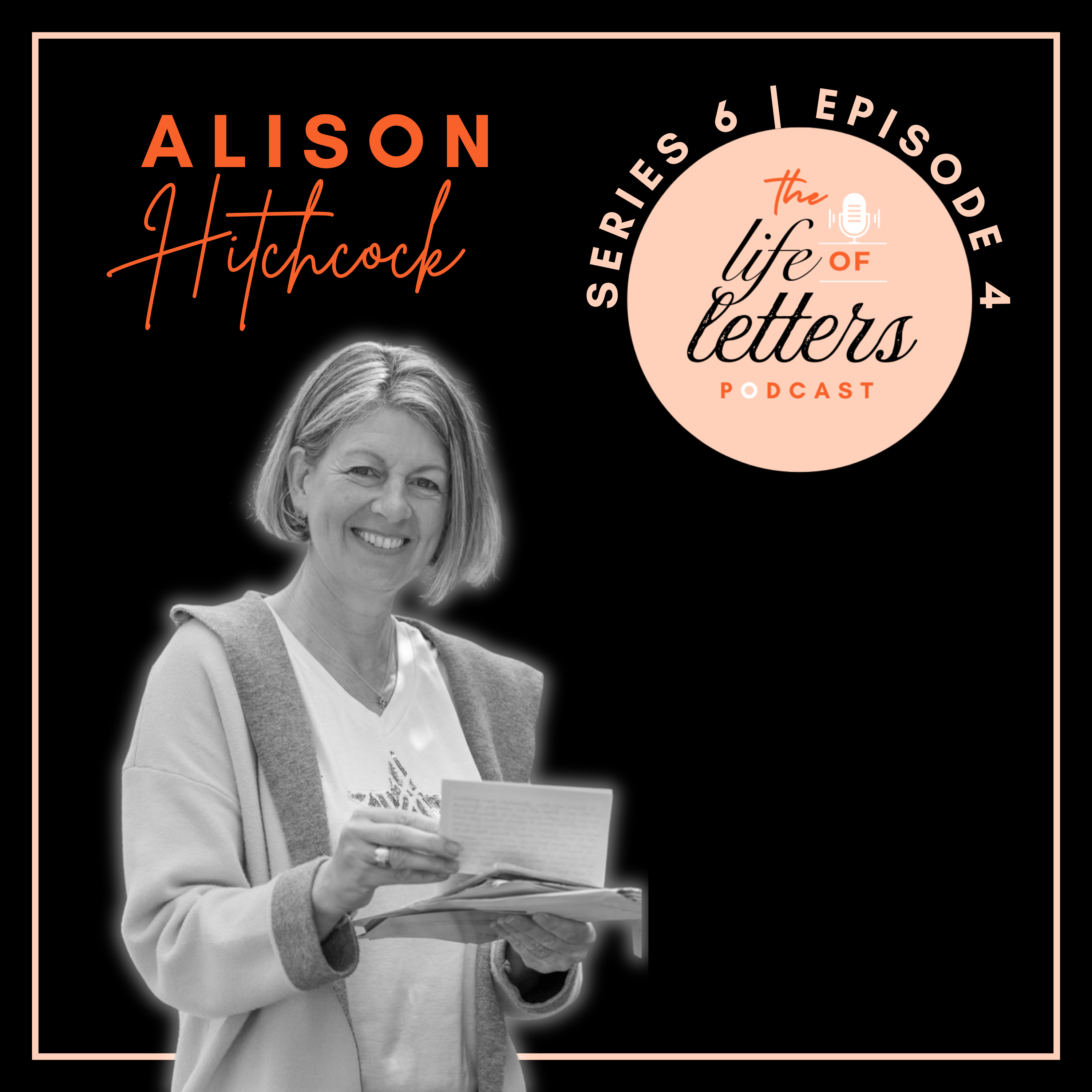
[00:00:53] Speaker B: In today's episode, I'll be speaking with Alison Hitchcock.
Alison discovered a love of letter writing when she began writing to her friend Brian Greenlee during his cancer treatment. These were simple notes intended to lift his spirits. But feeling inspired, Alison left her city career to pursue a master's in creative writing.
Together, Alison and Brian went on to found From Me to you, a national charity encouraging people to write letters to those affected by cancer, keeping them connected at a time when they feel most disconnected.
Since then, their work and their own story told through letters has touched thousands of lives across the UK, even inspiring a book of letters in 2023.
Welcome to the Life of Letters, Alison. Thank you so much for joining me today.
[00:01:40] Speaker C: Thank you for having me, Laura.
[00:01:42] Speaker B: It's great to have you here. Wow. What a very special way to sort of bring the life of letters, both of the Alphabet, but also the art of writing letters, to life. And I think something I really wanted to expand on was your charity's Donate a Letter program, which invites people to write letters that you then deliver to hospital patients. That's right, isn't it?
[00:02:04] Speaker C: It is, yeah.
[00:02:05] Speaker B: And in 2025, you delivered over 17,000 letters, which is just incredible and I think gives that scope of the, the kind of work that you do and what, what, what there. What a need there is for this.
But that's where you are now and I wondered whether you could just kind of draw us back a little bit and tell us a bit more about how the charity started.
[00:02:29] Speaker C: Yes. So mine and Brian's story actually started back in 2009 when we were both on a yoga holiday and we didn't know each other. I was working in the city and I knew why I was there. I'd gone there to relax.
And as far as I could tell, Brian didn't know why he was there.
So I thought that he was quite flaky. He thought that I was completely up myself, so we didn't really have anything in common. And then on the last day of the yoga holiday, we were both on our mats at the back of the class in headstand, and at exactly the same time, we both farted and we both heard each other and we crashed to our mats laughing. And it kind of bonded us in a bizarre way.
[00:03:13] Speaker B: Brilliant.
[00:03:14] Speaker C: We said, okay, when we get back to the uk, we're going to meet up and we'll have a drink. And, you know, you say those things to people on holiday and then you. It doesn't happen because you get back and life carries on. But actually, six months later, we did meet up for a drink and Brian, just three days before, had been diagnosed with bowel cancer. But he wasn't going to tell me because he didn't really know me that well. But of course, as we're sitting, sitting, chatting, the only thing in his head is, I've got cancer, I've got cancer. And so he just blurted it out.
And I felt, I think, like a lot of people would. Felt quite helpless, didn't know what to say, felt a bit awkward, but I thought, I've got to say something. I've got to, you know, I don't know you well enough to take you to hospital appointments, but I've got to do something. So I heard myself saying, I'm going to write letters to cheer you up through your treatment.
And he said, oh, you're a writer.
And I said, no, no, no, I work in the city, I haven't really got time for that. And so he went home thinking, she'll not write, she's weird. And I went home thinking, I'll not write, I'm really weird.
But it really bugged me. For the next two weeks, I was thinking, I said I'd write, he's got cancer. All I need to do is just send him a little card, you know, just say, I'm thinking of him.
So after two weeks, I sat down on my sofa, the big glass of wine, and I started to write and I loved it. I. And I just wrote nonsense, nothing about cancer, nothing clever, nothing philosophical, just the stuff I'd done, like over those two weeks, because it was being creative, just put a bit of a comedy slant on things or I could exaggerate or I could make stuff up.
And I spent an hour, I think, in this wonderful sort of trance, this mindful trance of being creative.
And I posted the letter to him and that was the first of Over a hundred letters that I wrote to Brian as his cancer went from stage three to stage four and he had radiotherapy, chemotherapy, four, lots of surgery, an ileostomy bag, and I just kept on writing. Brian never wrote back.
He said when he got my first letter, he text me and he said, you know, oh, thank you, loved your letter, won't be writing back. I've got nothing to say apart from I've got cancer, but please feel free to write again. And of course I was. I didn't need any more invitation than that because I had discovered, basically, I discovered creative writing. I discovered what it meant to get your pen out and your paper and just to kind of fire up that creative bit of your brain, which I didn't even know I had. And as the. As time went on, eventually he would perhaps start to phone me or he'd invite me around for a lunch. So we kind of became friends through the letters. And I think that I was probably sharing a different side of myself through the letters than I would have normally. I was probably being a bit more honest, a bit more reflective, a bit more me, I think, probably. And he was, he was getting to know that person, which of course, he would never have got to know through an email exchange or, or just from some phone calls. And then he started to say to me that he, despite having a partner, despite having family and friends, he was finding his cancer really isolating and lonely because he wasn't going to work, he wasn't socializing, and people who didn't know what to say didn't say anything. And he said. And he was isolating himself from people because he couldn't stand people's pity.
And he said, but your letters arrive, they land on my doormat, I know they're going to come maybe about every other week. And he said, I saved them till either a point in the day when I feel quite low and I just need a boost, or if I'm going for chemo, I save them and I take them and I sit in the chemo chair and I might show them to the person in the chair next to me and go, you know, read this. This might make you smile. So he. It was actually creating a bit of community in the chemo wards as well.
And so I, of course, I was delighted with this because, you know, I like any. Any feedback that's telling me I'm good, doing a good thing. I love. So.
So I just carried on. And the letters, they were never clever. They were just always full of creative nonsense.
And then we got to 2013. And Brian came on my hem weekend because by this time we were such good friends. But the other amazing thing that happened that weekend was that he got his first all clear.
And Brian, now in 2026, is still all clear.
So life kind of went back to normal, but not for me because I had discovered writing and I went on an Arvon course. And I. You know when you do something and you don't want to go to bed at night because you've had such a fabulous day and you've learned so much, but you can't wait to get up the next morning because you want another day of doing something like that you've not done before.
And that's what I discovered with creative writer Arvon. So then I did an MA in creative writing because now I was like, I am just loving my writing, but at the back of my head all the time I was thinking, I want to do something with the letters. Know Brian really enjoyed them. There must be other people who would enjoy similar letters.
And so in 2016, we were recorded by the BBC for the listening Project, and they said, you've got to do something with this story. Just friendship and letters.
And so they broadcast it on Christmas Day 2016. A neighbor of mine heard it and he said, oh, I have a friend in Australia who has cancer. Do you mind if I steal your idea and write to them? And I was. Not really my idea, but you may. And two weeks later he came back and said, what do you write? Somebody who's got cancer, I don't know what to write. And Brian said, that's it. That's what we're doing with our story. So we set up the charity, from me to you, just on the basis that we were going to set up a website and hold workshops to say to people, if you have someone in your life, if who has cancer, do not turn your back on them because you don't know what to say. We will help you write a letter, we'll tell you what to say, we'll tell you what not to say.
But they will be feeling lonely and isolated, however many friends they've got.
And a letter will just let them know that you're thinking of them. And so we. And that's how the charity started, just to say, send a letter or a card to a loved one. Don't let them be alone. And we found research that Macmillan had done which said 30% of people going through cancer treatment feel isolated. And of those, 25% go on to suffer from depression.
And then there's a lot of information in America, particularly about how loneliness impacts the recovery of cancer patients in the same way that obesity and smoking does.
So we then kind of picked up the momentum and then people started to say, oh, I love this writing.
I love writing letters. I love being creative. I want to write to more people.
And so that's when we started our donate a letter program.
And that's the bit that people from all over the world write anonymous letters and we share them in cancer wards, cancer centers, and with people going through treatment.
So that's what you referred to at the beginning. That's the donator letter. And that's.
So that's been going on for nearly 10 years.
And next year will be our 10 year anniversary of the charity. And as you say, last year we delivered over 17,000 donated letters from people who never know who wrote to them. There's no writing back. Brian never wrote back.
[00:11:00] Speaker B: Wow.
[00:11:02] Speaker C: Wow.
[00:11:02] Speaker B: So how does it work in terms of, do you give them questions or things to answer in the letter?
[00:11:09] Speaker C: Yeah. So we run online workshops for anybody who kind of thinks it's a lovely idea. But I'm really daunted to start.
The most difficult thing that people find is that opening line.
Because once people are writing, then they've forgotten that they don't know who they're writing to or even that the person is having cancer treatment. They're just, they're telling their story.
So we, on the website and in the workshops, we, we have a whole selection of opening lines that you can just copy and steal. And we say, but the most important thing is find the anecdote that you want to tell and try and find an anecdote that is the thing that most people have in common. So your anecdote might be just what I can see through my window, what was on my dog walk today, my childhood memories of holidays, my pets, my family, what my grandfather meant to me, what my hopes and aspirations are for my children. So anything that we've all got in common are the things that resonate the most.
People write those down and we give them prompts. But really, once people start, they think of an anecdote that they want to share, then they're away.
And then we just say to them, okay, here's how you close your letter. And we always ask that in your paragraph of your letter, you ask the reader a question because that then allows them to go into their imagination.
Because we had a lady who received a letter and she phoned us to say thank you. And she said, for the time I was reading the letter, I felt normal.
So I was okay. We have to kind of expand the time that somebody is in the letter.
So if you ask a question, so maybe you've written about your childhood memories of holidays, you know, on the Northeast England coast wearing jumpers. And you can just, in the last paragraph you just say, just say, what are your childhood memories of holidays? And suddenly you have double, tripled the power of your letter.
And then people just sign off with their first name or their initials because the letters are anonymous to the reader, because everybody's data has to be protected. And when you read the letters, you've just been transported to another place and it's distraction. It will brighten your day, it will make you think. A lot of, you know, some of the letters are funny, but a lot of them are kind of really make you think about, oh, that's what other people do with their lives. It's kind of like being really like a nosy neighbour that you can used to have a. Have a poke around in somebody else's life.
[00:13:53] Speaker B: Yeah.
[00:13:54] Speaker C: And you realize how much we all have in common and how different we all are, you know, both at the same time.
[00:14:01] Speaker B: I love that. I love that. And what a lovely way to make somebody who's going through something so. So challenging and so unpleasant feel normal. I think that's. That's such a wonderful thing to do and then be able to take that on. So through the kind of letter writing process, you've got sort of two things happening. Right. You've got the person writing it being able to have a quite a cathartic experience as well. But then they're also passing this over to somebody who can escape the realms of. Of reality for a minute. Also drop into a kind of experience where they can either imagine or explore things that have happened to them in their life. And I think that's wonderful is how does it work in terms of the logistics? Because that just seems incredibly complicated to get. I mean, on the surface, someone's writing a letter and you're getting it to somebody else, but actually it.
As a. As a charitable sort of setup. How does that work for you guys?
[00:15:02] Speaker C: Yeah, so we were, we were very lucky at the beginning because we had all of our processes audited by Macmillan. So that was really handy because they kind of pointed out where we needed more safeguarding, that we were dealing with vulnerable people.
So the way the process works is that on our website, you can sign up to be a writer for donate a letter, or you can sign up to be a recipient for donate a letter as well.
And then we send people a letter writing pack that gives them prompts, tells them the steps of how to do it, invites them to a workshop and they write their letter. And then they send their letter to our P.O. box. And in the letter somewhere, they put their full name and their email address.
But in the actual letter that they've written, they cannot say anything that would identify them. So most people keep things quite generic. But if you had an incredibly unusual name and you lived in a very unusual place, if you googled, you could probably find out who you were.
So all of those letters come to us in the PO box, and then we have this army of letter readers and they're all volunteers and they read all of the letters just to make sure that there's nothing inappropriate in there.
We don't have many do's and don'ts, but we do say, don't give cancer advice, don't talk about religion because you don't know the faith of the person, and don't get sick well soon because you don't know the prognosis.
So there are only don'ts.
But occasionally somebody will forget and they'll go into the old style of writing a letter and they'll put their address at the top, so would cross that out. And then all of those letters are then logged against on our system against the person who wrote them. Because what we want to do is be able to send them an email to say thank you for your letter. Because I think it's one thing writing to somebody you don't know who's in hospital, it's another thing to not even know whether we receive the letter.
[00:17:02] Speaker B: Yes.
[00:17:03] Speaker C: And then all the letters get packaged up and we have relationships with cancer centres and hospitals across the uk.
And so every month we send out a bundle of letters and sometimes it will be the nurses who are handing out those letters, perhaps to somebody who doesn't have so many volunteers or they know is having a bad day.
Some places will have a basket, perhaps on the information desk in the cancer center, and people just take a letter when they leave and other people sign up to have their letter sent to home.
So then we individually post letters to home as well, and you get one every month.
And so the cycle. So the cycle just keeps going round.
[00:17:45] Speaker B: That's incredible. Wow. That is an operation.
[00:17:50] Speaker C: All powered by an amazing array of volunteers who just, every week just, they're such like, give me more letters. And then when you start to read the letters, you understand why it's quite a Journey joyful volunteering role for them.
But then we also have the volunteers who bundle up the letters, which I don't think can be quite so joyful because they don't get to read them.
[00:18:13] Speaker B: Yes, yeah.
[00:18:14] Speaker C: But they bundle them up and they're posting them out to the cancer centers.
[00:18:18] Speaker B: Yeah, yeah. That's amazing. Many cogs, many people helping. This, this is amazing. And I wondered whether you had any sort of standout stories that come to mind when, you know, obviously every letter holds a story and obviously there's people's journeys and things, but anything that particularly stands out to you, there's.
[00:18:39] Speaker C: I mean, there's a few that the letters are so different. I mean, and people, some people might just write a poem or they might do a very simple letter and they'll crochet a heart or they'll put a tea bag in. You know, just those little lovely touches where the really shows they're just really thinking about the person. But yeah, there are a few, few letters that have stood for me over the years. We have quite a lot of Duke of Edinburgh students who write for us for their volunteer module and some of them, particularly the older students, just write the most beautiful letters. And there was one student who started off, what is your favourite time of day?
And then they went on to explain that their favourite time of day was 7 o' clock in the evening in the summer.
And they just wrote a whole letter about why.
And so it encapsulated everything because it was kind of what the world looked like at 7 o' clock in the evening. But also there were some smells coming from the kitchen because, you know, a parent was making a meal for them. And then there was the sounds of. That's when my brother gets on his Xbox and I can hear him shouting at the Xbox. So there was like a whole, there was a whole family going on behind them and the whole world of nature, of what nature looked like at 7 o' clock in the evening going on in front of them. So that was, that was wonderful.
[00:20:02] Speaker A: The conversation doesn't have to end here. You can find us on Instagram for behind the scenes glimpses of the podcast, on YouTube as well for all the up to date episodes and mini clips from each series. Just search for the Life of Letters podcast.
[00:20:19] Speaker C: There was a woman who used to write to us from Brazil. Her husband had had cancer, so she used to write and they owned a hill farm in Brazil.
Oh my goodness. Her letters were just. She just used to take you on like a seasonal walk through the hill farm and she would. So she'd just be saying, sue, I'm now in the polytunnel and there are tomatoes and chilies and the lettuce are coming through and, oh, I can hear a toucan now flying by. And you were just. Her letters were quite magical. You were just transported, wow. To Brazil, to this hill farm, which was amazing. And she used to write every few months, so you got a whole seasonal kind of thing. And then we had a letter from a woman who wrote 25 reasons not to get a dog. And she wrote this list of things like their breath smells, they take up all the room in the bed, you have to pick up their poop. And then. And then at the end it said, there is only one reason why you might want to get a dog. And that was because it will love you unconditionally for the whole of its life. So some really quirky. We have, I think, our oldest writer, who's nearly 90, she lives in Winchester and she just, she writes the most beautiful letters. She just writes about her day.
So often her day will involve sitting under the apple tree and watching the sparrows on her bird table and then watching the squirrels come and this battle for the seeds and the nuts and then going in, going back in the house and baking an apple crumble and what that smells like and what that tastes like. And then. And then she might have a piano lesson.
And that's. It's just. They are. Her letters are so simple and, and so beautiful. But you're with her. You're with her in her day. And that's the thing that all of the letters do, they just take you to another place. And you can tell that the people who've written them have got just as much, if not more out of the writing of the letters than even the people who are reading them because they've just taken some time. It's almost like journaling and the power that people, the therapeutic power of journaling. It's sort of like you've. You've journaled for half an hour.
[00:22:39] Speaker B: Yeah.
[00:22:39] Speaker C: And you've just shared. And because you never know the person who receives the letter, you can tell them some stuff that you wouldn't perhaps tell other people. Or you can, you know, if you're really creative, but you have, you know, maybe a really high powered job and you. Creativity isn't part of your day at work to come home.
Think, now I can talk about, you know, what I did at the weekend and, you know, because I went swimming. I love outdoor swimming. And that's What I did. And that's what I want to tell you about. We have a woman who, she has four children and she said every other week I say to them, it is now writing 30 minutes. And she said, I take myself off and none of them are allowed to come and bother me. And for 30 minutes I just write a letter for. Donate a letter. And she said, she said, and sometimes I have a biscuit too.
[00:23:31] Speaker B: Right. Too right. Wow. And what I think is so special is because my brain was going, oh, but you know, it sounds similar to maybe a blog or a newspaper article or this or that that they could read, but actually it's coming back to this window into someone else's life, as you say, the kind of concept that it's. You could say more than you'd normally say to someone, you know, because there's no performative element right there. There isn't an expectation of, oh, I need to be funny or I need to be clever or, you know, my grammar's awful. They're going to judge me. It doesn't matter because they don't know you. Nothing will come back. There's no kind of feedback on it. It's just you handwriting as well. Something. I presume most of them are handwritten or do you get your handwriting?
[00:24:21] Speaker C: We get a few because not everybody can write by hand. Not everybody can get to a post box. So we do get a few, but I'd say probably 90%, 100.
[00:24:32] Speaker B: Yeah. Yeah. And that again, you know, for the person writing it and the person reading it is something really quite special.
[00:24:39] Speaker C: Yes. And you will be the. When you're writing it. You know that other than they might share it with the family who come to visit them in the hospital, that there'll only be one person who reads that letter.
And we're so often people contact us to thank us for the letters and to tell us how they made them feel.
So many people say they have gone in my memory box. I've put those letters in my memory box. And I think, wow, that is just amazing for the person who wrote it, who will never know that, because with 17,000 letters, we can't say, oh, do you remember when who wrote that letter that's gone in their memory box? But the fact that that's how special the letters are to somebody is incredible.
[00:25:23] Speaker B: Yeah. Yeah. And you can see the full experience of that and how it impacts each of those people. Which is.
[00:25:29] Speaker C: Yeah.
[00:25:29] Speaker B: Which is amazing.
[00:25:30] Speaker C: Yeah. We often get people who just will message us and say, I know I got a letter today, it Arrived just at the right time. I just come back from. From the hospital and the news wasn't great. And there was a letter, and it just let me know somebody was out there thinking of me. And you just think, wow, that's, you know, that's incredible. And we also have really freaky things, like people will say, gosh, I received a letter and the woman used to go on holiday to the same place on the same island that I used to go to. And she wrote all the same things, like I would have written if I was writing the letter. And you just say, oh, you know, and that's spooky. Things like that happen. Yeah.
[00:26:13] Speaker B: Wow.
[00:26:14] Speaker C: We also had a. We also had quite a spooky, really nice coincidence where this is back in the days when I used to read the letters, when there were far fewer of them, which you can't do now. But one of our regular writers had written, and she'd written about she'd gone home to spend some time with her father, and they. They'd gone to his allotment, and she wrote about this lovely time that she'd got with her father in his allotment. And then we got another letter from somebody who'd never written to us before. And she had written about she'd gone home, spent some time with her father, and the lovely time that she'd spent in her allotment. So I said to her regular writers, oh, my words, you'll never believe. Just the spookiest coincidence.
And she said, what was her first name? Because obviously we couldn't tell the whole name. So what was her first name? I told her. She said, that's my sister.
And they had written almost the same letter of this amazing time that they'd both got to spend with their dad.
[00:27:15] Speaker B: That's wonderful, isn't it?
[00:27:16] Speaker C: Yeah, yeah.
[00:27:17] Speaker B: Oh, how lovely. I love these stories. And I think it's amazing. That just really shows the sort of power of writing and creative writing and what you can do.
And I feel like creative writing sort of slightly scares me because it makes it sound like you need to do something unusual with the writing that you're. You're creating.
I think actually it's almost. It's almost the prompts are allowing you to be creative within it. Right. So there's this. It's not so much, you know, you're creating something that needs to look a certain way or sound a certain way or read a certain way. The creativity is coming from your own kind of mind without you having to make it look a certain way.
[00:28:00] Speaker C: I Think it's creativity just means you can be yourself.
Because we spend a lot of our time being what other people expect us to be.
Maybe because we have to achieve things or we have to show up for somebody in a certain way to support them. But I think when you can just be yourself, that is when you're. Well, that's when you can be creative. And that's all my letters were to Brian. I was just telling him about the real me. And at the same time, unbeknownst to me, he was keeping a journal of his experience, which is what we then used to create the book that we had published. And when he showed me some of those journal entries, I was like, wow, Brian, I was getting to know you at this time. This is not the Brian that you showed to me. And he said, no, but this is what the real Brian was going through and experiencing. So he found a creative outlet for himself in the journaling to get him through that period of his life, but he was still having to show up as a different person for other people.
[00:29:10] Speaker B: Oh, my goodness. That's. Yeah, that's a lovely way to sort of summarize it, I think. And as if by magic, it segued beautifully into my next question, which is all around the book. And this is called A Diagnosis and a Promise Equals An Unbreakable Friendship.
[00:29:29] Speaker C: Yes. Yes. And we titled it From Me to you because we just thought that was easiest.
[00:29:33] Speaker B: Yeah.
And you wrote this a few years ago. And so why did you suddenly decide to do this when you've got enough going on with a charity to run as well?
[00:29:47] Speaker C: So we had, years ago, in the quite early days of the charity, we would just do anything to go and try and promote the charity.
And so one of the. We used to go to open mics where we used to tell our story, which used to horrify Brian because he had not stood up on a stage and spoken in public since he was about 8 years old at school. But of course I loved it. He absolutely hated it, but he did it. It was brilliant. And so we then decided we were going to create sort of a small play because I'd found out about these journal entries.
And so we put together for the Brighton Fringe, we put together this play of some of my letters and some of his journal entries, and we kind of played around with them. So they sort of told a story of our friendship, and we put it on at the Brighton Fringe, and then we put it on in London, all to raise funds for From Me to you. And I think that's what sparked it? Because actually, I was like. I was like, oh, this is new. You know, I've not done this before. I like this.
[00:30:49] Speaker B: Yeah.
[00:30:50] Speaker C: And it was. I'd done my creative writing study, and so it was a different way of using my creative writing.
And.
And so then I said to Brian, I said, oh, we should do a book. And Brian was like, oh, God, really?
[00:31:08] Speaker B: I said, yes, absolutely.
[00:31:12] Speaker C: And so he, very bravely, I think, gave me access to all of his journal entries, which were really raw and really honest and funny and heartbreaking. And he'd kept all of my letters as well.
So I had this pile of letters and all this pile of, like, all these books that he'd kept. So he didn't just keep. He didn't just write. But if he went somewhere, he'd put the ticket in of where he'd gone to visit or a photo or something. So it was. They were beautiful.
And then just over time together, we just kind of melded the two so that we told his story, we told my story, and we told our story.
And it was a lot. It was a lot of work. It was a lot of work, but it was.
It was amazing. It was an amazing thing to do, I think, because I kind of got to know him then in the same way that he'd got to know me, because I was reading these very, very honest journal entries. And we got an agent and we got a publishing deal. And then just before. And we were just about to start marketing it before it was going to be published, and Brian suddenly went, I don't know if I want people to read. It's so personal. I don't know if people. I want people to read it. And inside I was like, don't you dare.
[00:32:33] Speaker B: No.
[00:32:35] Speaker C: And outsider was like, brian, you must be totally comfortable with this decision.
And then we said, but it could help somebody, you know, that's why we're publishing it, because there'll be people out there who don't know what it's like. Somebody in their life will have cancer. They don't know what it's like to have cancer. And actually, my letters are like relief, and they're funny, but the real gold dust in this book as your journal entries. A man telling his story of what it's like to have bowel cancer. I said, if you help one person, you know, it'll be amazing. And so it got published. And actually, the feedback that we always get on it is people saying to us, oh, I've just bought your book to give to a friend, because Their partner's got cancer or their cousin's got cancer, and I wanted them to know what it's like.
And so it's his journal entries, which are the.
The real.
I guess the real gem within the book. You know, my letters just give you some light relief. But his diary entries are so raw and honest.
It's quite incredible to read.
[00:33:44] Speaker B: That's amazing. And amazing that you can have an impact on other people's lives by telling your own story is a huge thing. And I kind of. I guess it's sort of synonymous with the work that you do as a charity and inviting people to do the same. But also, yeah, as you say, being so, so vulnerable, putting your own stuff out there. I mean, even if your letters are light relief, they were meant for Brian and you're sharing that with the world who then get to see the charity's work in practice and kind of where it was started as well. So they might. Then that might just inspire somebody else to become part of the program or to start writing those letters. And, yeah, I think that's. That's an amazing legacy to have. And, yeah, I'm glad you did write the book because that's. That's another way to allow people into this space, I think. And you're continuing the work as well, through the workshops and you're also doing From Me to Brew events.
Is this a genius title, if anything, But Cups of Tea, what happens?
[00:34:47] Speaker C: Yeah. So I have to say, I did not come up with From Me To Brew. It was actually our treasurer who came up with From Me To Brew, which I think shows anybody can be creative.
[00:34:56] Speaker B: Yep.
[00:34:57] Speaker C: Don't be put off by a title.
[00:34:59] Speaker B: Absolutely.
[00:35:00] Speaker C: So, yes, it's bringing people together to say, have a piece of cake, have a cup of tea, raise some money for us if you want. Also write some letters, but raise some. Some money for us because obviously we have to buy packaging and stamps and postage and the admin of running the whole machine does not happen for free, despite all of our wonderful volunteers.
And so, yeah, so it's a. It's a fundraiser for us that anybody can just sign up. We send you a beautifully designed pack. We have a community ambassador called Wildflower Illustrations who just designed this beautiful pack for us.
And it, you know, it tells you exactly what to do, but basically just get your mates round.
[00:35:47] Speaker A: Yeah.
[00:35:48] Speaker C: And have a cup of tea and connect. You know, it's all about connecting. Connect over a cup of tea and a piece of cake and raise some money for us. Isn't that beautiful?
[00:35:58] Speaker B: Yes. It doesn't have to be complicated, does it?
[00:36:01] Speaker C: No, no, it really doesn't.
[00:36:04] Speaker B: And any excuse for a cup of tea really. But if we can fundraise too, even better. Oh, thank you so much, Alison. And we'd like to wrap up these conversations with maybe the hardest question you'll get today. I don't know, but what is favourite letter of the Alphabet and why?
[00:36:24] Speaker C: So I think it's B and the reason is that I think when somebody says to you the Alphabet, you immediately think of A and then B gets a little bit forgotten.
So I always think, always go for the, the one that's.
It gets less attention.
So it's B. I have no. I know, other than my, you know, my, my surname as a child began with a B. But it's not that. No, it's all the beautiful shape of a beast.
[00:36:56] Speaker B: I thought you were going to say Brian.
[00:36:59] Speaker C: Brian.
[00:37:00] Speaker B: I was like, you're listening, Brian.
[00:37:02] Speaker C: That was the reason.
[00:37:06] Speaker B: I think it, I think it was there, it just, you know, it wasn't
[00:37:09] Speaker C: in your mind taking time.
[00:37:13] Speaker B: No, I love that and I think. I love that. Sort of underdog. Yeah, it's. It is. There is.
Yeah. Lots of people think of the A first. Yeah.
[00:37:22] Speaker C: Forget the B.
[00:37:23] Speaker B: But I, I love that. Yes.
To find out more about Alison Brian, the charity people can visit you
[email protected] and you're on lots of different social channels, but Instagram from me to you letters. But as always, we'll put all the links in in the show notes so people can find out more, reach out and have a From me to Brew event and donate a letter and get involved and volunteer and be part of the whole wonderful operation. So thank you so much for sharing your story today and also for creating this because it's wonderful to know that there are people out there doing these things for others and, and inspiring more people to do the same. So thank you.
[00:38:09] Speaker C: Yeah, well, no, thank you for letting me tell our story. I always love it when I can tell our story because it always still makes me smile after all these years.
[00:38:18] Speaker B: Good, good. Even better. There's. Yeah, there's lots of joy in something that can feel quite heavy. So thank you, Alison, lovely to talk to you today and thank you for being a part of the life of letters.
[00:38:30] Speaker C: Thank you.
[00:38:33] Speaker B: Thanks for listening.
[00:38:35] Speaker A: Series 6 is made possible by my wonderful producer, Heidi Cullop, and the support of Speedball Art, whose commitment to high
[00:38:41] Speaker B: quality tools and creative tradition continues to
[00:38:44] Speaker A: serve, partner and deliver to artists all over the world. If you've enjoyed the episode. Don't forget to subscribe, leave a review, or share it with a fellow letter lover. And until next time, keep listening, keep creating, and keep celebrating the life of letters.