Episode Transcript
[00:00:01] Speaker A: Welcome to series seven of the Life of Letters, a podcast exploring the art history and future of calligraphy, handwriting, signwriting and all things letter related.
I'm your host, Laura Edrilyn, and this season we're following letters into the realm of magic, myths and mystery.
It's a journey from legendary worlds and ancient alphabets to hidden codes and spiritual practice.
As we begin another season, I'm delighted that the Life of Letters is once again kindly sponsored by Speedball Arts, whose commitment to quality tools and creative tradition serves artists all over the world.
Pull up a chair, grab a cuppa and let's dive in.
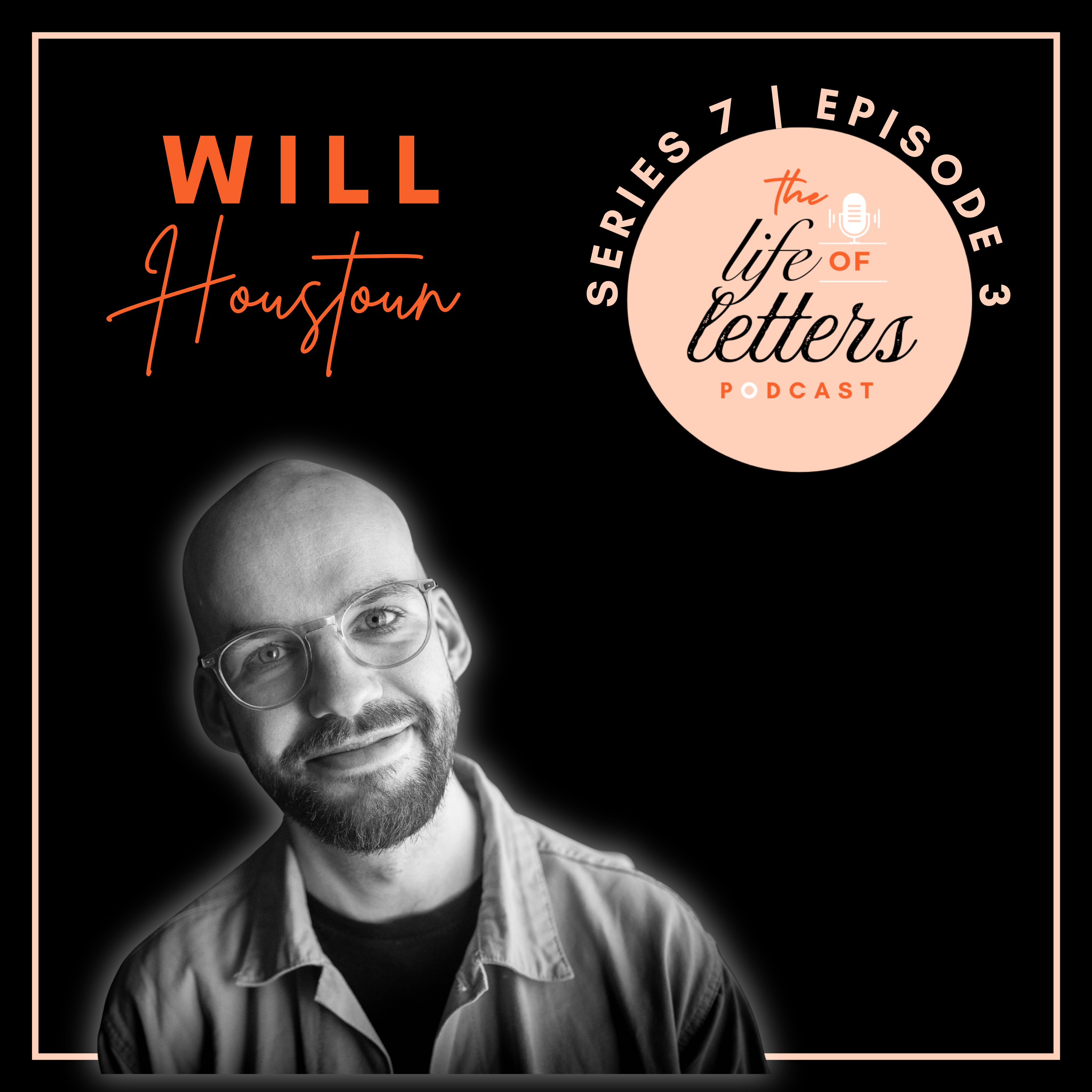
[00:00:45] Speaker B: In today's episode, I'm excited to be speaking with Will Houston.
Is that how you say your surname?
[00:00:51] Speaker C: It is, yes. Good work
[00:00:55] Speaker B: just getting over that hurdle first.
Will holds a literary fellowship from the Magic Castle, is a magic circle close up Magician of the year, has a PhD in Victorian conjuring and consults for film and television. He is also the executive editor of geni, the international conjurers magazine. So a perfect magic and letter combo expert. Welcome to the Life of letters magic. Will, it's lovely to have you here.
[00:01:21] Speaker C: A pleasure to be here.
[00:01:23] Speaker B: I have many, many questions, both magic and letter related, but I thought let's get into a little bit of context and background firstly. So how did you actually get into magic? What was your journey to becoming a magician?
[00:01:38] Speaker C: Yeah, so very much the same as a lot of people to start with, I suspect in that when I was about 11 years old, I was given a magic kit one Christmas.
The thing that was slightly different about the way my interest developed though, is that most people get the magic kit, play with it for a couple of days and then grow out of it and move on to more important things. I haven't quite got around to the growing out of it phase just yet, so that interest in magic very much stuck with me. I had a wonderful mentor, a man called Claude Perry, who was an excellent magician. Taught me lots of things about what it is to be a magician and to be a good magician, I hope.
And I sort of maintained an interest in magic as a hobby really, whilst pursuing what was going to be a grown up career in mechanical engineering.
At the end of a master's degree, though, mechanical engineering felt a lot less interesting than magic. So I ended up putting the engineering to one side and sort of planting my feet firmly in the world of magic.
[00:02:36] Speaker B: That's amazing. What a journey. What a journey. And I want to come onto a little bit about your connection with letters as well, but briefly, because I know that the Magic Circle exists. But for those that don't know what the Magic Circle is, and the Magic Castle, which I mentioned in the beginning, could you just give us a little bit of a background to those two things?
[00:03:03] Speaker C: Yeah, absolutely. So around the world there are lots and lots of magic societies, magic clubs, which essentially are places where magicians get together on a semi regular basis, show each other new bits of magic they're working on, gossip, chat, and sometimes also have lectures from visiting magicians who might teach you how to do some new magic or how to think about the magic that you already do in a slightly different way.
Two of the biggest, most prestigious magic clubs in the world are the Magic Circle, which is based in London, and the Magic Castle, which is based in Los Angeles.
The Magic Circle is a club for magicians. It was founded in 1905, so it's one of the oldest magic clubs in the world and it's got about 1500 members around the world at this point. There's a headquarters in Euston, which, amongst other things, has a wonderful Library with about 15,000 books dedicated to magic and its history.
And it's a club that you have to do an audition, a little exam almost, if you want to become a member of it.
The Magic Castle is based in Los Angeles. It also has a little library. It also has a space where magicians can get together and spend time talking about the latest tricks. But as well as that, it's a venue that you can visit. So if you find yourself in Los Angeles and you want to see some good magic, the Magic Castle is very much the place to go. Open seven days a week with a bunch of great shows. The challenge you'll have though is is that the only way you can get into the Magic Castle is to be the guest or somebody invited by a member. So it's a private club and it's rather hard to get into if you don't happen to know the right person.
[00:04:43] Speaker B: Is that the same for the Magic Circle?
Does that exist as a venue as well?
[00:04:49] Speaker C: Absolutely. So the Magic Circle also does a selection of different shows. It's not a sort of seven days a week venture hospitality venue in the same way that the Magic Castle is, but there are shows on a regular basis.
So if you visit the Magic circle's website, the magiccircle.co.uk, you can find out about all of the shows that are coming up. For me, one of the best ones is the Christmas show, which happens for a few weeks run over Christmas, New Year period, every single year it was one of the first shows I went to where I got to see live magic. And it's still a show that I go back to quite often. It's each year, because it's just a great way to see a wonderful magic show. It's the perfect kind of thing to go to with a family group, for example, and it's a great introduction to the society to see some live magic and also get to dig around a little bit in the headquarters, see some of the artifacts and historical bits and pieces that are there.
[00:05:42] Speaker B: Oh, my gosh, that's so exciting. I didn't know about there being a sort of library. That's already kind of tickled my letter taste buds. But I also want you to tell me that there is a, you know, secret entrance, and you couldn't possibly tell us how to get into these places. But I'm guessing it's not like that.
[00:06:05] Speaker C: You say it's not like that. The Magic Castle is a little bit like that. There is an owl who guards the doorway, which looks very much like a bookcase. And when you visit, if you manage to pick the right magic word and whisper it in the owl's ear, then the bookcase slides open to get you into the club and find out what's going on inside. So a little bit of a thing again, a letter connection with a bookcase and also an owl who knows a password guarding the entrance.
[00:06:34] Speaker B: How magical that is. That's brilliant. That's brilliant. What amazing experiences. And to be going for so long, that's incredible. And I'm guessing, you know, you've been influenced by a lot of magicians.
I don't really know much about the history of magic either. I mean, I guess it's existed for so many years, and it's turned into something that is much more, I want to say choreographed, but that might be not a word that you would choose to use.
[00:07:05] Speaker C: Oh, it's very, very finely choreographed. Very, very detailed in terms of the choreography of what's going on. One of the interesting things, I suppose, about magic, choreography is part of it is the stuff that you as the audience see. And part of the choreography is the secret technique that hopefully you're not even aware exists, let alone see happening. So there's sort of two layers, I suppose, of choreography or two layers of story going on. Anytime you see a magic trick, in terms of the history of it, it's got a very, very rich history. The sort of general starting point, I suppose might be 1584, with a book called the Discovery of Witchcraft.
That was written by a chap called Reginald Scott, effectively saying that witches might not be real, they might be doing lots of other different things that aren't supernatural and aren't problematic. And one of those things could be magic tricks. So he described a little bit of magic in that context. There's then a bunch of different books, a bunch of different performers doing magic over the centuries, until you get, I would say, to the sort of late Victorian period, 1870s, thereabouts, suddenly there's an explosion in magic. We hit what we call the golden age of magic, when it's sort of the most pop form of mass entertainment, I would say. And I happened to study that period for my PhD, looking at a chap called Professor Hoffman, who wrote some very good books about magic and how magic is done at the time and really sort of fed into that golden age as a bit of a catalyst from that golden age. You then get magicians being the pioneers and in some ways inventors of film as a storytelling language. Film, of course, takes off a little bit, eclipses magic, I think you could say, in the 20th century. But magic's always continued along in the background and occasionally has these sort of little surges of popularity when someone like Derren Brown or Dynamo in the UK ends up doing particularly good work in a particularly high profile way.
[00:08:59] Speaker B: Yeah, of course, there's the celebrities of the magic world that can help spread the entertainment, I guess, of illusions and magic as well. And when I reached out to the Magic Circle to see if anyone would come on the podcast, your name was instantly thrown my way. Partly because of your work in magic, but also because you have an interest in calligraphy and words in many senses. As the editor of the conjurer's magazine Genie, can you tell us a bit more about your letter related side?
[00:09:33] Speaker C: Yeah, absolutely. So I've always been a book sort of a person. Most of the magic I've learned has come from books in the first instance and then perhaps filtered into the sort of chatting with other people side of things later on.
So there's always been an interest in letters because of that.
As a historian, as someone who has an interest in researching things, quite a lot of that is trying to find stuff that hasn't necessarily been published and put out there.
So there's always a sort of excitement to finding an old Victorian handwritten notebook describing magic tricks. A little bit before that, I did a book based on a late 18th century manuscript describing card tricks handwritten by somebody destroyed partway through the 81st card trick. So you learn 81 card tricks in the process of reading this thing.
Handwriting, I guess, is sort of key to that, and then broadcast more broadly speaking. I'm interested in the overlap between all sorts of different craft practices and magic. And also the way maybe there are elements of illusion or deception in other areas.
I suppose things like letter heights varying in order to look the same might be an example of that.
But I'm sure you know more about that than I do.
[00:10:50] Speaker B: You're right. I think. I think it's. It's amazing what you can do to change how letters look, and I guess not just the individual letters, but how a whole word fits together.
And I've spoken to a few people about the sort of optical illusions and things like that, which sort of ties into the magic of what letters do on a page, but it's also the space around it as well. And I. I think that's a really interesting maybe duality with magic. It's. It's. It's what you're not showing people and what you are showing people. And it's the same with letters, right? There's the height, the spacing between things and the shapes.
[00:11:30] Speaker C: Yeah, absolutely. And I think one of the other interesting parallels between the way optical illusion sort of fits into the technique of setting out type and the way illusion fits into magic is that in both worlds, there's an amount of work that goes in in order to create an illusion of something, whether it's the illusion of a coin appearing and disappearing or. Or the illusion of a word being nice and uniformly put together.
And if that work is done at its best, all of that technique and all of that illusory work sort of fades away into the background in order to tell a story, because you're able to read the word and absorb the content of it, or to tell a story because you're able to engage with the idea that maybe there's a world where coins can appear from nothing, rather than thinking about the technique. So I think there's an interesting sort of relationship between the way the technique disappears and melts away when it works and when it doesn't work, it really jumps in the way of the story you're trying to tell. It really gets in the way of things.
[00:12:29] Speaker B: Yeah, yeah, that's. That's really interesting. And I think as obviously as a visual art form on an audible podcast, this might be tricky, but can you talk us through any parts of magic, Magic tricks, illusions that that kind of. You might use letters with.
My brain has immediately gone to invisible ink, which probably isn't quite the level that you work at, but I'm sure it's much, much, much higher. But invisible things, things that disappear. But I guess it's also tricks with words, whether you're speaking them or showing them. But over to you, tell me.
[00:13:09] Speaker C: Yeah, so there's absolutely magic which uses lettering.
I suppose one of the things that you see quite often at the moment is magic based around ambigrams. So words that can read one way or the other way, depending what perspective you take, whether you look at it in the mirror or in real life, whether you see it the right way around or upside down, for example.
So if you're doing a trick, perhaps, and you ask somebody to think of something and then change their mind, it's a really stunning ending to that trick. If you can unfold a piece of paper and you can show that you predicted the thing that they finally settled on, and then as an afterthought, as a sort of little kicker, you ask what the thing they started off thinking of was. And when they tell you what that was, you turn the piece of paper upside down and you reveal that the prediction actually says that thing as well as the thing that they ended up settling on. So there are plenty of instances, I suppose, where you're using something like that with lettering in magic, you in, I think, an interesting and fun sort of a way.
[00:14:11] Speaker B: Yeah, definitely, definitely. When you're doing tricks, are you.
Are you sort of aware? I'm trying to think of the right word. Are you thinking along with everybody else or are you thinking only about what you're doing? I don't know if that makes sense. Are you trying to think what other, other people are thinking in advance of what they're thinking?
[00:14:36] Speaker C: Completely. Yeah, completely. So I suppose one of the big differences between magic and a lot of letter based things, whether it's writing, editing, signwriting, calligraphy, all of these different things, is that magic is a thing where the product is the experience that you have live with an audience as they experience the work that you do.
So it exists as a process, but it doesn't exist as a sort of finished product at the end. Whereas a lot of other things, there is a process, but a lot of the motivation for the process is to get to the product that comes out at the end. So it's not necessarily about the writing process, it's about the text or the calligraphy piece or whatever it is that comes out at the end of it. So magic is sort of slightly different structurally in that way, I would say.
And because it's something that you can only do in real time with somebody as a live experience.
An awful lot of work goes into thinking about what the experience you're trying to create for that person is, how you can tell that story in the best way possible, how you can take all of the technical things and the jiggery pokery that you have to do in the background and make sure that is only supporting the story that you want to tell and it's never getting in the way of the story that you tell. And also how you can make sure someone else wants to be there and wants to watch it. Because I think one of the things that everyone will think of when they hear that somebody is a magician is that that person might be a sort of slightly objectionable, overly smug person who kind of does tricks at you with a bit of a sense of, I'm clever and you're not, because I know how the trick's done and you don't know how the trick's done. And that is a bad way of doing magic. It's a bad way of existing as a human being, I would say. But it is something that you see a lot. A good magician is trying to work past that. A good magician knows that you can only do a magic trick if there's an audience who want to engage with you and want to see it. Because the moment of magic only really happens in their head when they imagine the coin to have disappeared. Although actually you've done something else. And so you really have to be doing magic with somebody and for somebody else. And because you have to do that, a lot of work goes into working out how you can make it a with and for experience, rather than something that you're doing at someone or something that you're doing to someone.
[00:16:59] Speaker B: Yes, Brilliantly answered from a very vague question. That is what I wanted to know. It's also made me think about there's a level of creativity that comes with magic, obviously, creating the trick to begin with. Like, you've got to come up with an idea of what you want to do.
But then in that live experience moment, I'm guessing, and you know, for. For most magicians or most artists or most people, there is a level of things not going well, things that, you know, a bit of trial and error, practicing, changing, but also in a scenario where you have got a large audience, you need to navigate as things are happening real time.
And is that.
Is that a sense of creativity that you all sort of talk about as magicians?
[00:17:54] Speaker C: Yeah, absolutely. And I think that's part of the fun for me at least, the idea that when you do a show, you are co creating an experience that will only ever happen that one time with that particular audience in that particular place and the particular set of surrounding circumstances is the thing that makes it worth doing live, rather than just saying, here's a video, watch it in your own time. It's everything sort of perfect in a clinical sense, but maybe not interesting to watch or engaging in a performative sense. And it strikes me that that must have overlap with the craft practice that a lot of people who you've engaged with are part of.
One of the groups I'm a member of is an organization called the Artworkers Guild, which is a collection of craftspeople, artists, architects, based on finding people who do some sort of craft or art based practice to a high level and then putting them all together in a room so they can all sort of chat, figure out where their practices overlap and where they differ. And one of the things I found particularly interesting to hear about from the craft based practitioners is that they talk about their work very much as a collaboration between them as the craftsperson and the materials they're working with. So if you're working with a piece of clay, you might have an idea that you want to impose upon it, but the material will respond in particular ways to what you do to it. Some of that will be unexpected. And the process of crafting something is to sort of integrate what you would like to do with what the materials are suggesting and what the materials are offering to then end up with the finished result.
I don't know whether that also resonates in a calligraphy sense, but it feels to me like maybe the difference is going. You could have a technically perfect thing by making it incredibly beautiful and spending hours and hours editing on Photoshop and then just printing out 100 of them. But that's far less interesting than producing 100 things one by one by hand, where each of them has a slightly different engagement between pen and paper and ink and all of those different variables. And all of them have sort of a soul and a heart and a collaborative process behind the production of them them rather than being this kind of technical, cold, dry thing. And for me, I suppose the audience is the bit where the material you're working with is offering new possibilities that you wouldn't have automatically found yourself and then also offering challenges that you need to negotiate and work around in a collaborative manner.
[00:20:23] Speaker B: Beautifully put. And also makes me wonder, has magic impacted your life in other ways? Like obviously you've got your magic career and that when you're a magician, you're a magician. But do you find that magic has made you think more creatively, adapt in conversations or create dialogues differently? I don't know. Like, I wondered whether becoming a magician has sort of changed you in any other way.
[00:20:51] Speaker C: I think it's hard to say because magic has been something that I've done for so long, so I haven't sort of existed as a functioning adult without an interest in magic at any point.
I think a lot of things that you do in a vocational way do sort of impact who you are and what you do. I suppose I might say I am a magician, you might say I am a calligrapher. A lot of jobs. You don't say that, you say, I work in a. Or I do this for my job. And it's not the same thing as who you are.
Things like magician, craftsperson, etc tend to be much more about who you are in some way, I think. So I'm sure it does impact on all sorts of bits of life.
The other thing, I suppose, about the way that I work is that I'm not particularly interested in doing magic shows on their own. I do occasionally, but it doesn't happen particularly often. The thing that I'm really interested in is using magic as a way of achieving something beyond just a moment of, wow, that was a nice magic trick.
So some of the work I do is in film and theatre, where we might use a magic effect as a storytelling tool in a play or a TV show or something like that. And a character, an actor, needs to learn how to do something that is otherwise impossible so that we can tell a story. So it is about using magic, but it's about using magic to tell a story that you otherwise couldn't tell, rather than just to find the right card.
I also do an amount of work with people at Imperial College and the Royal College of Music, at the Centre for Performance Science, where, again, I'm using magic and I'm teaching people magic, but not because they're going to be magicians, but because magic's a useful way to think about how you perform, how you engage people, how you think about what information is important for someone else to know and which things are important for you to take care of but aren't actually going to impact the other person's journey. And all of those other sort of transferable skills that are useful in lots of different bits of life.
And the third strand of that magic used for something else is work that I'VE been doing with some other magicians for an organization called Breathe Arts Health Research who use magic as a therapeutic tool for young people with a condition called hemiplegia, which sort of results in stroke like symptoms with limited movement on one side of the body.
We teach those young people magic tricks. It's exciting for them because they're learning how to become magicians. But all of the magic tricks have been chosen with occupational therapists to incorporate actions that are useful in day to day life. So we'll teach a trick, for example, that includes a lot of picking up an object between a finger and thumb, stretching your arm out to show it, and then dropping it into something like a cup of. It's a good trick, it's a fun trick for a young person to learn, but if they also learn to do those grass patterns and those movements, that's going to translate into being able to do something like doing up buttons on a jacket or a coat that they need to wear.
[00:23:54] Speaker A: If you've been enjoying the life of letters, I'd love it if you'd hit subscribe wherever you're listening today. It's a simple way to support the podcast and make sure you never miss a new episode. And if you know a fellow letter lover, why not share it with them too?
Now let's get back to the episode.
[00:24:13] Speaker C: So again, it's magic. It's very much about magic, but it's magic being used for something else.
And I guess because I'm interested in magic for something else, magic then ends up infusing a lot of other things outside just me being a person doing tricks.
[00:24:30] Speaker B: That's fascinating. And I think there's sort of a secondary layer of magic within it. Right. That you are.
You're almost disguising this maybe necessity to exercise in a certain way or improve somebody's condition or health by having something that's actually really interesting to learn and quite entertaining to be part of. Or there's a sort of mystery around it that they get to be involved in and they are in control of that act or that trick. That's incredible.
Yeah.
[00:25:07] Speaker C: And I think any time magic is used in a teaching environment, it's quite a good leveller because people tend not to have done it before.
Any sense of who's good at something or bad at something or whatever disappears and you end up in a sort of fundamentally safe and also fundamentally playful space where you can explore different ideas. It's also mostly the case that people don't end up wanting to use magic as part of their Careers, I suppose I'm an exception to that. And so because people don't see being a magician or being able to do magic well as part of their core identity, a sense of who they are, it's a very, very easy place to say something is not good within that world and this is how you might make it better. And then afterwards to make a jump to say, and how might that also inform what you do in day to day life in some way that might be quite covert with young people, for example, that might be very overt in a corporate training setting, for example, but that idea is often there.
The other thing which I think is interesting about magic particularly and particularly within the group of young people who are facing some sort of physical or psychological challenge, is that every magic trick is sort of a little metaphor for the idea that something can seem like it is impossible when you first look at it, but that if you think about it in the right way, you practice, you work hard and you get the right help and support the. Then you can make that impossible thing seem to happen.
That's built into a magic trick, of course. But if that idea can move into other aspects of life, that can be a really helpful mindset, I think in some cases.
[00:26:44] Speaker A: Yeah.
[00:26:45] Speaker B: And I think any of any.
A lot of art forms can help with this. Right. It's, it's. You're making me think about calligraphy and when I teach calligraphy, it's getting people to. Who come in saying, I'm not very creative, my handwriting is awful. This impossible task, this is going to be so hard for you to teach me.
And then coming away with going, oh, I kind of learned something about myself or I was able to do it and it's challenging those, those sort of.
Yeah. Preconceptions of what they're going to be able to do and being able to unlock a little bit of a creative mindset that maybe they haven't been practicing or, you know, exercising because of whatever else happens in their life. So.
[00:27:33] Speaker C: Right. I also think calligraphy for me, for as a hobby feels particularly appealing because it has an amount of creativity to it, a larger amount, the better you are. I'm sure yours is more creative than mine ever will be, but it's sort of within a set of constraints as well. So something like drawing fills me with dread because the idea of staring at an empty piece of paper with no sense of what to put on it is too big an obstacle to sort of start off with for me. But the idea of going, you know, I understand the idea of Letters. I understand the basic forms of letters, although I might not understand the stroke pattern or a particular script type. Well, I know what the building blocks are. And now the game is how do we play with those building blocks in an interesting way. So it sort of is both creative but also, at least for me, constrained enough that there's predefined stuff that I can play with rather than just starting from scratch and being terrified by a blank piece of paper.
[00:28:28] Speaker B: Yeah, absolutely. And it's very interesting how you can shift and I wonder if this crosses over with magic tricks. I'm just, I'm thinking of like holding, when you hold a pen, you've got this almost automatic way of holding a pen and you're sort of slightly unlearning that to then hold the pen differently, to have a new dialogue with it. And you have to, you have to engage a new way of thinking, a new way of understanding how the mark is made on paper. You know, this is down to the really sort of minute psychological details, I'm sure, but I think there is, that's almost how you're accessing that flow state. And I wonder whether that's a similar experience being a magician when you are holding cards and you know, yes, you might play card games, but now you're moving into doing something different with the cards. You're, you are, like you said, sort of in dialogue with the materials or tools that you're using and that becomes a conversation that needs practice. And you're, you know, how you shuffle the cards, how you move them, how you hide them.
[00:29:41] Speaker C: All of that, yeah, absolutely. I suppose, is sort of about whether the thing is a functional act or an aesthetic act in some way. And a card game for me is very much cards as functional objects. So you have to make sure people don't see the wrong side of them at the wrong time. They do see the right tide, they do get mixed up. But beyond that, the cards are only really there as functional objects.
When you see a magic trick, the cards are being used as aesthetic storytelling objects which need to be handled in a particular way to create a particular sense or a particular feeling or a particular vibe, whatever that is. Maybe the same is true of letters in sort of day to day handwriting. I suppose you're using letters only as forms of recording information or holding ideas in words. And at least for me, one of the interesting bits about starting to think about calligraphy was stopping thinking about letters as the idea of what the letter represents and instead starting to think about it as a shape or an object. Or something like that. So the, you know, what an A is is no longer about what an A represents. It's about the fact that it's a stroke down with pressure and a stroke up without, and whatever those bits and pieces are.
[00:30:52] Speaker A: Yeah.
[00:30:53] Speaker B: Yes. Seeing it differently, it's.
Yeah. There's much more of a crossover than I was expecting, I presume, as well,
[00:31:02] Speaker C: there's a technical crossover. In as much as when you start doing a magic trick, a huge amount of your brain is concerned with holding things in the right way, with the right pressure at the right angle, and not much of your attentional focus has moved on to what story you're trying to tell, who you're trying to tell it to, and what atmosphere you're trying to create.
Similarly, I suspect when you're first trying to hold a dip pen and write something with it, you're just going, don't splatter, don't push too hard, don't move too fast, don't move too slow. All of those kinds of questions. And you're not really thinking about the overall composition. And then gradually, perhaps, you expand, thinking about the whole letter and then the whole word and then the whole page and so on and so forth. And as your technical competency grows, your potential to be aware of all of the surrounding information develops.
And at least as a magician, it's the capacity to do the technical stuff you need to do to make the trick work at the same time as giving the largest possible amount of attention to who you're performing for, what's going on in the room around you, what unexpected things are happening. All of that other stuff is the thing that makes you a good performer rather than just someone who can make their way through a magic trick.
And maybe there's something similar in your world.
[00:32:20] Speaker B: Absolutely, yeah. I think for most of us, we don't have that additional pressure of an audience responding live. I mean, you had. There's plenty of calligraphers who will have, you know, live events work. And so you have got people looking at you, but generally they're sat there just watching and observing. And it's more demonstrative than reactive. Right. Whereas yours is. Yeah, you've. You've got a real kind of engagement all the way through.
Have you had any tricks go wrong?
[00:32:59] Speaker C: Yes, gazillion.
[00:33:01] Speaker B: I don't want to ask you that question. This is a horrible thing.
[00:33:04] Speaker C: Have you ever slipped whilst trying to write something?
Not in a grudge, in your competency way, But I presume the answer is yes, because.
[00:33:11] Speaker B: Absolutely yes to do Something, yes. And is it just a practice? Is it like, you know, when comedy acts go wrong and you've, you know, that was an awful. You know, that was an awful performance or show because I was heckled and I wasn't prepared for it. Is it similar in a magician's world where it says just sort of you move on from that show or you move on from that act? Or is it about, you know, you've just got loads of ways of navigating it and it might go wrong, but nobody knows.
[00:33:42] Speaker C: So in terms of stuff going wrong, it's inevitable. It will always happen to everybody. And the question, I think, is, how do you deal with it both before and afterwards?
And as a performer, one of the things I would be advocating is the idea that you need to practice. And practicing means refining technical details in a very conscious, deliberate, careful way. So thinking about how you're holding things, what pressure you're using, what might make it better, what would make it worse, how do I improve that? Very, very deliberately, very, very carefully, after practicing, I would try to sort of assimilate that technique, which might mean doing it at the same time as watching a TV program or doing something else, so that my hands are getting used to executing the difficult technical stuff without my full attentional capacity being dedicated to it. And then after that, I would want to rehearse the trick I want to do, which means having a go, putting all the bits together, running it, start to finish, and if something goes wrong, seeing if I can get out of it as though I was in front of an audience.
And then finally you have the performance where you actually do it in front of people.
So in all of those phases, you're trying to set yourself up with the best chance of success for the people you're working for in the future.
And part of that is going, what's the best case version of this? Everything goes right. What does this look like, and how do I execute that? And part of it's going, and what things can I imagine might go wrong and how will I deal with them? Not necessarily because you then have a complete solution, but because at least the fact that you've acknowledged it could be a problem and you've tried to start thinking about how it might be dealt with if it happens, means that you're not encountering it when you're stood in front of 3,000 people for the first time, but you've already got a little bit of a head start.
The second thing is what happens after the show, which is, of course, going, something didn't work as well as I'd like it to. And I'd love not to have that happen again. And then also thinking, how do I avoid that thing happening in future? Is there something I can do that will make it less likely? And also, if it does happen again, was the way I handled it the best it could have been? Or is there something else that I might do differently? And so at each point in that sort of series of practicing, assimilating, rehearsing and performing, you can look at what was good, what wasn't as good as you'd like it to be, and then loop back to whatever the appropriate stage is in that little sequence to try and figure out how you do something better.
One of the exciting things, I suppose, though, about performance is liveness involves a degree of risk.
Part of the appeal, I think, of going to see something happen live is knowing that it probably will happen in a way that will never happen again. And that could be a small detail about the intention behind something that gets said. Could be a big thing. Like, I was there the night when X happened. Something went badly wrong, and then things had to get fixed. And so that idea of dealing with the unexpected and being live feels to me like it's very much part of what that world is.
And it seems to me, and I don't know again, whether I'm right or not, that in your world there must also be things where the risk of something going wrong is substantial.
But perhaps because the goal is to end up with the beautiful end result, the sense that things going wrong is part of the process may be less in people's awareness. I suppose I'm thinking about. I don't know if you're writing something on a particularly valuable or a particularly hard to find object, or you're in a shop and you're doing the sort of calligraphic engraving on very expensive bottles of whatever that someone's bought for Christmas. You know, if that goes wrong, there is somebody watching, they see it go wrong, and the material is either irreplaceable or costly to replace.
So it sort of feels like you might be at the worst end of the spectrum in terms of the jeopardy and the penalty to something not going as planned. In some ways, yeah.
[00:37:40] Speaker B: There's a sort of a real material outcome to it, I guess.
I think that's really interesting, though, the experience of knowing that something could go wrong.
I think for anybody doing something by hand, crafting that adds a level of humanness to it. Right, because the person creating it has an experience of wanting you know, all the skill, the background, all the knowledge of doing it. But in that moment you've got something that will never exist again. You know, the lighting, the, you know, where you're breathing, all of those things. Your, your, the mood that you woke up in that day, whatever happened just before you decided to sit down and do it. So I guess in those scenarios it's very similar to, to, yeah, performing. There is a performance to it. It's just that hopefully in a lot of cases you're able to do it again.
That's really interesting. I wanted to touch on, before we sort of wrap things up, the editorial side of your work.
Obviously you are part of bringing the stories and the world of conjuring onto print. Is it printed or is it digital? Yeah.
And how did you get into sort of becoming part of that world?
[00:39:12] Speaker C: So editing magazines for magicians is something that I've done for quite a while at this point. So the Magic Circle has an in house magazine for its members pun called the Magic Circular, which goes out every month. And for 14 years I was the editor of that.
So that was producing 32ish pages of content every month for a membership of 1500 people or thereabouts. More recently I've moved to Genie, which is an American magazine started 90 years ago, much, much more substantial. It's 88 pages of material each month, also working with a slightly larger team. But most excitingly for me, the Magic Circular is a magazine which is about the Magic Circle's interests, which are fascinating and intriguing, but not necessarily perfectly overlapped with my own interests. Genie is an independent magazine, so it's not trying to represent a club perspective or an institutional perspective. It's sort of dedicated to just saying what is interesting and worth talking about in the world of magic at the moment.
And that editorial freedom to pick any story that feels relevant and interesting is incredibly exciting because it opens up a bunch of possibilities for what one might talk about and also a little bit intimidating because the more choice you have, the more potential you have to not pick something that could be exciting or to not handle a choice that you could make as responsibly as possible in terms of what people might be interested in. Genie is both a digital and a print magazine, comes out every month. It has all sorts of different content in it, so there are some sort of op ed pieces about what's going on in the world of magic.
One of the debates at the moment is should magic be political or not in performance? Lots of people say no for commercial reasons because you're more likely to get booked by more people. A lot of people say, if we're going to be a performance art form, then being engaged with the world and therefore with politics in some way is part of the responsibility that you have as an artist. So things talking about that kind of materials in the magazine, there are tricks in there. So if you want to learn a new way of making a card appear or disappear or whatever, we always have a selection of tricks each month. We have news, we have reviews of products that have been released in the magic world. And then we always have a couple of features about a particular facet of someone's work or a particular phenomenon that's going on at the time.
Examples of that might be. We had a very large feature with a multitude of voices in it talking about the idea of manufacturing a standing ovation.
So at the end of a show, how reasonable is it for you, as the performer, to try and artificially make people stand up and clap at the end? And what does that do to their experience? What does it do to your experience? And what does it do to the frame of when a show starts and when a show finishes or. There was a particularly good Argentinian magician chap called Rene Levand who died a few years ago. He used to do an absolutely astonishing piece of magic with pocket knives, where they would change color, multiply, jump from place to place in the most remarkable ways. It was a very poetic trick. A trick that he did a lot of work on.
His way of performing and presenting magic was quite poetic. And it also had a lovely story because it's the first piece of magic he showed the woman who became his wife.
And when they got married, he decided the trick had then given him more than he could ever give it. And so he retired it and stopped performing it because he felt he had sort of had everything there was to have for from it, and it was time to rest it. So we did a piece about the evolution of his routine with these pocket knives, the story behind it, that sort of thing. So a whole range of different stuff to do with magic, but in a broad way. So it might be a trick, might be a performer, it might be an artistic organization that's doing an exhibition that connects with magic in some way. We did a piece about the way magic and so superpowers within the comic book world intersect and how magic engages with different eras of comic book manufacture.
Yeah, anything that feels like it's connected with magic and interesting gets to go in the magazine. And that makes it a fun magazine, an exciting magazine to work on a
[00:43:34] Speaker B: brilliant kind of selection of things that people could potentially explore.
That's lovely.
[00:43:40] Speaker C: Yes. And if they want to, they should visit geniemagic.com perfect. Pop that in there with my commercial hat on.
[00:43:47] Speaker B: Yeah, absolutely.
We will talk about where people can find out a little bit more about you and some of the work that you do. But we do like to wrap up our episodes with a very challenging question for all our guests, which is, what is your favourite letter of the Alphabet and why?
[00:44:05] Speaker C: What a difficult question. And I remember seeing your list of questions come through and going, ah, that's not something I have an obvious answer to. I really should make sure I think of something clever and witty and sensible.
[00:44:16] Speaker B: This is my magic trick.
It's to put everyone on the spot right at the last minute. Just when you thought it's, you know, a really nice, relaxed conversation.
[00:44:26] Speaker C: Yeah, it was sort of going well, what would I say?
So I think if I were to pick a letter that had to be a particularly interesting or a particularly pleasing letter, there would be different ones that I would pick for different reasons.
One of them would be any descender because they're more fun to play with when it comes to writing stuff yourself.
So they're the ones probably that bring me the most joy when I'm messing around with words. I'm sure that's an incredibly amateur calligrapher thing to say because all of the letters must offer possibilities. But for me, those are the easy ways where I can start playing around with different things.
In terms of reading old magic stuff, I think there's something incredibly lovely about a long S.
So the old fashioned S, which is sort of tall, like an F, but without a crossbar, and you would use that in the middle of words rather than the normal S that we see in day to day life today. I think there's something incredibly appealing about the long S and it gives a real character to stuff and a real sense of what a. What a book is and what a book's about in some way.
That's probably the best I've got. We'll either go with a 17th century S or anything which has got a descender on the end of it.
[00:45:45] Speaker B: Hey, I love it. I love it because it's getting people to think a little bit on their feet and probably ask a question that they've never really thought about asking themselves and maybe never want to again. But it's lovely for us all to hear you and your thoughts. It gets everybody else thinking about it as well. Oh, yeah.
[00:46:05] Speaker C: And there's people struggle with a question every now and then.
[00:46:07] Speaker B: I like making it difficult for you.
I also think it's lovely because it's very rarely the same. And actually, you know, it's again, like we've been sort of saying throughout the conversation, it may change. You know, if someone asks you tomorrow, you might find something else that you feel differently towards letter because of whatever that that meaning has for you that day.
[00:46:30] Speaker C: Or in 30 minutes on the bus somewhere else. I'll go, for goodness sakes. The obvious answer was absolutely this. You should have said this. Why did you not say this?
[00:46:39] Speaker B: It's definitely W. My name begins with it. Why didn't I go there? Or M for magic. I know, but you didn't give us either of those very obvious answers, which is I didn't give you the obvious.
A true sign of a true magician
[00:46:51] Speaker C: leaving room for someone else to come back and use the obvious ones should they want to.
[00:46:55] Speaker B: So kind.
[00:46:55] Speaker C: That is a gift to a future podcast volunteer. Victim, collaborator, whatever word we use.
[00:47:02] Speaker B: Definitely victim.
To find out more about Will, you can follow him, Dr. Houston on Instagram or Dr. Houston.com but as always, we'll put all the links to all the details in today's show notes and make sure that the magazine's in there as well for anybody who wants to find out a little bit more about it as well. But just a huge thank you for being a part of the Life of Letters and joining me today. Will Pleasure.
[00:47:34] Speaker A: Thanks for listening.
Series 7 is made possible by my wonderful producer, Heidi Cullip, and the support of Speedball Arts. If you've enjoyed the episode, don't forget to subscribe, leave a review or share it with a fellow letter lover.
Say hi over on Instagram and watch clips and moments for all the series on YouTube at the Life of Letters Podcast.
And until next time, keep listening, keep creating, and keep celebrating the Life of Letters.