Episode Transcript
[00:00:01] Speaker A: Welcome to series seven of the Life of Letters, a podcast exploring the art history and future of calligraphy, handwriting, signwriting and all things letter related.
I'm your host, Laura Edrilyn, and this season we're following letters into the realm of magic, myths and mystery.
It's a journey from legendary worlds and ancient alphabets to hidden codes and spiritual practice.
As we begin another season, I'm delighted that the Life of Letters is once again kindly sponsored by Speedball Arts, whose commitment to quality tools and creative tradition serves artists all over the world.
Pull up a chair, grab a cuppa and let's dive in.
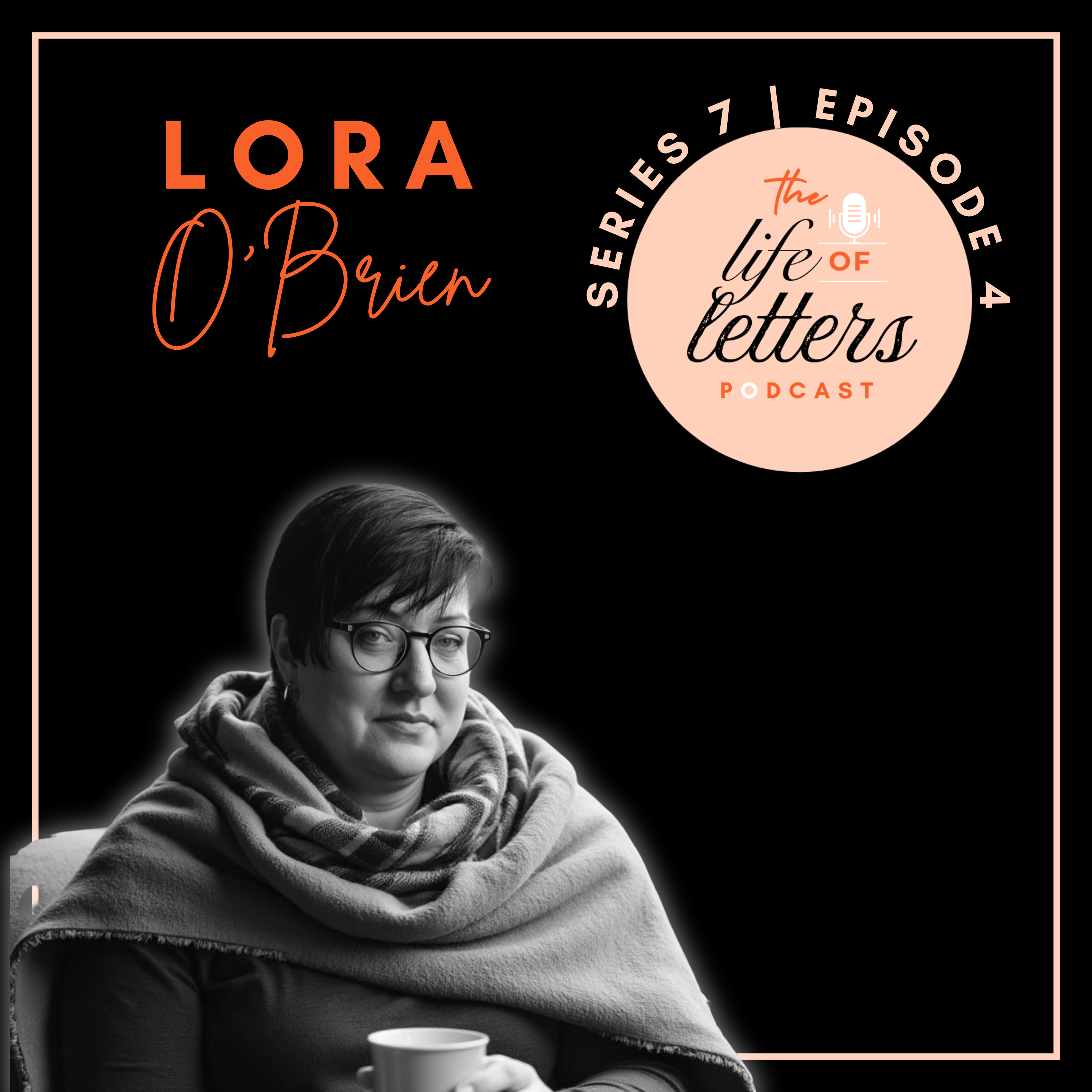
Today I'm talking to Laura o', Brien, an Irish dree and founder of the Ogham Academy, where they teach Ogham as a script, a source tradition and a living spiritual practice rooted in the historical record.
They hold an MA in Irish Regional history and they've published eight books to date on the Irish tradition. Welcome to the Life of Letters, Laura. It's lovely to have you here.
[00:01:09] Speaker B: Thanks a million for the invite. It's an honour.
[00:01:12] Speaker A: And really, that was a very, very, very brief introduction to you and this ancient Irish script, which I only really came across in my kind of research around looking at what. What kind of scripts there are that might hold a bit of magic and mystery, which is our theme for this series. But could you maybe just give us a little bit more information about what the script is and for any. For me, certainly. And any listeners who don't know a bit of the context around.
[00:01:47] Speaker B: Yeah, absolutely. So om is not a language, which is the first kind of mistake that people make. It is a script, as you say, it's an Alphabet and it's a whole writing system, really, which was developed specifically to capture the sounds of our most ancient form that we know of, of our native Irish language, which scholars called primitive Irish. But I think that has a bit of a colonial hint to it. So I always call it proto Irish, you know, just, just, just getting that in there. But, but yeah, it is this earliest recorded form of our language and it. The original form consists of about 20, of exactly 20 letters, and they're arranged in four groups of five, and each letter is called a fee or a feta. And each of the groups is called acma, or plural is acme.
And acma is an old Irish word for a family group of five, which I think is lovely as well. It's written originally in. So we had a couple of phases of om, I suppose, is the best way to start there.
The original phase would be like the monumental Phase, which is the Ogham stones, which a lot of people might be familiar with, maybe you've never heard of them before, that's all okay. But, but these were carved literally onto the corners of a stone. So that vertical line. So the Om originally would have been carved from bottom to top along the edges of these stones. So each of these groups has a series of strokes or notches which represent each of the letters. The fee.
So the monumental phase would have been the height of it would have been around the four hundreds to the six hundreds, maybe into early seven hundreds.
And this is what we call like the orthodox corpus. So this is like the, the Og, the original form of the Om. And then later though, it didn't go away after that. We went into a manuscript or a scholastic phase where, you know, we, we were known through medieval times in Ireland or in Europe as the island of saints and scholars. And there was a lot of academic pursuit, academic interest, academic excellence going on here in Ireland when, you know, Europe was in the Dark Ages really.
But they started to explore Ogham within the written down manuscript tradition instead of just carved onto the stone at that point. And honestly, it never really went away.
You know, we see examples of the Om being used right through all the centuries. And then in the 19th and 20th century we had a real revival of it starting probably around the 1700s and then 18 and 1900s. And then in our current modern phase, Ogham is just everywhere here in Ireland. It seems like everywhere I turn somebody is using Om or talking about Om or anything. So it's going through a real cultural revival as well at the moment.
So, so, so yeah, that's the basics of it. Is there any questions on that? Anything I didn't kind of COVID No,
[00:05:09] Speaker A: I think that's really interesting. So there's this. Obviously it's so old that it was sort of pre document and then it gets carried forward and then I guess other languages come in. There's lots of influences, I mean, potted history. Right. And then. But it, it's remained throughout as a, as a kind of constant written system.
[00:05:31] Speaker B: Yeah. And it was never about like, you know, you wouldn't be writing your shopping list in Om. There was always a formal ritualistic side to it. Certainly when it was on the monument stones, it was placed on burial stones and boundary markers and it was really to record, you know, names, ancestry, kin. And this is where maybe some of the spiritual and magical side of it comes in as well. Because it could be seen as protective, it could be seen as ancestral worship, you know, all of these elements are possibly tied in, now attested by so many scholars, depending on where that scholar is coming from. So I suppose through this interview I should be really clear.
I do have a spiritual and magic belief in om.
There's a few things I can go into, definitely, that would argue my case through the historical record, but there's a lot of scholars who believe that it was just, you know, some, some guy, some Christian guy basically invented it. It's, you know, he looked at Latin, he looked at Old Irish and he basically said, let's, let's just make a writing system. But my sense is that it's a lot older than that. But again, the earliest that we can actually date it like categorically would be around the 3002, I suppose, based on the language. The problem actually archaeologically is you can't carbon date stone.
So when an archaeologist is trying to determine a date on something through history, on a, you know, on a monumental find, on a, on an archaeological find, carbon dating is basically, you know, a system of how much carbon has been released. And they can time it then based on that. Stone doesn't release carbon. So stone has to be dated contextually.
And unfortunately with the Ulm, it's really useful building stone so it has been taken out of context multiple times, put into different locations. You know, the whole archaeological record is a little bit confusing, but we do have about 400 stones remaining and they're spread.
There are examples all over the island and there's some examples in Britain as well.
Nowhere else in the world you'll see a lot of people claiming a lot of different things, but OM has never been formally identified anywhere else in the world except these two islands.
The general theory is that it definitely started here. And again, we had this very, very developed pre Christian oral tradition which definitely included magic, which definitely included spirituality, pagan spirituality we would call it, through Druidic influence, through our mythology. You know, all of this is, is a record of, of that.
So it doesn't really make sense to me that there would just be nothing and then bam. Christians invented it, like so.
[00:08:34] Speaker A: Yeah, yeah, you know.
Yeah. And actually I'm going to come on to what, what the, the sort of letters and Alphabet looks like. But I wanted to just touch on the fact that we introduced you as a Dree. And I wondered which is spelled right? D, R, A, O, I. So I'm always tempted to say dray, O, E, which is absolutely wrong. But could you just tell us a little bit about what a Dree is?
[00:09:02] Speaker B: So a Dree is it would be the same root as the word druid, which I guess more people would be familiar with, but it essentially just means a user of magic.
And it would be one of our, like, one of our oldest words, really.
So I've just.
I took that on many, many years ago because, you know, like, when I was looking at any of the.
The terms that were available for my spirituality, they all seemed a bit, you know, changed around by neo paganism, I guess. So druid in particular has been taken by a lot of, like, English and American orders and has made it something very unrecognizable from my native tradition.
So I wasn't really comfortable with druid, even though you could technically call me a druid. You could also call me a witch, because I use magic. And, you know, one of my books is Irish Witchcraft from an Irish witch, but it's a witch in the old. What we would call the Banfasa tradition, which is the wise woman tradition here in Ireland.
So there's a lot that I could call myself and that just seemed like the. The simplest, to be honest.
[00:10:10] Speaker A: Yeah, I love that.
Yeah, absolutely. And it's what you're comfortable with. Absolutely. And on this same kind of thread, how did you become interested in this script?
[00:10:24] Speaker B: I have always been fascinated by it.
I was very lucky in that my. My grandfather and my mother would have been very interested in history when I was a kid and a lot of the folk traditions. And I grew up between very urban Dublin, so Ballymune, if anybody knows it, and very rural East Clare, where my nana was from. So I would kind of be between both of those places. So I got a very rounded education into Irish tradition. And, you know, the folk magic, honestly, was just as strong in Ballymon as it was in Whitegate in East Clare, you know, so all of that would have been a huge influence on me when I was a kid.
I couldn't tell you when I saw my first Olmstone or anything like that, but we definitely would have learned about them in school. Like, when I was in primary school, we would have touched on them and then history just through secondary school as well, when I was a teenager and I started just going. Looking for stones very, very early, as soon as I could. I was going to say as soon as I could travel, but really I was hitching around the country looking at ancient sites, because I was that kind of teenager.
Do not recommend. Do not do that.
But also my mother would have brought us on a lot of, like, historical excursions when. When we were kids. So it's just always fascinated me. It's always really, really just there was. And I suppose this is where my real belief that there's something more to it, because before I knew anything about the history, before I took my master's in Irish history and, you know, did all that with Om as the topic
[00:12:01] Speaker A: for
[00:12:03] Speaker B: really started with the root of just. There's something to this. I could feel it off the stones, you know.
[00:12:08] Speaker A: So, yeah, it started amazing where all good magic comes from. Right. The feeling. And.
And. And when you look at this writing system, these letters, I'm going to attempt to describe what I understand, and then you can correct me.
It's a horizontal sort of line, and then there's lines that are like markings that cross over. Right.
Vertically.
[00:12:34] Speaker B: Well, that's the manuscript tradition. So. Yeah, because it flipped when it went into books, it flipped. So when we're talking about the stones, the monumental phase, if you imagine a tall standing stone, right, and you know where the two edges meet on the corner, so that's your central line.
So if we were drawing Ogham from, or writing Om from the monumental phase, we would be drawn a straight line vertically down a page, but starting at the bottom and going up.
[00:13:11] Speaker A: Yeah.
[00:13:12] Speaker B: And then when it gets into the. The manuscript tradition, it flips and it goes from left to right. As, you know, we were reading at the time. So here in Ireland.
[00:13:23] Speaker A: Yes. So there is a sort of anchor line and then there are the. The markings that dictate what letter or what character or group of letters. Yeah, I'm learning.
They are kind of coming across. And there could be one six different versions of it, right? Five.
[00:13:46] Speaker B: Yeah. So each group of letters. So if we take the original 20, each group of letters has a particular style of markings. So the first group starts. We're going to. If you imagine a vertical line, right.
And one like an L shape, one dash coming to the right of it. That's the first letter. That's Beth. Okay. So the second letter then has two horizontal lines coming off that vertical line. The third has three, the fourth. So you work through each group like that. So It's. It's literally 1, 2, 3, 4, 5. Right. And those are the five letters in that group. And then the second group, the second acma, it's the same vertical line, but it goes off to the other side.
[00:14:34] Speaker A: Yeah. So the first letter
[00:14:39] Speaker B: is 1, and then 2, 3, 4, 5.
So it goes up.
The third group has a diagonal dash. Win is the first letter in the third group. So that is straight across that central line, but diagonal and Then, as I said, the fourth group is straight across, bush, horizontal.
[00:15:02] Speaker A: Okay. Okay. Yeah, yeah, yeah.
So actually, a fairly. I mean, I know it's difficult to explain on here, but a fairly simple, if that's fair to say, a simple anatomy of letters, like the actual construction of them, it would have been possible to do, I don't know, with whatever tools they would have had to make a mark on stone or to even make a marker is. It's not complex in. In the shape of this. And there's no curves. Right. So everything is just straight and. Yeah, yeah.
[00:15:37] Speaker B: And sometimes the vowels will be like.
Like dots instead of dashes. Straight across. That's just a different style of writing on it. But just. Just in case people get confused by
[00:15:49] Speaker A: that at some point.
[00:15:50] Speaker B: And so sometimes you'll see the. The vowels, which is the fourth grouping, as, like, dots. Like, so one dot, two dots, three dots, rather than a straight line across. And I think that's because sometimes on stone, the difference between, like, a diagonal line across and a straight line across is not as obvious. So I think maybe that's why that change was made, just for the visual clarity of it.
[00:16:15] Speaker A: Okay, so that might have come in later.
[00:16:18] Speaker B: Yeah. And there is another. Just to really further confuse things, when we get into the manuscript era, there, where the language had developed, so there were extra sounds which were added. So these are the extra letters, so they're called the four feather, which just means literally extra letters.
So there's five to six of those.
There's six technically, but two different periods. There was five at one point in the. Then another one was added. So we technically have 26 letters in the Om Alphabet.
But again, some of them are much earlier. And interestingly, some of the earlier ones are also for sounds that have gone out of the language now as well. So you'll see some confusion if you see it transliterated written down.
Sometimes you'll see two different versions of like. So, for example, streff has, like, an st sound or a Z sound, and that's because, again, the language was changing. So, like, the one thing Om gives us is a really fascinating record of the evolution of the Irish language, like, through millennia, literally.
For linguists, it's really fascinating. And again, how we date it is through the earliest version of the language, because we can't archaeologically date the stones. So we look at what form the language was in when that Om monument was being carved, and that's how we date the earliest Om.
[00:18:01] Speaker A: Yeah, fascinating. I love that it holds so much history.
And, of course, as we Sort of touched on. We're exploring the world of magic and mystery of letters. And this Om really nails this theme because it is holding a lot of magic, as we've. We've talked about. But can you tell us a little bit more about what.
What you've seen in terms of the kind of spiritual or magical side of this ancient script?
[00:18:29] Speaker B: Yeah.
So again, my position is that it definitely holds a magical and spiritual dimension.
There is some supporting reasoning to this. You know, if I'm gonna. If I'm gonna continue in the academic vein.
[00:18:44] Speaker A: Right.
[00:18:47] Speaker B: Our main manuscript source for it would be a book called Inlawer Om. So the. The Om book, basically.
And there's talk like it's. It's linked in there through the old stories. The origins of it are linked to one of the Tuathedanan gods, Oma, who invented us as proof of his ingenuity. And, you know, that.
That it was like a restricted script for specialists, basically. So it was like some kind of elite bullshit going on. But anyway, there are also. So anybody who's familiar with magic will know about association lists. I mean, you know, Aleister Crowley was famous for these. Right.
But symbolic associations with each letter would be, to my mind as a three would be a very magical element to it. And within the medieval manuscript tradition, we have copious amounts of lists. Now, the most common would be trees. And we might talk about trees a little bit more later. It's not. It's not what most people think. If you're familiar with Ogham, people are like, oh, it's the wisdom of trees and the magic of trees.
Yes and no. So that's something I'd love to dig into a little bit more. But the association lists carry so much depth in them.
And each letter, you know, everything from colors to artistic or craft skills to rivers to forts to, you know, like, there's a pay gome. Like, you know, it's just. There's all sorts of associations which I can't think of, like, logically, what need there would be for them and why they would have been written down like this.
Like, if we needed, like a mnemonic for, you know, just for learning them from an oral tradition into a written tradition and back out again, then for people to go and travel and, like, know these letters that could be very simply done without all of these lists. And then in the books that we have, say, the Book of Ballymoglike has a couple of pages dedicated to all these different ways of using the Ogham,
[00:21:04] Speaker A: if you've been enjoying the life of letters. I'd love it if you'd hit subscribe wherever you're listening today. It's a simple way to support the podcast and make sure you never miss a new episode. And if you know a fellow letter lover, why not share it with them too?
Now, let's get back to the episode.
[00:21:23] Speaker B: But we do also have. There's a couple of different artifacts. So there's one in particular, I think it's in the British Museum.
There's an amber bead which has an Om charm for toothache on it. Right.
But I suppose the kind of the clearest. And I don't know if this is just some later thing, but there's a pretty new document has been found called the Minchin Manuscript.
[00:21:51] Speaker A: And,
[00:21:54] Speaker B: and it was signed 1849, but again, could be a copy of a copy of a copyright. But that's relatively late, obviously, in the tradition.
And it's written almost entirely as, like, healing charms that are written in Om.
Irish charms written in om by a modern quack for concealment. Was the actual J.F. campbell was the one who, who kind of discovered it and was looking at it. But it was only published in February 2025, and it still hasn't been fully, like, deciphered, basically.
But it's all, it's all magic. And the theory is that it was a traditional healer family, an Irish healer family who would have kept their store of knowledge and obviously for concealment, didn't want us, you know, so like any good magical langu were using Ogham specifically as a. As a secret code.
But again, I would say for the power of the actual Om itself as well.
So it's just, it is very ritualistic by nature, you know, even in its earliest use, as I said, you know, if you think of like a stone that is marking the edge of a territory that has the name of an ancient venerated ancestor carved into it in Ogham, which, you know, if somebody comes across that and is facing that, that's going to carry a lot of weight, especially if there is a common understanding that Om is a magical language. And again, we have, we have an example of that from the mythology of literally it being used as a boundary, as a protective, as a shield, you know, so it just, it makes more sense to me that it was magic and ritualistic than not, you know, it's not a practical Alphabet as such, you know.
[00:23:55] Speaker A: Yeah.
Amazing. Fascinating. And so is Om still being discovered? I mean, you mentioned the necklace and there's things kind of coming out. Do you feel like there's still a long way to go to kind of discover more.
[00:24:08] Speaker B: Yeah, I know that we've lost a lot, which breaks my. Absolutely breaks my heart. Right. But in.
In Knock Boy in County Waterford in 2021, I believe there was like the ruins of a church and were being cleared out and cleaned up by a stone mason. And there was a new OM carving found there.
Unfortunately, too fragmentary to read properly, but it was definitely identified as OM in County Kilkenny. There was.
That was a little bit later, I suppose, in like the 60s, 60s, late 60s.
There was one found just again, randomly, like farmers clearing fields, masons going in, clearing out churches, like, you know, old, old walls coming down, getting knocked down in storms or whatever. And suddenly there's an Ohm carving because again, the stones were being used and reused all the time.
And some of them may have been carved specifically as protective, because we see in, say, monuments like in Newgrange would be a very good example. And when we see the carving on the stone there, it's not just front facing, it's actually all the way around those stones, you know, so stuff that wouldn't even be seen by anybody within the monument is still there. And there's been a couple of examples of Om where it seems to be in original situ, but, like, you wouldn't have been able to see the carving on it, you know.
So again, all of that is pre Christian, I don't know, but it was definitely reused by Christians. And because of all the moving around, you know, I think probably at this point, like any kind of stone monument standing in a field has definitely been found, like freestanding in a field in its original position. We definitely know where all of those are.
But who's to say that, you know, stuff didn't get knocked down, just cleared over to the side of a hedge, you know, all of this. So there's a lot. And even just with the Minchin manuscript, like that was only.
Excuse me, that was only published last year, so. Yeah, yeah, there's still work being done, definitely.
[00:26:22] Speaker A: Yeah. And a lot of that work and a lot of the kind of preservation and the revival of it is through everything that you're doing. And you founded the OM Academy. Can you tell us a little bit more around the kind of mission of the academy and what and how you teach all of this wonderful stuff?
[00:26:40] Speaker B: Again, like, I guess for me personally, I, like, I used to work, I was a manager of a heritage center, so I carried my own spiritual beliefs into that. I'm also a pagan priestess, you know, I'm dedicated to the goddess Morrigan. Like, so there's a lot of my own history which predates my work, my academics, all of that stuff, my own life. Like, as I said, growing up the way I did, the frustration for me of the misinformation has just been huge. You know, when I was 14, 15, starting to try and read about spirituality, paganism, especially, anything Irish, all I got was, you know, Llewellyn crap. Sorry, I have books published with Llewellyn, but at the time it was absolute crap. You know, Celtic magic and, I don't know, Witter and, you know, all this. All this absolute crap that was just being made up by people to, you know, to cash in on the Celtic cash cow, basically.
So there was. There was a lot of this, and Celtic wisdom sticks would have been part of that. Like, and, you know, I'm not going to name names, but this. This whole kind of Celtic shamanism was going through a revival in the 80s and 90s, and it was just pure crap. It was absolutely. And as soon as I kind of got excited, I thought I'd find something, and there was nothing. So that's actually how I got into academics. I didn't actually do college until very late in life, but I started having to dig through academic papers and resources myself.
You know, got in touch with people who were in colleges and, hey, I need this paper. Can you get it for me from your library kind of thing? You know, a lot of that over the years and just trying to figure it out and trying to put it in some kind of accessible. So, like, all of my work with the Irish tradition, like, for the last 30 years has really been about that, trying to find good source material, trying to put it in and understand it in the context of the very real experiences that I've had, magical and spiritual, you know, as a person growing up on this island who has been open to the other world and has been, you know, open to our folk magic, open to our customs and our traditions as well as our history.
So grew up knowing that the magic was there and then needed to make sense of it. So that's where all that started, you know, so just the OM Academy has basically come out of that. I also run the Irish Pagan School and the Morrigan Academy, but the OM Academy, when I. When I went to do my. My thesis, when I was doing my master's, I was really, really fascinated at the time by the place of Om in the development of Irish identity. Because obviously, as a historian, pre colonization, post colonization, you know, a lot of our History is very concerned with all that. Right. And very affected by all of that.
So I've just been really fascinated by like, who we are as a people and how we developed our identity. So that was the basis for my thesis was looking at the development of Irish, the place of home in the development of Irish identity in the 18th and 19th centuries in the Leinster region. Just to give it its full title.
[00:30:00] Speaker A: Give it, yeah, yeah.
[00:30:02] Speaker B: So there was a lot of research that went into that and it really came very clear to me that, you know, as I mentioned earlier, like, um, even at that point in, you know, 17, 1800s, Ulm was still such a.
Such a presence in our landscape, you know, and it's tied up with our language, definitely. And the language was a huge part of, you know, the Gaelic revival and the revolution and all of that, like, because your language is your identity, but this is how our language has been expressed.
And a really interesting thing is that it was basically, it was also available as a not Catholic and not Protestant element of our history that everybody could kind of agree on, you know, academic wise. So I think that played a role as well.
It was like almost neutral ground, you know. Well, it's Druids. It doesn't matter about religion.
[00:30:54] Speaker A: Yeah, yeah.
[00:30:56] Speaker B: So that was a huge factor too, I think, I believe. And actually the research would have backed that up as well.
But the OM Academy basically was born out of all that. I was doing all this research. I was just up to my neck in OM and I was like, let's, you know, let's, let's make this available for other people. Because that's been my mission basically is to make sure that other people have the resources that weren't available to me. And, and you know, to give it its proper kind of mission statement is to be the ancestor that I needed in the world. You know, so whether that's with the magic or, you know, social activism or whatever, just to be able to make it a little bit of a better place. So that the hard time that I had and a lot of people had isn't. Doesn't have to be repeated, you know, so that's why a lot of that work is just publicly available.
There are courses and everything because, you know, I have to pay for the hosting and all the rest of us. Right.
But there's a lot of. The majority of the work I do in all areas is free educational content. You know, YouTube, podcasts, blogs, all that stuff. So that was basically I wanted a place to host it. So I just started the OM Academy.
[00:32:02] Speaker A: Yeah. And it's incredible. I've, you know, signed up to a newsletter, I've got all the downloadable things. I've, you know, worked out what my name is. And it's, it is a really lovely thing to explain, explore, and as you say, there's courses for people who want to dive a little bit deeper and especially if you have got Irish roots. I think it's such a lovely thing to be able to discover a little bit more around, like the deepest historical context of where you've come from, isn't it? It's just, it's lovely, but you've made it hugely accessible and I think we'll. We'll put all the show links and things at the end.
But I wanted to. You mentioned about trip trees earlier, before we wrap up. I wondered if you could just bring that in before we end.
[00:32:50] Speaker B: Yes. So, again, you know, I suppose harkening back to that, a lot of the nonsense, like people have basically just taken the. The tree associations of Ogham and kind of run with it. And in fairness, that didn't start with neo paganism. It started with a guy called Robert Graves, who was a poet. He wrote a book called the White Goddess.
Beautiful poetry.
He's pretty much responsible for the whole Maiden Mother and Crone thing and for the Om Celtic tree calendar stuff that you're going to see about the Om.
If somebody's trying to talk to you about the Celtic tree calendar, please run. Please, just, honestly, honestly, please just don't.
There are tree associations with the Om, again, through the manuscript tradition. There are tree associations, but actually of those 20 letters that we talked about, only six of them have specific tree associations in the original. And when we're talking about associations, there's a bit I missed, actually. There's a thing called Briharom, which is word oms, which again, would attest maybe to the magical, you know, or spiritual nature of it, because they're basically little like. They're called Kennings. They're like little kind of one to two lines of almost poetical kind of explanation of each letter.
A guy called Damian MacManus did great work in the 80s, an Irish scholar, to really kind of translate and translate the letter names and really, you know, really worked with the manuscript tradition to try and kind of give us the source material then that, you know, that we've been able to work from since. So probably the father of modern Ogham studies would be Damien McManus. So, you know, props, if you ever listen to this work, is much appreciated.
But yeah, the cannings are really fascinating, but they specifically like the associations in the manuscript through the Cannings. Like, there are six actual trees. So, like, the letter D or dar, for example, would be associated with the oak, but then you have kind of commonly understood associations. So, for example, another. Another letter T, thinna, is associated with Holi, but it actually means, like, an iron rod or an iron. Like an ingot, like a metal ingot.
So, like, the holly association is kind of accepted now, but it's not really from the original tradition. And it was kind of, again, it was put in with these lists of associations. But if we're taking the lists of associations as proof, like, why are we not. Why don't we have a Celtic pig calendar or a Celtic river calendar, or, you know, because trees are very romantic and great.
Now, again, the tree association is not nothing. Please don't mishear me, because the word fi, which is the word for each letter, F, I, D, literally means wood. Basically, it has wood associations. So the tree association with the OM is not nothing, but it's definitely not what has been made of us with, you know, Celtic tree calendars. There's no Ogham astrology. There's no, you know, your sign in Om, if you were born in this month.
That's just complete crap. There's actually an article on the OM Academy about this. If people want to go and look, look it up.
[00:36:13] Speaker A: Yeah.
[00:36:15] Speaker B: But again, what I try and put up there is, is just like, real resources. And as you've hopefully heard from the interview, it's not that we don't have gaps, and I'm not afraid to, you know, to fill those gaps with my own beliefs, but you have to be very, very clear about what is actual source material and what is your own supposition or beliefs or, you know, wants or desires in some cases, some people kind of project a little bit, and that's okay, too, for your personal use, for your personal spirituality, for your own beliefs. Grand. But my problem is, obviously, when people come along and start selling books called, you know, Celtic Wisdom sticks and crap like that.
[00:36:54] Speaker A: Yeah.
[00:36:54] Speaker B: Because it's just. It's. It's setting up and has done a huge amount of damage to the actual Omen tradition. It's so muddied. The waters are so muddied.
[00:37:04] Speaker A: I think.
I think what's beautiful and that, you know, I've definitely taken from this, is that there is this wonderful kind of blend between the sort of magical and natural world and what. What we are trying to do by giving it a sort of academic context to ensure that it's rooted in truth rather than, you know, the fluidity of time coming in and confusing things. So yeah, and I think that's something that you, you and the academy and that all the resources that you've got really trying to put out there is that, you know, there's a lot of misconception and things that have come through which will inevitably happen. Right. And it's sort of sifting through some of that to get to a deeper understanding and truth being, you know, it doesn't have to be in front of us. Some things we can't see and some things are lost forever. And it's understanding that there's truth in magic and the spiritual sides of things as well.
[00:38:08] Speaker B: My whole, my whole model is we learn, we experience and we integrate. And I think in a lot of our modern contexts, people are either too heavy on academics and learning, they're too heavy on just, oh, well, this is what I feel. So it must be grand, it must be right.
And then they don't actually take the time to integrate any of that into, well, how does this affect me? How does it affect my life? How can I make use of this to make the world a better place? You know, like all of these things, the, the integration and reflection part of it is just as important as either of the other two. But again, you can't really have. It's my three legged stool, my three pillars model, you know, that I teach at the Irish Pagan School. And it's just, it's just what's always made sense. So it's how I teach. So that's what you're getting at the OM Academy, I guess.
[00:38:53] Speaker A: Yeah, yeah. Incredible. And I think that's a. Yeah. Something that maybe we all need to take forward into our lives. Not just in the OM Academy, but this series. We're ending with a question sort of not dissimilar to some of our other other series where we've talked about our favorite letters of the Alphabet. But what I want to pose to you today is what letter of the English or OM Alphabet? I mean OM would make sense, but do you feel holds the most magic or mystery and why?
[00:39:25] Speaker B: I feel like it's going to be very personal for me personally.
It would be the letter G or goet. It's called G O R T and girt translates as a, like a cultivated field or garden, like a cultivated sanctuary. Right.
And that letter is, I suppose, representative of what I'm trying to do with the Irish tradition because, you know, when I came in it was kind of There was a lot of, like, let's think of it in the garden model, right? So there's a lot of invasive species have come in and, you know, are taken over. So there's no room for any of the native plants or soil or anything to grow. So, you know, they're taking up all the resources and they're taking over everything. And so my first thing was to try and clear all that out and, you know, this is the cultivated part of it and clear it all out and see what's actually coming up natively. And that's. And holding that space, you know, because the. The enclosure is really important for me as well. So, like, I would often get accused of gatekeeping, which I don't know why I would be doing so many free resources if I was a gatekeeper, but anyway.
But I think it's important to have boundaries about, you know, how the tradition is. Is worked with and looked at. And, you know, of course, people can do whatever they want at the end of the day, but, you know, within my little cultivated garden, we have. We have boundaries and, you know, we try and focus on the native beliefs, traditions, and, you know, try and kind of clear out anything that's going to come in and take over, you know, so.
So that's why Gert is. Is my personal favorite.
[00:41:10] Speaker A: I love it. I love it. Yeah, Beautifully.
Yeah. Explained. I think that's. That's a great. A great letter to choose and one that really kind of chimes in with everything that you've said today. So thank you so much. And for people who want to find out more about you or the Academy, they can visit Ogham Academy and, you know, explore all the resources and blog posts and things. But you're also on Instagram Ogham Academy. And as always, we'll put all the details and links in today's show notes. We'll also get some visuals of the Alphabet and the.
The ogham. Did I say ogham again?
[00:41:49] Speaker B: You did.
[00:41:50] Speaker A: Oh, for goodness sake. I nearly made it through the whole episode.
Okay, they can visit Ogham Academy, but it is spelled O, G, H, A M.
Academy.
[00:42:02] Speaker B: Yeah. And you're not completely wrong saying ogham. But ogham is the old Irish form of it.
There's debate over how it's actually pronounced. You know, it could be softened. The G could be softened or it could be hard. Nobody's really sure because it's, again, very old.
But the reason that I use om O, G, H A M is because that's the modern Irish version. And again, I'm not looking to enshrine anything in amber. You know, like we're, we're working with a living tradition here. So I will be using the modern form of the language as much as possible because that's what I speak and that's where we are at the moment, within this living tradition. So it's O G H A M and it's om oam oam.
[00:42:42] Speaker A: Brilliant. Thank you. Thank you so much, Laura. It's been so nice speaking to you today and lovely diving into the sort of magic and mystery and an incredible ancient writing system of lovely letters that people can go and discover more about. So thank you so much.
[00:43:01] Speaker B: No bother, no bother.
[00:43:04] Speaker A: Thanks for listening.
Series 7 is made possible by my wonderful producer, Heidi Cullip, and the support of Speedball Arts.
If you've enjoyed the episode, don't forget to subscribe, leave a review or share it with a fellow letter lover.
Say hi over on Instagram and watch clips and moments for all the series on YouTube at the Life of Letterspodcast.
And until next time, keep listening, keep creating and keep celebrating the life of letters.